
Kara Gavin
Research and Policy Media Relations Manager
Gavin draws on more than 25 years of experience in communicating about science, medicine and health policy. She focuses mainly on the health services research done by members of the U-M Institute for Healthcare Policy and Innovation, who work to understand and improve the safety, quality, equity and affordability of health care. As part of the Michigan Medicine communication team, she has lead responsibility for primary care and mental health topics. Contact: [email protected]; Twitter: @Karag


Health Lab
Should older adults, with fewer years to live, keep getting cancer screenings?
Cancer screening guidelines increasingly factor in how long a person has left to live, to guide whether to continue or stop screening. A new poll explores older adults’ attitudes toward this approach.

Health Lab
A training ground for healthcare innovators
Advanced programs in healthcare equip doctors, nurses, and others with the skills and knowledge needed for successful careers in health. Explore how Michigan’s Clinician Scholars Program can empower healthcare innovators across different disciplines and enhance medical education.
News Release
Phillip Rodgers, M.D., takes on primary care transformation as new chair of Family Medicine
Puts focus on population-based patient care from birth to end of life, developing core areas of research and training a new generation to lead primary care tomorrow
News Release
Ravi Allada, M.D. to lead Michigan Neuroscience Institute at U-M
A neuroscientist who began his career at the University of Michigan and made important inroads in understanding the mysteries of sleep has returned to Ann Arbor to lead a fast-growing community of scientists studying the brain, nervous system and mind.

Health Lab
Many primary care providers and patients wary of discussing firearms
Screening primary care patients for gun ownership has been recommended especially for people with mental health issues. A Michigan Medicinestudy shows wariness by providers and patients.

Health Lab
High rate of mental health problems and political extremism found in those who bought firearms during COVID pandemic
Firearm purchases rose during the pandemic and a survey shows high rates of mental health issues and political extremism among those who bought guns during 2020 and 2021.

Health Lab
As Medicaid ‘unwinding’ continues, Michigan report provides key insights
Medicaid expansion’s impact on low-income Michigan residents included reduced uninsurance, increased primary and preventive care, and better financial health.

Health Lab
Few children – especially those with safety-net insurance – get vision checked at checkups
Few children are getting eyes checked at their pediatrician or other regular doctor’s office, and rates vary greatly by insurance status.
Health Lab
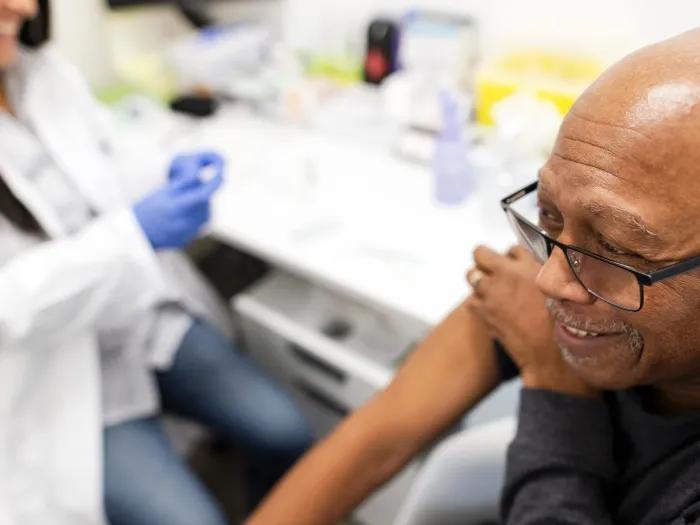
Many older adults want RSV vaccine, poll shows
RSV vaccines are now available to older adults for the first time; a poll gauges awareness and interest among those over 60.
Health Lab
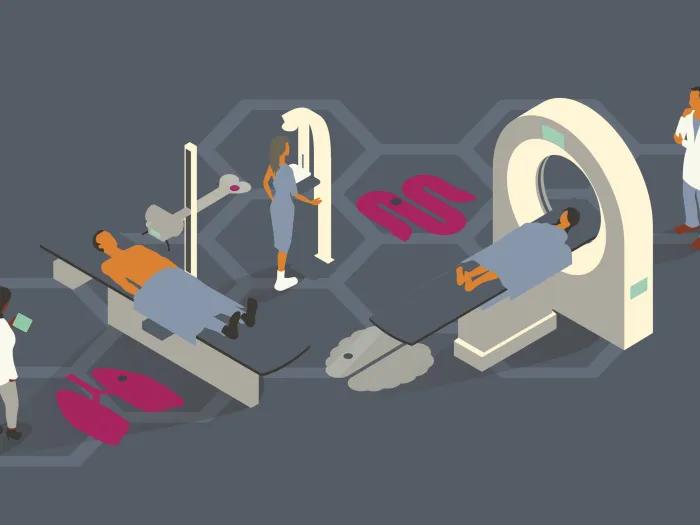
Cancer screenings have saved the U.S. at least $6.5 trillion
Mammograms, Pap tests, colonoscopies and lung CT scans have the power to detect cancer early and save lives – a new study tallies up the savings in both years and dollars.

Health Lab
Chronic pain patients who take opioids need better care and coverage
People with chronic pain who take opioids have trouble finding multimodal pain care; insurance and provider education changes are needed, experts say

Health Lab
Can AI help hospitals spot patients in need of extra non-medical assistance?
Needs related to housing, transportation, food, social support and more can be identified through AI/ML techniques

Medicine at Michigan
Realizing a (delayed) promise: Telemedicine at Michigan
A 1999 story in Medicine at Michigan was hopeful about the expansion of telemedicine — a promise that would not be realized until 2020.
Health Lab
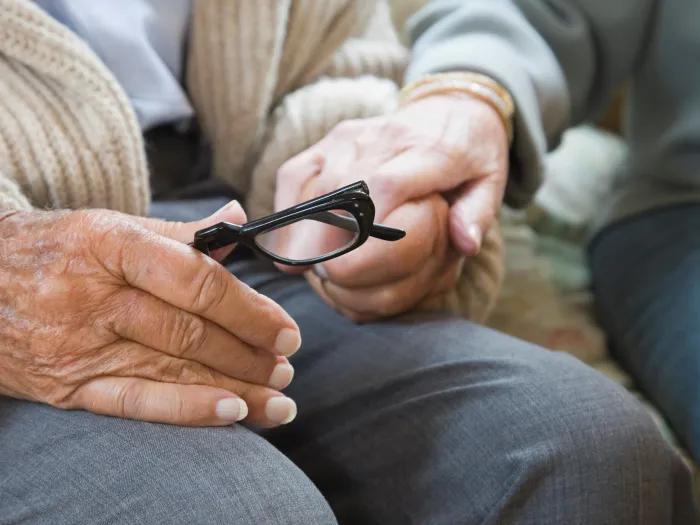
Study shows dementia more common in older adults with vision issues
A link between vision issues in older adults and an increased likelihood of dementia.
Health Lab
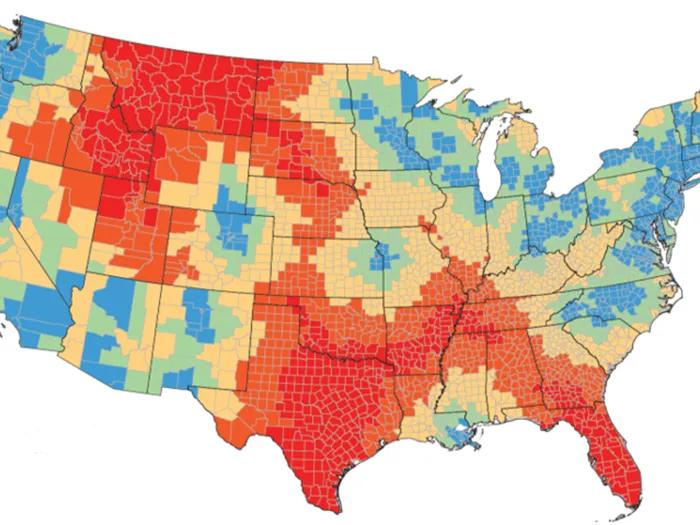
Mapping the changing landscape of gender-affirming care for teens
Gender-affirming care for transgender teens is restricted or may be soon in 20 states; this has increased travel time to available clinics
