
Health Lab Articles

Health Lab
Examining mental health and reducing stigma in diabetes
Research at Michigan Medicine has been working to improve the psychosocial concerns related to diabetes, which often pose issues for people living with the condition

Health Lab
Parents of young kids increasingly turn to social media for parenting advice
A C.S. Mott Children's Hospital health poll found most mothers and over two-thirds of fathers of children ages 0-4 use social media for questions on topics like feeding and behavior challenges.

Health Lab
Keep telehealth alive and well, experts tell Senate subcommittee
Telehealth coverage by Medicare is scheduled to expire at the end of 2024; experts told Senators what they think should happen to preserve it.
Health Lab
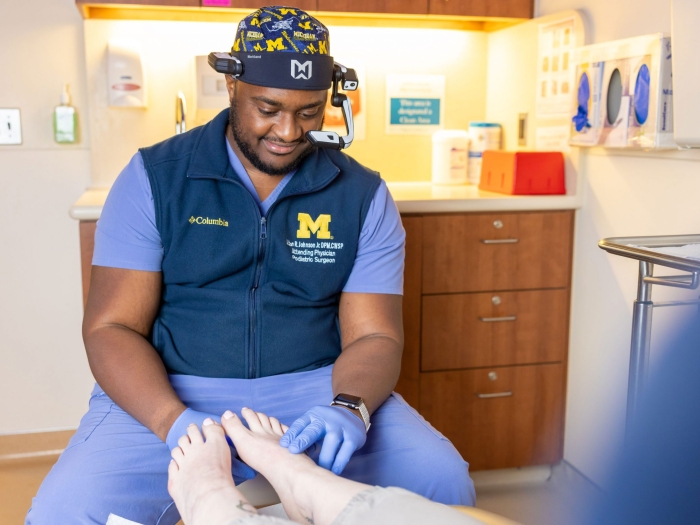
Medical students use virtual reality to improve diabetes
A physician invents a creative approach for medical students in diabetic care.

Health Lab
Do your UTIs keep returning?
A Michigan Medicine urogynecologist discusses what urinary tract infections are, how they are treated and what new research is on the horizon.

Health Lab
Irregular heartbeat after valve surgery increases risk of stroke, death
Postoperative atrial fibrillation, commonly known as Afib, has traditionally been viewed as benign and limited. But a study led by researchers at the University of Michigan Health Frankel Cardiovascular Center finds that postoperative atrial fibrillation increases the risk of strokes and permanent Afib — and is linked to worse long term survival — after heart valve surgery.

Health Lab
Older adults left out of clinical research trials
Including older adults in research can be beneficial, explains a Michigan Medicine research, who says more should, and can be, done to have their insights.

Health Lab
A diabetes device that makes a lot of “Sense”
Living with diabetes at such a young age comes with challenges, but those challenges have inspired Jackson, now 8 years old, to come up with ways for people like him to live a little easier with a new device called "SensePod".

Health Lab
Health plays a role in older adults' vulnerability to scams
Most older adults have faced an attempted scam, and some have been defrauded, but rates were higher among those with health problems or disabilities.

Health Lab
Managing scleroderma symptoms through a team approach
Research published in the Arthritis Care and Research Journal from Michigan Medicine found that scleroderma patients made significant strides when working with trained peer health coaches in adhering to wellness routines, leading to resilience and improvements in fatigue, pain and depressive symptoms.
Health Lab
Findings shed light on how a pediatric heart surgery complication impacts heart transplant survival
Patients who experience this condition following the Fontan continue to have a high risk of death from the time they’re waitlisted for a new heart through receiving the transplant, according to a 20-center study led by Michigan Medicine. And one specific complication called cyanosis – or experiencing less than normal oxygen blood levels – was associated with worsened survival.

Health Lab
Monitoring program flags cancer patients at risk of highly toxic chemotherapy side effects
Researchers from the University of Michigan Health Rogel Cancer Center have developed a monitoring system using a research genetics program to trigger alerts about cancer patients suspected to have the DPYD gene variant.

Health Lab
The malfunction of an undamaged brain
People with these two functional neurologic disorders often go misdiagnosed
Health Lab
Spread of drug resistant bacteria linked to patient hand contamination and antibiotic use within nursing homes
A Michigan Medicine research team seeks to identify characteristics of patients within nursing homes, as well as the nursing home environment itself, that are associated with contamination by vancomycin-resistant enterococci.

Health Lab
Child care centers aren’t a likely source of COVID-19 spread, study says
Research published from experts at Michigan Medicine, the University of Pittsburgh School of Medicine, and UPMC Children’s Hospital of Pittsburgh shows that children in daycare centers were not significant spreaders of COVID-19
