Yes, You Should Wear a Mask. Here’s How and Why
Properly wearing a mask can help keep you safe while navigating the COVID-19 pandemic.
9:15 AM
Author |
This article was edited on Feb. 4, 2022.
As cases of COVID-19 continue to spike again across the country, it's important to stay steadfast in helping prevent further spread of the virus. Being fully vaccinated (including a booster), continuing to wash your hands, covering your coughs and sneezes, avoiding touching your face, keeping your distance, and wearing a mask are the key interventions that prevent COVID-19.
Here's why: As we've learned throughout this pandemic, the most common way COVID-19 spreads is through person-to-person contact. When an infected person coughs, sneezes, or talks, they produce respiratory droplets that can travel about six feet and can land in the mouths or noses of those nearby. COVID-19 can also be spread by people who don't know they have the virus since they aren't experiencing any symptoms.
"The COVID-19 cases in Michigan are extremely high right now and the Omicron variant appears to spread more readily. It is critical to wear a mask in public right now to help prevent the spread," said Amanda Valyko, M.P.H., the director of infection prevention and epidemiology for Michigan Medicine.
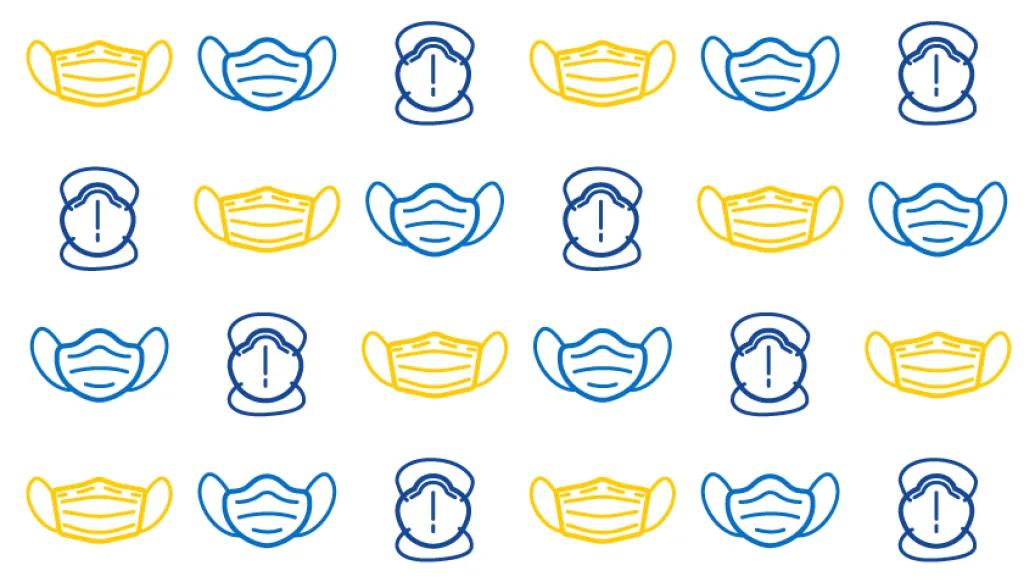
The type of mask does matter. There is a lot of variability in cloth masks. Masks with multiple layers of tightly woven fabric that fit well enough to avoid larges gaps provide more protection. Single layer masks, such as neck gaiters and bandanas, do not provide as much filtration and are less protective.
To make sure you are properly protected, there are some things you should and should NOT do when wearing a mask:
-
Choose a mask with multiple layers, made of tightly woven material.
-
Choose a mask that doesn't have a valve or other openings in it.
-
Make sure it covers your face from the bridge of your nose down to your chin.
-
Try to fit it snugly against the sides of your face, making sure there are no gaps.
-
Make sure you can breathe easily through it.
-
If you are using a cloth mask, wash it regularly using water and a mild detergent; dry it completely in a hot dryer; store it in a clean container or bag.
-
Do not allow it to slip under your nose and don't wear it on your forehead or around your neck.
-
Do not put it on a child younger than 2, anyone who has trouble breathing or anyone who is unconscious, incapacitated or otherwise unable to remove it without assistance.
-
Do not touch the inside of it, as it may be contaminated from your breathing, coughing or sneezing.
While wearing a mask may not keep you from getting COVID-19, it can help lower the odds. If you're sick, a mask can help keep your germs from infecting others. If you're healthy, a mask can help keep respiratory droplets from someone who is sick from landing in your nose and mouth. While we can't quantify how effective it is to wear a mask, we do know it offers some protection while not wearing one offers none. Masks are most protective when everyone is wearing them.
The key tools that we have to prevent COVID are being fully vaccinated, including a booster dose when appropriate, and masking and distancing. As Michigan sees record numbers of COVID-19 cases, these strategies are critical to preventing transmission.
"We are all in this together and wearing a mask helps protect you and everyone around you, especially those who are at the highest risk," said Valyko.

Health Lab
Explore thousands of health news & research stories by visiting the Health Lab homepage for more.
Media Contact

Public Relations
Department of Communication at Michigan Medicine
Stay Informed
Want top health & research news weekly? Sign up for Health Lab’s newsletters today!
Featured News & Stories
4 ways to teach your teen safe driving habits
4 in 5 parents say having a baby is too expensive

What’s the latest on 7-OH and kratom availability and addiction care?

Better prenatal care data could help prevent maternal complications, experts say

Nerf gun accident causes retinal detachment in pediatric patient