Many older Americans plan to take long trips soon, but may alter plans if COVID spikes at their destination
Most say they’ll take steps to anticipate medical needs while away for two weeks or more, but some may count on telehealth visits that may not be available out of state.
8:00 AM
Author |
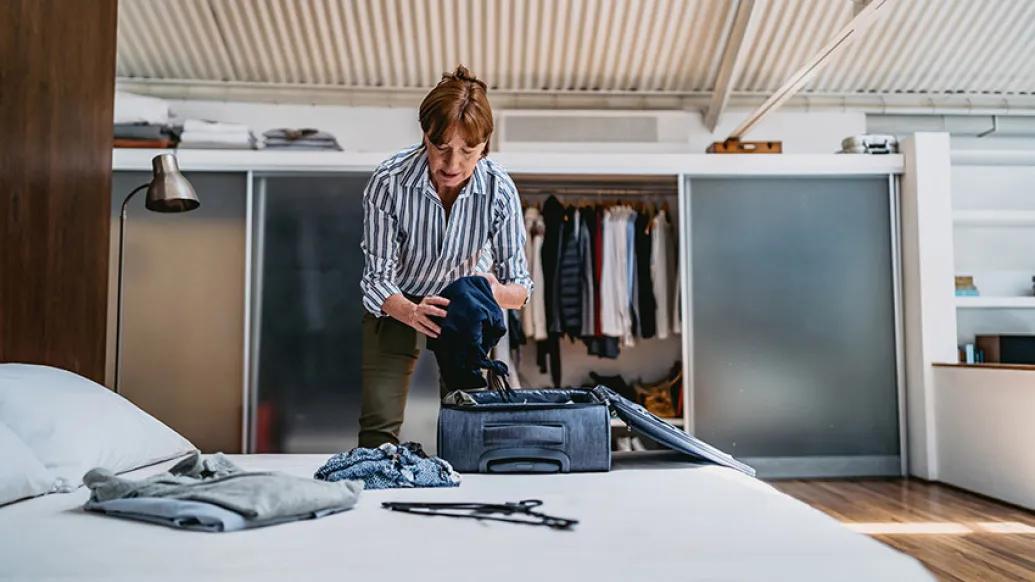
Nearly one in three older adults plans to pack their bags for a long trip far from home in the next year, and many are looking forward to holiday travel in the next two months, a new poll finds.
But among those ready to hit the road or take to the skies for an extended getaway, many said they would consider local COVID-19 case rates at their destination, and potentially change their travel plans if rates spiked there.
The new data come from a report from the National Poll on Healthy Aging, focusing on adults age 50 to 80 who have recently taken or plan to take trips of two weeks or more, 100 miles or more from home.
Only 17% of respondents said they had taken such extended trips in the past year, but 31% say they intend to in the coming year. One in four older adults said they plan to travel over the upcoming holiday season, from now to January.
If COVID-19 cases surge at their destination, 20% of these would-be travelers said they would definitely alter their plans, and another 52% said they may do so.
MORE FROM THE LAB: Subscribe to our weekly newsletter
Older adults who aren't vaccinated against COVID-19 were much less likely to say they'd consider COVID-driven changes to their travel plans, though they are less protected from serious illness than most vaccinated older adults.
The poll is based at the University of Michigan Institute for Healthcare Policy and Innovation and supported by AARP and Michigan Medicine, U-M's academic medical center.
SEE ALSO: Tips For Staying Healthy Before Traveling For the Holidays
"Travel, especially after so many months of staying close to home, could give many older adults a needed break from their everyday surroundings and a chance to feel a sense of normalcy, or reconnect with friends and family separated by distance for so long," said Preeti Malani, M.D., the poll director and an infectious disease physician at Michigan Medicine. "Vaccinated older adults should still be mindful of COVID-19 activity at their destination, but most would face a much lower risk of developing a severe infection than their unvaccinated peers."
A recent brief report from the poll team showed that the vast majority of adults over 50 have gotten vaccinated against COVID-19, and that a majority of them intend to get or have gotten a booster or third dose.
Other travel-related health concerns
The poll also asked respondents about how they would handle health concerns that might arise while traveling, and what they're doing to prepare for those.
Of those who had traveled on an extended trip in the past year, 10% reported getting medical care while traveling.
Vaccinated older adults should still be mindful of COVID-19 activity at their destination, but most would face a much lower risk of developing a severe infection than their unvaccinated peers.Preeti Malani, M.D.
While nearly all (97%) older adults planning a long trip said they'd make sure to bring enough of their prescription medications with them, and most (88%) said they would make sure to bring enough medical supplies, far fewer said they'd take other steps.
For instance, 34% said they would see their primary care provider before they left – such appointments can ensure patients know how to manage health emergencies related to their medical conditions while away from home. Among those who took a long trip in the last year, only 18% said they had taken this step.
Less than a third (30%) of those planning travel said they would check with their health insurance plan to see what they would cover if medical needs arose that required treatment while away. About 1 in 10 said they would identify a place they could get care at their destination or buy more health insurance coverage.
SEE ALSO: People Gave up on Flu Pandemic Measures a Century Ago When They Tired of Them – and Paid a Price
One poll finding suggest that 25% of older adults planning extended travel may be banking on an option that might not actually be available to them: having a telehealth visit with their regular health provider while on a trip. State and federal rules about telehealth, and policies at many health systems, may not allow these kinds of appointments to happen by video if the patient and provider are in different states or countries. Only 19% of the older adults planning extended travel said they would stay in their own state.
Like Podcasts? Add the Michigan Medicine News Break on iTunes, Google Podcasts or anywhere you listen to podcasts.
"These poll findings are consistent with previous AARP research which shows that optimism for travel this year is growing, but COVID-19 precautions still take precedence for many older adults," said Alison Bryant, Ph.D., senior vice president of research for AARP. "As more Americans make travel plans, it's important to continue referring to public health officials' travel guidance. Those who may be at higher risk of infection should talk to health care providers about how to stay safe if they travel."
The poll report is based on findings from a nationally representative survey conducted by NORC at the University of Chicago for IHPI, and administered online and via phone in August 2021 among 2,110 older adults age 50–80. The sample was subsequently weighted to reflect the U.S. population. Read past National Poll on Healthy Aging reports and about the poll methodology.

Health Lab
Explore thousands of health news & research stories by visiting the Health Lab homepage for more.
Media Contact

Public Relations
Department of Communication at Michigan Medicine
Stay Informed
Want top health & research news weekly? Sign up for Health Lab’s newsletters today!
Featured News & Stories

Human Rabies Exposures Growing Across the Country

Top 7 tips for choosing Medicare prescription drug coverage for 2027

Many older adults make Medicare decisions quickly and most don’t change plans, poll finds

4 in 5 parents say having a baby is too expensive
Many hospitals still don’t do enough to prevent UTIs from catheters