Many Grandparents’ Medicines Aren’t Secure Enough Around Grandchildren
Keeping medications in easy-to-reach places and easy-to-open containers can raise the risk of accidental poisoning or intentional misuse.
7:00 AM
Author |
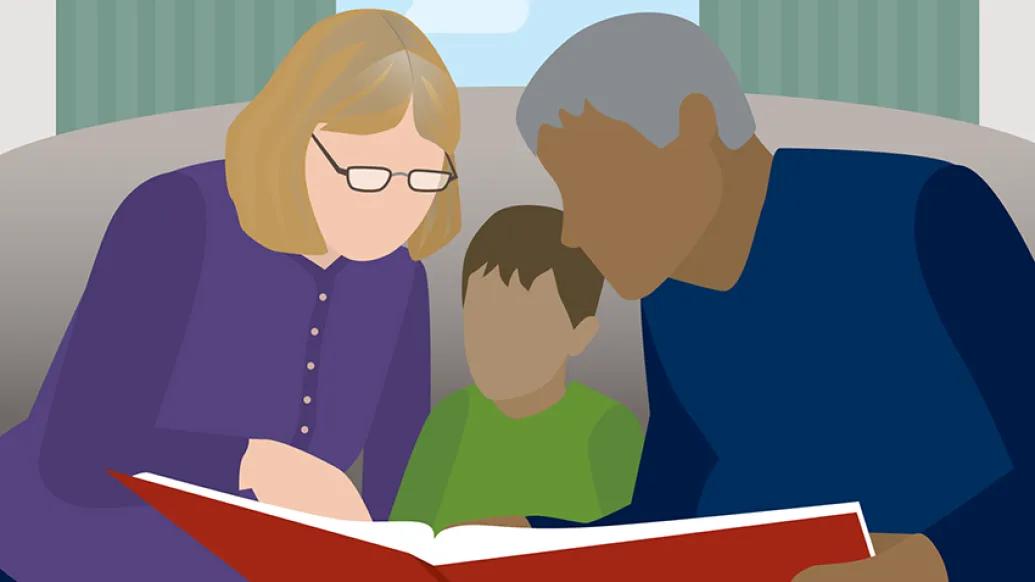
Whether it's a rare treat or a weekly routine, spending time with grandchildren brightens life for many older adults.
But a new poll suggests many of them could do more to reduce the risk of their medications harming their grandchild.
LISTEN UP: Add the new Michigan Medicine News Break to your Alexa-enabled device, or subscribe to our daily audio updates on iTunes, Google Play and Stitcher.
More than 80% of the grandparents polled say they keep their medication in the same place as usual when their grandchildren visit their house – and 72% keep them in their purse or bag when they go to visit their grandchildren.
And nearly one-third say they store their prescription medications in something other than the container they came in – with the vast majority of them using an easy-to-open container.
These practices may put children at risk of accidental poisoning if they get into their grandparent's medications, say the University of Michigan researchers involved in the poll.
And for older grandchildren, the easy access may lead to misuse of certain medicines that hold the potential for abuse – for instance pain medicines and sedatives.
No matter how old your grandchildren are, you need to think about medication safety.Preeti Malani, M.D.
The findings, from the National Poll on Healthy Aging, suggest that grandparents need more education about safe medication storage when they're around children and teens, whether for a holiday visit or a regular childcare session.
The poll, carried out by the U-M Institute for Healthcare Policy and Innovation with support from AARP and Michigan Medicine, U-M's academic medical center, asked more than 2,000 adults aged 50 to 80 questions about medication storage.
According to the federal Centers for Disease Control and Prevention, nearly 40% of children treated in emergency departments for medication-related poisoning took their grandparents' medicines.
MORE FROM MICHIGAN: Sign up for our weekly newsletter
"Prescription medicines, and even over-the-counter medicines and supplements, can harm children and teens who find them in grandma's purse or on grandpa's kitchen table," says Preeti Malani, M.D., the poll's director. "Meanwhile, opioid painkillers and sleep medicines can be diverted for recreational use by teens. No matter how old your grandchildren are, you need to think about medication safety."
Care and risk
The poll finds that two-thirds of grandparents say they provide care for their grandchildren; 42% care for them monthly and 18% care for them weekly. One in ten live with their grandchildren year-round. Just over half of all adults age 50 and over who answered the poll are grandparents, including 74% of those over age 65. In all, 86% said their grandchildren had visited them in the past year.
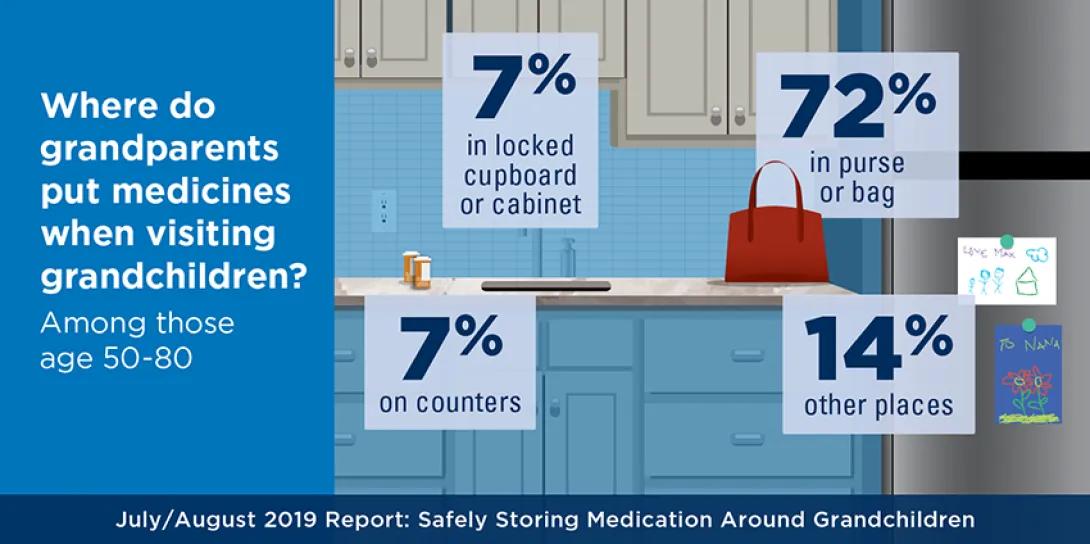
During those visits, the poll found, 84% of older adults don't change their routine regarding where they store their medicines. Those usual places include cupboards or cabinets (61%), countertops and tables (18%), purses or bags (7%) or other locations (15%). Only 5% said they routinely keep their medications in a locked cupboard or cabinet in their own homes.
And when grandparents visit their grandchildren, the chance of easy access may go up, the poll suggests. Nearly three-quarters of grandparents say they keep their medicines in their bag, and 7% leave them on a counter or table. Only 7% placed them in a locked cupboard or cabinet.
"We know that grandparents love spending time with their grandkids. A few simple steps can keep those little ones safe when you're together," says Alison Bryant, Ph.D., senior vice president of research for AARP. "Don't leave medications in your purse or on a kitchen counter—it's best to keep them locked up. It's also a good idea to go through your medications every few months and safely discard any that are expired or no longer needed."
Containers matter
Malani notes that childproof prescription drug vials and bottles were developed and required starting years ago, specifically to protect children from accidentally swallowing medicine not prescribed to them. Those "childproof" containers, however, can be hard for some adults to open. So the poll asked grandparents if they ever used alternate containers — ones that could be easier for children to open.
Twenty-nine percent of the older adults polled said they transferred their prescription medicines to other types of containers. Slightly lower percentages did the same for supplements and over-the-counter medicines, which can also harm children especially when taken in larger than recommended amounts.
"If you put your pills into day-of-the-week pill sorters so you can remember whether you took your medicine each day, that's great – but keep that sorter out of the reach of little ones," says Malani. "Make sure you explain to them, and their parents or older siblings, that it's important to stay away from your medicines – that those pills are for you and you alone."
She also notes that grandparents should make sure to have the national Poison Control number, 1-800-222-1222, stored in their phone, memorized or available.
The new poll updates findings from 2012 from the National Poll on Children's Health, run by the U-M C.S. Mott Children's Hospital and the Susan B. Meister Child Health Evaluation and Research Center.
For more information on safe medication storage and use around children, visit https://www.upandaway.org/

Health Lab
Explore thousands of health news & research stories by visiting the Health Lab homepage for more.
Media Contact

Public Relations
Department of Communication at Michigan Medicine
Stay Informed
Want top health & research news weekly? Sign up for Health Lab’s newsletters today!
Featured News & Stories
4 ways to teach your teen safe driving habits

Top 7 tips for choosing Medicare prescription drug coverage for 2027

U-M-led consortium to receive up to $52 million in NIH funding to study why viral respiratory infections affect children differently

4 in 5 parents say having a baby is too expensive

E-Bikes are everywhere, but most parents say they don’t know enough about them