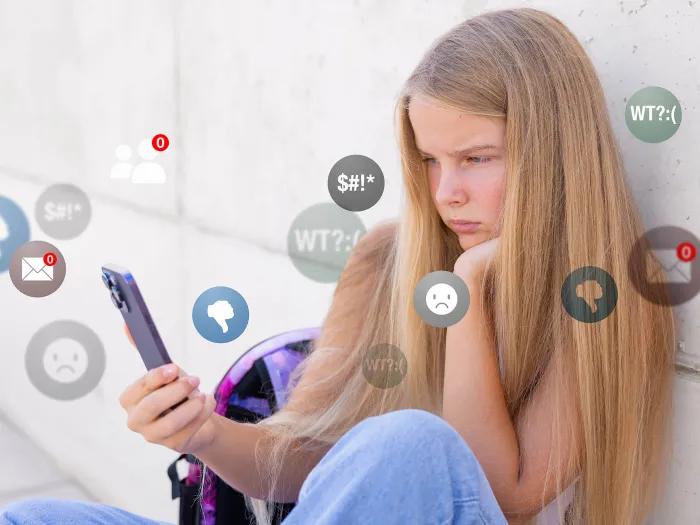
The Power of Mattering
How connection, purpose and belonging help communities thrive
8:00 AM
What does it take to create a culture where people can truly thrive? In this episode, Dr. Elizabeth Harry welcomes Dr. Robert Ernst, Chief Health Officer and Associate Vice President for Health and Wellness at the University of Michigan, about building well-being into systems, policies and everyday experiences. They explore purpose-driven leadership, belonging, mental health and why helping people feel they matter can strengthen entire communities.
Guests:
Transcript
Dr. Elizabeth Harry:
Hello, and welcome to Well-Being at Michigan Medicine podcast. I'm your host, Dr. Liz Harry, and today we're honored to have Dr. Robert Ernst with us. Dr. Ernst serves as the Chief Health Officer and Associate Vice President for Health and Wellness at the University of Michigan. He's a trusted advisor to university leadership, and a driving force behind UM's commitment to embedding health and wellness across the institution, a vision inspired by the Okanagan Charter and realized through dedicated service, system level change, and community collaboration. From stewarding public health through crisis to championing innovative support for mental and physical health, Dr. Ernst's work is a model for health promotion and higher education.
Today, we will explore his career, his vision for a thriving campus, and the purposeful leadership required for a brighter, healthier future. Dr. Ernst, thank you so much for joining us.
Dr. Robert Ernst:
Thank you, Liz. It's a real pleasure.
Dr. Elizabeth Harry:
So, if we think about a university where health and wellbeing are woven into every classroom, every policy, and every event, what would that look like?
Dr. Robert Ernst:
Well, it's a whole, I think, cultural change and it's, I think, a real opportunity to engage non-traditional partners to talk about something that most people care about. And even at a big place like the University of Michigan, where we're involved in all kinds of different kinds of work here, I think health and wellness is a unifying purpose for folks, whether it's the people we serve or the people we work with. I think we really care about the wellbeing of the community here.
To answer your question, what would it look like if the whole ecosystem promoted health and wellbeing? I think we would just think about the work a little bit differently. We wouldn't want to jeopardize the work itself in any way, and this we can talk about in some ways how that comes up, especially on campus where the academic rigor is something that people are really understandably proud of and don't want to sacrifice that. But I think there's a way to consider wellbeing in the way we do our work, and consider that in the ways we construct our systems and policies.
Dr. Elizabeth Harry:
It's such an interesting point that you bring up around this question of, are they mutually exclusive? Is excellent performance mutually exclusive with wellbeing? Or as a lot of the data, as you know, says, are they actually mutually reinforcing, and that people that are thriving tend to be doing better?
Dr. Robert Ernst:
That's how I subscribe to it, right?
Dr. Elizabeth Harry:
Yeah, me too. So I'm curious, was there a personal or a professional turning point that shaped your passion for health and wellness, or how did you get into this field?
Dr. Robert Ernst:
Yeah, I think it wasn't the original plan. I started my career here at the university as a very busy clinician educator. In the true sense of what a general internist once was, it was both caring for complex and common problems, both in the clinic as well the hospital. I was very busy and content, doing a lot of clinical work and a lot of good work. And at the same time, having a lot of opportunities to teach, and I thought that was perhaps going to be a long-term plan.
In 2003, I made a decision to shift to take over as the medical director of the campus health service. That was a lot of both personal and professional reasons for doing that at that time. And it was a major pivot. I mean, my clinical practice at the hospital was really complex care. A lot of hospitalized patients and even the outpatient work was connected to that. So, to shift to the campus health required me to do a lot of re-imagining what my impact could be. Of course, I was in an administrative role, but I had to think about the clinical work and make sure that it was important, impactful. And really was maybe a bit surprised by the level of complexities, especially around the issue of student mental health. And I think that was probably the change that really got me going and trying to think about what we could do to try and move the needle on student mental health.
I also think that when you think about students, and most students, if you ask them, they will say that they think their health is very good or excellent, and they maybe focus just on their physical health when they answer that question. But that same population, if you ask them if they think if they're thriving, about a third will say yes. So there's a big disconnect to how students may rate their overall health, and then their overall wellbeing. So I think trying to address that with both addressing drivers of distress, but also thinking about preventive strategies. So I think that's when you think about the population on campus, student mental health and I think the opportunity to really lean into preventive health, was probably the big change.
Dr. Elizabeth Harry:
And I hear you saying a couple of things in that too and leaning back to that original sort of vision of, what could it look like if it was infused everywhere? I hear you saying that it's not only not being in a state of disease, but actually really thriving and making sure that we're doing the preventative health measures. And we're also thinking about, what does it take to take people to the next level where they're thriving as they learn and as they investigate this next career, part of their educational chapter? And so, as you're thinking about this in this really intentional way and you're thinking about how to embed wellbeing throughout our university's culture, what does that really mean in practice?
Dr. Robert Ernst:
Well, I think I took maybe at first a population health perspective, and that helps me take a step back first and say, actually we had a lot of work to do on campus to even just get organized on the important downstream clinical resources that are available to the campus. And that's important part of the continuum of care that you create. People look to, where should I go if I need help? Right? So I think bolstering those resources was a good first place to start.
And I think trying to inspire the team there that this was really meaningful work, was another part of the job. And I mean, just when I think about population health, it's first understand, who's your population you care about? Rigorously try to understand what their needs are, and then really configure systems to best meet those needs. And then the fourth component is to really make sure that those systems that you create are systems that people want to work in and offer the people in the system rewarding professional experience. So, that's just my construct for population health.
And when I was thinking about that with the campus back in those early days, it really was important to think about our mission different from our vision. I remember doing this work. I was reflecting on it with Mary Jo Desprez, a really great long-term colleague of mine, just retired last month and I said this at her retirement celebration, that I remember being in the room when we did a leadership retreat, this is probably 20 years ago. And we thought about our vision and the vision we wrote 20 some years ago was a thriving campus community, period. And then we could work towards that aspirational goal. That was way before the Okanagan Charter and some of the other sort of things that have helped define the work going forward. But our mission then was to live into that.
And from a clinical standpoint on the downstream clinical resources, we really focused on the nuts and bolts. We leaned in on the needs of the campus community, defined what we thought was the core work. And the good news is that we know a lot about the needs of students. A lot of it is episodic care. If I asked you today, "What do you think of the top 10 things they see at the health service?" You would probably be right, and we don't minimize that. We know that easy access for the episodic care needs of students is really important to keep them on track academically. So, we emphasize the importance of easy ways to access clinical care. And you know that's difficult in ambulatory medicine right now. Emphasizing, what are the main categories? We talked about preventive health issues. We talked about mental health. Some of these infectious diseases that we see very commonly. Also, musculoskeletal and sports injuries, and then gynecology and sexual health. And just define those five pillars as important content areas. You can't be a campus health provider without having expertise in those five content areas. I believe that.
So, we've had a lot of work in defining what was the clinical need downstream. And at the same time, we knew our campus and every campus when it came to mental health was struggling because the numbers kept saying that this appeared to be getting worse and worse, no matter how we were bolstering the number of clinical counselors available and things like that. So, the contemporary approach has been to also work upstream, identifying what are some of those drivers of distress in the community? And then work across silos to try and address the systems and the policies that are leading to the distress so that we can turn down the temperature while we're creating integrated systems of care downstream.
Dr. Elizabeth Harry:
And so, I mean, it's really complex, right? Because it's setting up the infrastructure. It's making sure that you can be responsive and responding to things as they're coming to you, but then also proactive and trying to anticipate what then are going to create these sort of further needs. And so I'm curious, I mean, it sounds like you all have done a ton of work in both building this responsive infrastructure and also building this proactive infrastructure. Can you share a story or a time of one of your favorite campus-wide initiatives that you all have rolled out?
Dr. Robert Ernst:
Well, it's for me about building the partnerships, because it's the kind of work if you're going to do upstream work, you've got to engage people who are non-traditional partners, because while it's true that students come to college and experience homesickness and relationship issues and things like that, the fact is, some of the real drivers of anxiety and worry and depression in our students is finding friends, belonging, dealing with academic rigor, dealing with setbacks, and maybe not having the same kind of resilience that previous generations have had, or worrying about perfectionism and needing to be the best at everything and involved in everything. The future weighs on them. So, to try and engage academic affairs colleagues or our folks in academic counseling and things like, that is not a usual kind of partnerships.
When I talk about what was an experience where we had to really work on these kinds of issues that everyone cares about but are really complicated and complex, and it was, I have to think back to COVID. Right? So I got, for a lot of reasons, put in charge of the university's COVID response. I think because I was an internist, the folks felt like we're trained to make really hard decisions with incomplete information. So when we are up against a novel virus, it was a no win situation, we had to understand that we were going to have to figure this out as we went along. And what we realized is that it was so polarizing how people were responding to that, that also made it really challenging.
And I think what helped getting us through that, what helped get me through that from a leadership standpoint, was to be really clear upfront what was most important. I believe that the University of Michigan is just a really good place and does really, really important work. And again, like we did for campus health and decided what are the core areas of work on campus health? At a higher level, I believe the university, and I did this work with executive leadership at the time to say was, doing our world-class education and our research enterprise and our clinical care and our service to the community, those were the most important things. And if we could keep our eye on continuity of operations on those areas that we thought were the core fundamental reasons for why we're in business, then we could sail through a lot of the noise around how many tests that we needed to do or even how many cases we had, versus somebody else's cases and things like that.
So, just focusing on the core purpose of how we're functioning as a university was the guiding principle. And I think that was really impactful for me to keep your eye on the ball of what you're really trying to do here and not get distracted by some secondary things, because they're out there all the time. We see that in clinical practice. We get so focused on our schedule and all this stuff, as opposed to, what gives us energy, what are we really trying to accomplish? And I think that was an example of how the COVID story put the purpose upfront and then brought people together from across the campus in service to that shared common purpose.
Dr. Elizabeth Harry:
In some ways, I think it was a very hard time, but I think in some ways it was a special time across many healthcare campuses because of the way it did unify people around a purpose and really, and clarity of purpose and singular purpose. For the first time I think in a long time, a lot of competing priorities seem to fall away. And to your point, it's very easy in wellbeing, you can make an argument for wellbeing being applicable to almost anything. And so I'm curious, and you've really named a lot of really good examples of how you keep focus and you have clarity of, these are the things we're attending to and therefore, these are the things we wouldn't be attending to because we're focusing on these things. But because it is such a broad topic and having responsibility for it at the campus level, at this huge level, how do you measure it? How do you make sure that wellbeing is impacting all members of such a large community, when it might mean different things to different people? And to your point, have all these different layers to it?
Dr. Robert Ernst:
Well, it's a couple of parts to that. I will say that while I strongly agree, we've said wellbeing is something that we all care about. I do worry that some may come in and think of it as being discretionary, and that becomes difficult in a campus where there's a lot of turnover too. You find your partners or you get buy-in from a leader, and then if things change, you've got to continually raise the sort of A, provide the context and talk about the structure and then here's the outcomes we're looking for. I'll answer the question about, how do you know what we're doing in the context of how we're approaching the system-wide approach to wellbeing on campus?
Actually, it was in the midst of COVID, it was at the height of the pandemic, in partnership with the Vice President of Student Life and the Provost, we charged a committee that was campus-wide, designed to establish innovations around student mental health. It's got a real long name, but it's basically been called the Student Mental Health Committee. It was designed to basically say, the issue of student wellbeing has already been getting worse and worse as we've been adding more and more counselors, and it's likely going to be accelerated by the pandemic in many ways, whether that's social isolation or disruption of your everything. Lets, while we're dealing with the pandemic, not take our eye off the ball about this other priority that we care about, and let's do an assessment of current state. Let's look out at best practices and make recommendations. So, it's out of that committee established in a formal adoption of the Okanagan Charter, which is basically, aspire to be a health promoting university. You embed health and wellbeing in your systems and policies, consider health and wellbeing as you organize your work.
And we created the Wellbeing Collective at the university. It's not a super attractive name. It sounds like a process, not a thing, but it's the real thing, we call it the university's Wellbeing Collective. And the way we did that was through an established framework called Collective Impact. And again, that sounds jargon-y, but it has really worked for us because there are five core elements to collective impact, and it is the answer to your question. You start with a common agenda. So, it gets buy-in from the various stakeholder groups to get folks to agree that the wellbeing in this case of our community matters, it's important, and we're going to consider wellbeing as we organize ourselves around systems and policies.
The second is to create a backbone structure, and that's where I think a lot of big ideas flounder a little bit when you bring people together ad hoc instead of build something for continuity and perpetuity. And that's what the Wellbeing Collective really is, with some really relatively modest base funding needs for people and structure. And that's our advisory committee and our other coordinating committees and our frameworks for how we get input from various stakeholder groups, whether it's faculty or staff or students.
And then that's the cadence of how we get those stakeholders together and identify the third element of collective impact, which are mutually reinforcing activities. And then you can set up task groups out of this structure to say, okay, what is technology issues that are impacting wellbeing, or what are academic policy issues that we could consider? And we've had some real wins that have come out of these that have said, wouldn't it make sense to have a uniform-ish drop deadline when doing scheduling, or shouldn't we push back the start of the winter semester another week so that people get a chance to recharge before they come back to campus, and things like that.
The last two elements are maybe the two hardest ones, but are maybe the two most important. And one is, constant communication. You just need to continually let people know that what's happening, reinforce those principles for why we're doing this, what it means, what has actually happened. To then get to the last is, some shared measures, which are really difficult when you're talking about sometimes squishy things like resilience and thriving, or what it means to just have vitality instead of just the negative parts of how much depression and anxiety is amongst our community. But we're working on those things and that's how we've organized ourselves around this issue of creating an ecosystem that promotes health and wellbeing in the context of a lot of change and a lot of external pressures that make it understandably important for us to defend it, because a lot of people have needs for funding and things like that. And I constantly worry about people agreeing, yes, important, but yeah, as in maybe it's not the most important thing.
Dr. Elizabeth Harry:
Yeah. I mean, you hit on that. First off, I love the structure and the way it builds on itself. And to your measurement point, I think one of the challenges is also that we don't have a control. Right? So as the number of people that are having depression and anxiety is rising, there's no way to know what that would've looked like had you not implemented all of these things. Right? And so that always makes it really challenging, I think, in this kind of work. But I want to hit on that first point that you made, because I think-
Dr. Robert Ernst:
Can I just, before... Hold that thought.
Dr. Elizabeth Harry:
Oh, yes, yes.
Dr. Robert Ernst:
It is the whole nature of public health, right?
Dr. Elizabeth Harry:
Yes, right.
Dr. Robert Ernst:
I love the analogy of, public health is being like your invisible shield. When it's working great, you don't notice it.
Dr. Elizabeth Harry:
Right.
Dr. Robert Ernst:
Right? It's only when you really need one-
Dr. Elizabeth Harry:
That's right.
Dr. Robert Ernst:
... that people remember. That would be great if we had something like... So, it is the whole notion of public health.
Dr. Elizabeth Harry:
Yes, yeah, no, that's right. And so the measurement gets sticky, I agree with you there. And I think we can learn a lot from public health and I think it's a good model in thinking about this. But that first point that you made about the agreement, the agreement that this is important and in a substantive way that this is important. What would you say to someone who said, "Yeah, it's nice to have, but"? What would you say to that?
Dr. Robert Ernst:
Well, I think it gets to a couple things. One, it's actually the only thing you have to do with adoption of the Okanagan Charter is to get the executive leadership to sign a one-pager to say, "We agree." And that feels almost performative, and yet we take it seriously. We have an executive leadership signature on a document that says, "Here's our commitment to aspire to be a health promoting university, and we are going to try and live into that commitment through this Wellbeing Collective."
I think the other part about how to make it compelling to people is to really remind folks that we have a holistic model of wellbeing. We recognize that people are complicated and that there's different dimensions to our wellbeing, and not everybody wants to enter systems to address their wellbeing through the same door. Right? So I think creating this more holistic approach is a way to be welcoming to just about everybody in the community. Right?
And that approach is one that resonates also with other big kinds of work that I think are important for the university, like our sustainability work. Right? I think this interconnectedness is, when I say holistic, that can be applied to a person, can be multiple dimensions. But a holistic approach to wellbeing in my mind recognizes interconnectedness of people within the system and to other things that we're doing. And I think wellbeing is intrinsically connected to sustainability work, I believe. And the way we care about the planet and the place is very adjacent to how we care about the people who are working in the place and the people who are coming here for education or service. So, that interconnectedness of these big initiatives is an intrinsically important part of health and wellness work on campus, I believe.
Also, the campus community is bigger than the students. And I, at this stage of my career, don't identify as a student health person. I call myself a campus health person to address this exact issue of interconnectedness of the various subpopulations that are here. And I tell people, "Even if you're only caring about the students, you should want a thriving academic community," because just you said it yourself a few minutes ago, people are, when they're at their best, when they're feeling at their best, you can expect more out of them, and that's contagious, right? So I think that a holistic approach to wellbeing needs to address the needs of all the subpopulations as well.
We have found, and then we're actually digging into this, it's a resource to all of us now, is that one of the biggest drivers of distress in our faculty has been the fact that over the last 10 years or so, they're finding that they're engaging students in distress and that's stressing them out. So we're trying, one of our sub teams in the Wellbeing Collective was a diverse group of stakeholders who got together and said, "How can we build faculty capacity to help manage and to help students connect with resources and to help them navigate some of these stressors?" And building faculty capacity has led for the university to develop an online course now that's available to all faculty that's modular based. It's got some scenarios that come up to help faculty feel more comfortable engaging with students who might be in near crisis, kind of thing. So, and that's to help students, yes, but it was actually developed because we heard that one of the biggest stressors for faculty was dealing with stressed out students. So, that's an interconnected ecosystem.
Dr. Elizabeth Harry:
Yeah. I mean, we also have data in the physician training environment that if we have physician faculty coach trainees, not only does the trainee burnout reduce, but the coaches' burnout reduces because we came to academics because we care about learners. And so, I can see how that would be very distressing. And I can also see how an intervention to equip folks would be helpful not only to reduce the initial distress, but actually might be empowering because they feel that they're able to make a real difference.
Dr. Robert Ernst:
It's an interconnected ecosystem, just like what I was talking about before.
Dr. Elizabeth Harry:
Yeah, yeah, absolutely. And speaking of, so you have a lot of different departments. You have university health and counseling and Wolverine Wellness and Michigan Recreation. How do you think about all of these together? How do you break down silos? Can you think of an example where there was an ability to connect all of these that maybe led to a breakthrough in student or community health?
Dr. Robert Ernst:
Yeah. I guess I would say that one of the... I'm constantly reading stuff. I'm always trying to... yeah, we did a thing over the holidays, yeah, so a little tangent, where around the table we were asking each person to say, "Take one word that you would say to describe yourself," kind of thing. And I said, "I would say, evolving for myself." I'm always trying to work on stuff and I'm very curious about myself, as well as the work. And one of the words that's come up recently for me is mattering. It's close to what it means to belonging, and I think it's so important for people to feel like they belong in places, but I think that the difference around mattering is that there's being valued as well and making valuable contributions. So I'm really curious about this term, mattering.
So, one of the latest initiatives to try and integrate some of the various service lines and some of it also crossing over to certain other campus partners has been something we're playing around with, like a mattering movement. And some of the components of that we're starting to launch already has been something that we're doing that's called a wellness check-in. What it is, it's a partnership between our campus health resources and health promotion with some of the foundational courses. So these are the very large, usually the first year students in the intro to fill in the blank. These can be hundreds and hundreds of students. And what we have found is that if not me or one of my directors, but the actual instructor at several points of the semester sends out an email to all the students in the course and invites them, basically asks them, A, how they're doing and if there's anything about the course that could be improved.
But the third is to say, asking them if they would want us to arrange a wellness coach with them. So, there's a really hard thing to get our teams willing to do, because of course we're dealing with hundreds and hundreds of students, several thousand if we added up the different classes, to get the teams to say, "Well, we can't. We don't have the staffing to do wellness coaching for all those students." And we didn't know what the uptake would be. And what we found was 5% of students in each class said, "Yes, that would be great. Please set me up with a wellness coach." So then the instructor worked with our wellness coaching cohort to arrange consultation there in a one-on-one motivational interviewing session.
And then at the end of the semester, well, what we actually found, let me pull back, is the students that said yes to that question were overrepresented as first generation college students and underrepresented minorities. At the end of the semester, what we found was that nearly 100% of the class improved in their report on how much that the university cared about them.
Dr. Elizabeth Harry:
Wow.
Dr. Robert Ernst:
Now, think about that. That was like, we had to do actually an intervention on 5% to get 100% of the population feeling better about their connection to the university. And we could do that through integrating our wellness coaching cohort with academic affairs partners. And in some cases, wellness coaching is multidimensional but oftentimes will turn into some issues around alcohol and other drugs or may come out of this some other kind of non-clinical interventions.
So, this is the next step that we're going to do with the mattering is to create a more established social prescribing hub that's going to integrate with this, so that we have already a pretty mature ArtsRx program, and within some parts of the university, there's a NatureRx program, and within our other campus clinical or our campus health resources is recreation stuff. And we think that if we work individually with students, we can identify intrinsically what might be positive accelerators for them and connect them to not just experiences, whether it's a recreation experience or a service experience or a nature experience, but we're hopeful to create cohorts, that we connect them with cohorts who have like experiences to build a sense of belonging and tie that to this proactive approach. Yeah, very much so. So, that's an example of how we're trying to integrate some of these various activities that historically I think have functioned more independently, and are trying to tie them together.
Dr. Elizabeth Harry:
You're hitting on a lot of the pillars of lifestyle medicine where you've got movement, which we know really has really strong data for depression and anxiety, and then stress management within the NatureRX that you mentioned, and then building the community, and that's really impressive.
So as you're thinking about this whole portfolio and you're thinking about the population and as the population is evolving and you're thinking about the stressors both external to the university and internal intrinsic to higher ed, intrinsic to being a student in higher ed or a faculty in higher ed or staff, what does the future look like? And what trends are you excited about that you think might be helpful or maybe wary about?
Dr. Robert Ernst:
Well, I think it follows with this sort of evolving concept. I think a lot about technology, and I think technology can be a real stressor for many people, but I think for younger generations they have an advantage of us that comes with the intrinsic kinds of improvements and efficiency and time management and things like that. But, so I think we can't talk about the future without understanding impact of technology.
And I think that there could be a lot of really strong positives associated with technology, but I have to wonder how we're going to be prepared for perhaps some of the consequences of easier distractibility or social pressures associated with social media. A group of our team is really leaning in on the issues of online gaming and online betting has become more and more prevalent, and I think we have to be prepared to help first understand what some of these issues are and what could be some positive things associated with technology, but what might be up against some of the potential consequences with technology. I think those would be some things we're spending a lot of time talking about.
I am really super curious about this notion of mattering, and I think the more we can engage with our partners, and on campus this is the academic affairs partners is really important, because I think a lot about that. I'm a parent of a university student also and I appreciate the fact that the university offers a lot of opportunities for my kids. But I also really am grateful that the university is as invested in the non or co-curricular experience and the health and wellbeing, and to really be intentional about the humanistic development of people who are here at the same time that we invest in their academic development or their professional development, I think is something that's really important for us to stay very clear about if we care about it. So, that's where I think I see a lot of hope and opportunity.
Dr. Elizabeth Harry:
Yeah. I'm also hopeful and optimistic. As you talk about this mattering piece, one of the things that was coming to mind is how often people are using AI because it can be so supportive and some use the word sycophantic, but it can really be a supportive sort of partner in thinking through things. And yet, we have cases of people being led astray by AI, particularly in the mental health space, and so. I'm curious how you're thinking specifically about that. And what is our responsibility there, particularly when we have these folks that are, they're adults and they're here but they're very impressionable and they're still developing?
Dr. Robert Ernst:
That's what I was talking about with just wanting to understand, right? I think it starts with some curiosity about what would be the positives and how do we say anything that's new is just bad, right? No, there's got to be a way to harness some of the benefits associated with emerging technologies, whether it's AI or other important developments. But still, understand what some of these risks are, and I think it gets back to the core elements of health promotion. Right? We've got to first understand, what are the core actions of health promotion? One of them is to build supportive environments, the other is to get people to focus on their own individual skill building. And I think you've helped me actually over time remind ourselves that it's not all about individual skill building, it's also about building these systems and frameworks that will promote health and I think not just maximize benefit, but also minimize harm. Right?
Dr. Elizabeth Harry:
Yeah. So really complex time, complex topic. You are evolving and curious and continuing to think about this. So, what do you do? I mean, leading through crisis and change is demanding. How do you keep yourself grounded, well, energized? What are your practices?
Dr. Robert Ernst:
Yeah, I care a lot about my own personal health and wellness. A couple things. One, I've got a really supportive and terrific family that I love spending time with my family and just being with family and friends is energizing for me. I know exercise for many can be a real positive mood lifter and not everybody, but for me it is. I could spend a lot of time exercising in a lot of different ways. I've been a lifelong runner and swimmer and I try to do that as much as I can. I also think that one of the reasons I've been here so long is I just love the state of Michigan and all the outdoors that has to offer. You mentioned lifestyle medicine, oftentimes they talk about green spaces there. In Michigan, we also have blue spaces. And for me, I'm just in love with Lake Michigan and love to be near Lake Michigan, and the outdoors is a great place to be year round.
Dr. Elizabeth Harry:
Well, thank you so much. And if every listener asks themselves one question about their role in promoting wellbeing this week, what do you think that question should be?
Dr. Robert Ernst:
Yeah, I would bring it back to how I started, I guess, is that first, be really clear about purpose-driven behavior. Right? And if you start with, what's your purpose? And then really intentionally connect your actions to that purpose, right? And that's not all the time, I think we all regress to normal at some point, but I think to really impactful and rewarding experiences in my mind are those that are actions connected to meaningful purpose. It's helpful to remind yourself about what you're trying to do, and then connect that to your actions. So if you're living into that, I think people will feel really energized. And that's hard to ask as a single question, but I would bring it back to that. That's a great framework, whether for leaders or for parents or for partners or just people.
Dr. Elizabeth Harry:
Yeah. And I love it phrased simply, what are we trying to do here? What are we really trying to do? That's amazing.
Well, Dr. Ernst, thank you so much for sharing your experiences, vision, and leadership with us today. Your dedication to fostering a culture of wellbeing where health is seen as fundamental, purposeful, and integrated into every aspect of campus life is truly inspiring. And we learned that transforming wellbeing isn't just a matter of individual health, but of building systems and communities where everyone can feel connected and safe and empowered to thrive.
We hope our listeners feel encouraged to take part in promoting wellbeing, whether through your daily actions, supporting one another, reaching out if you're worried about someone, or advocating for meaningful change. And so, thank you for tuning in to the Wellbeing at Michigan Medicine podcast.
Well-Being at Michigan Medicine
Listen to more Well-Being at Michigan Medicine podcasts - a part of the Michigan Medicine Podcast Network.
Featured News & Stories

Digital alerts support timely treatment decisions of critically ill cardiac patients
Studying Period Pain

Foundation gift inspires additional gifts to strengthen youth mental health care

A tragedy and a trial shine a spotlight on new moms’ mental health

Beyond the White Coat: The Med Student Tradition Behind Michigan’s Smoker