Environmental sustainability and its effects on well-being
A conversation with Chip Amoe, U-M Health's Chief Sustainability Officer
Dr. Elizabeth Harry welcomes Chip Amoe, U-M Health’s Chief Sustainability Officer, who shares how his Michigan roots and passion for revitalizing communities inspired his career in health care sustainability.
He highlights the vital link between climate change and health, emphasizing the need for hospitals to lead sustainability efforts.
Through thoughtful building design, like the LEED-Platinum certified D. Dan and Betty Kahn Health Care Pavilion, and a focus on reducing waste, emissions, and harmful chemicals, U-M Health is improving well-being for patients, staff, and communities. Amoe encourages individuals to be ambassadors for sustainable practices both at work and home.
Resources
- U-M Health Environmental Sustainability & Carbon Neutrality
- D. Dan and Betty Kahn Health Care Pavilion
Transcript
Dr. Elizabeth Harry:
Welcome to the Well-Being at Michigan Medicine podcast. I'm Dr. Elizabeth Harry, and today I'm delighted to have Chip Amoe with us. Chip is a Sustainability Officer for University of Michigan Health in Ann Arbor, Michigan. With a wealth of experience in sustainability and health policy roles, Chip has served as the Director of Sustainability for both Michigan State University and Henry Ford Health. Additionally, he brings over 15 years of experience in government affairs and health policy from his time with the American Society of Anesthesiologists and American Medical Association in Washington, DC. Raised in Michigan, he holds degrees from the University of Rhode Island and University of Pittsburgh.
Michigan Medicine's sustainability strategy is centered around five main goals. Reducing greenhouse gas emissions, eliminating chemicals of concern, minimizing waste, sourcing healthy and sustainable food, and building healthy, resilient communities. By prioritizing sustainability, we not only ensure the long-term health of our planet, but also the mental, emotional and physical well-being of individuals at Michigan Medicine and beyond. So, welcome Chip, thank you so much for joining us today.
Chip Amoe:
Thank you. I'm glad to be here.
Dr. Elizabeth Harry:
Could you tell us a little more about your background and what inspired you in your journey into the realm of sustainability, and specifically here at University of Michigan?
Chip Amoe:
Sure. So as you mentioned, I grew up in Michigan, so I've been in specifically Northern Michigan and I grew up in Alpena, where we were constantly playing in the woods, didn't have iPads or anything, we were always out playing in the creeks and whatnot. And so I was always kind of connected to nature and really inspired, just by being able to have fish and go play in the woods and see the nature.
And then I moved from Alpena to Grosse Pointe when I was in seventh grade, and I remember my grandfather taking me through the city of Detroit because he and my grandmother grew up in Detroit, and they were taking me on this great trip through Detroit and waxing poetically about how great this was, and this is where they had their first date. But it ended up, as I'm looking around, it was all boarded up with graffiti and it somehow hurt my heart a lot that they were looking at this city that was, with such love and admiration, and yet it was a mess.
So somewhere there, I got inspired to try to want to come back and help with the revitalization of Detroit and Michigan. And when I did, I was fortunate that I landed at Henry Ford Health, where I thought it was a great opportunity to use our healthcare mission to help improve the city. And if we were going to rebuild the city, let's do it with an eye towards health and well-being. A lot of the work that I was doing was focused on, how do we take and use our anchor status in much the same way we're doing here at the U of M Health, to use our anchor status to help improve the health of the community that we serve, beyond just the patients that we serve walking through the door? And so I had an opportunity to join onto our voluntary green team, and then get a little bit more inspired and eventually asked our senior leaders about developing a new role for the health system, which was to create a new director of sustainability.
And so I was the first director of sustainability there, and I guess I'm the first sustainability officer here at U of M Health, so a few firsts, but it allowed me to get very engaged and learn very quickly about the work that we need to do and making that connection between sustainability and health, and really taking a focus on that because I think hospitals and healthcare in particular have a unique opportunity to make that connection, because that's why we're doing it. We're doing sustainability to improve the health and well-being of the employees, patients, and communities we serve.
Dr. Elizabeth Harry:
Well, it's so amazing to hear the sort of course of your journey, and so you mentioned that you felt like healthcare was a really natural place to be a leader in this area. And I'm curious what you saw that led you to think that and why sustainability is so important in healthcare, not only for how it helps our patients, but also for those who are participating in the delivery of healthcare.
Chip Amoe:
Well, I mean, when you look across the country and you look at the threats that we face as a society, I think climate change is the largest health threat I think we face as a society across the globe. It's contributing to a lot more problems than we even recognize. We're all acutely aware of the catastrophic events like hurricanes and floods and those types of things. But the droughts, the displacement, the deaths that are caused from heat-related illness or exacerbation of conditions from air pollution, it really has a big impact on our health.
The other big piece is, when I first moved back to Michigan from being in Washington DC, I used to walk everywhere in Washington DC. I moved back to Michigan and I found myself in the car driving everywhere. And shortly after I got here, a few months into it, I'm like, I've already gained five pounds just because I'm not moving. And so, we really need to think about health and when we think about health, we think about the social determinants of health. And we know the 20/80 rule, which is 20% of your health is determined by the actual healthcare you get, and the other 80% is based on your environment and life choices and the foods you eat and the decisions you make. But it's up to us is planners and people that are building cities to be thinking about, how do we build the healthy choice into everything that we do? We make it easier for people to walk and connect, and having places, and more beneficial places can often be more impactful on people's health than any program that we can provide within the healthcare industry, so.
Dr. Elizabeth Harry:
It sounds like it's thinking about it very holistically and how we can impact our patient's health and also the health of everybody who's trying to deliver healthcare, by not only thinking about some of the more obvious interventions, but thinking about even the design. How do we design even our buildings and the way that our clinics are laid out? And so I'm curious, as you think about creating this, what is the relationship with building community and connectedness, and how does all of that play into your focus of sustainability?
Chip Amoe:
Sure. Well, as I mentioned, places are more impactful than programs. When I was at Henry Ford, I always use the example, we had a great diabetes prevention program there, and we were excited when we had 300 applicants get involved and help manage their diabetes. But then I said, but look at the Riverwalk on any given Saturday on a nice day and you see the thousands of people that are out there. They're walking, they're getting exercise, they're connecting with one another. That helps with both our physical and our mental well-being. We need to create spaces and places both within the community, as well as in our own facilities where people can connect and interact and not feel as isolated to be able to do that.
And so we know that things like trees and green space and community, open spaces helped connect us, but it also, there was trees in green space also helped mitigate the impacts of flooding, mitigate the impacts of extreme heat events, provide shade, and also have a calming respite. They've actually, there've been studies that show that trees in urban areas can actually reduce gun violence.
Dr. Elizabeth Harry:
Wow.
Chip Amoe:
... and other issues there. So there really is that strong connection between the nature and our own health and well-being and I always say we need nature more than nature needs us. In fact, nature would probably prefer us to go away so it could go on and continue to regenerate and do the things it does.
Dr. Elizabeth Harry:
Yeah, I mean, it's so true. I was telling someone earlier that I've taken to just taking little walks in the arboretum between clinic sessions and it makes just a huge difference. We're so lucky to have a resource like that right next to our main Ann Arbor campus.
I'd love to hear and have the opportunity for you to share with our listeners a little bit about the D. Dan and Betty Kahn Healthcare Pavilion and how this new facility is helping to contribute to carbon neutrality and advance other environmental sustainability goals that we have at Michigan Medicine.
Chip Amoe:
Yeah, this is a great project, we're really excited about opening that up. It will actually be the first LEED Platinum hospital built under new LEED 4.1 standards, which the standards keep evolving each year to get a little tougher and to incorporate more aspects. So, the fact that we're able to get to a platinum level status in that LEED. LEED is just an acronym that talks about the leadership in design within the buildings, and it incorporates various sustainability factors into that design, for those who are not LEED or architecture engineers or folks like that.
But some of the main things that are associated with it is it uses a lot less energy than other buildings. So the facade is built and the envelope is built to be more energy efficient, so heat stays in when it's supposed to and cold stays out when it's supposed to, when we cool, it stays cooler when it's supposed to. But beyond that, we really look at a lot of the health factors that are built into the building, beyond just the reducing energy and water. We have low-flow toilets and faucets, so we can try to minimize the water usage. But there's other intentional design principles built into it, like we have covered bike parking to make it more accessible for folks to be able to ride their bikes and utilize their bikes to get there.
And then a lot of the furniture, furnishings and floorings that we're putting into there are very intentionally designed and selected to reduce the volatile organic compounds, or VOCs. They're made from recycled materials. One of the big areas is we're using rubber flooring, which is made from recycled material. But the nice thing about it is it wears for a long time, it could be recycled when it's hit its useful life, and I said it's made from recycled materials, but the cleaning of that is a lot easier. We don't have to use those harsh chemicals on that, so it doesn't require any waxing or stripping.
So all of those things, when we're in our daily lives, those are things that we need to be thinking about is, the products that we purchase, what are the impacts? What are the long-term impacts of those products that we purchase, and are they exposing us? They might be cheaper, but are they exposing us to chemicals or other issues that we might not want to be exposed to?
Dr. Elizabeth Harry:
I mean, there's so many things that you could just walk by in your day-to-day and not even realize how much thought went into really trying to choose the materials that have the least impact in a negative way and have a positive impact. And it strikes me that this is a topic that maybe of concern to a lot of people, including our healthcare workers, as well as our patients. And if they wanted to be engaged in efforts to try to help, what would be some tips or advice that you would give them?
Chip Amoe:
Yeah, so I think you mentioned the five main pillars that we're focusing on and the goals for around our health system, and those were intentional for a number of reasons. A, they aligned with a lot of the commitments that we've made in some of the leading organizations like Practice Green Health that we're members of and that we apply for an application or an award application every year. So they're aligned with that, but they're also intentionally aligned to help improve the health of the employees, patients, and the communities that we serve. At the end of the day, sustainability is not just about protecting the polar bears or protecting the trees, it's really about protecting the health of the humans. And so what we're hoping to do through those goals is to say, "These are the areas that we should be focusing on, and here's the impact that they have on your health."
So with those five pillars, individuals within our organization can now look at those and say, "What am I doing within my department, within my daily operations that are helping us reduce greenhouse gas emissions? Eliminate chemicals of concern from the products that we use? How can I reduce waste? And then when I go eat the food in the cafeteria or we're serving food to the patients, how can we create and make healthier. More sustainable choices for our own health and well-being as others?" And then within our own communities, part of it is to model the behavior so that employees can take the things that we're learning and we're doing back to their own homes and be ambassadors and champions, and explain why we need to be more sustainable in our daily lives and in our communities.
Dr. Elizabeth Harry:
I love that idea of being ambassadors and taking the information home because it spreads it, right throughout their community and throughout their families. And the reason that I really was so taken by the work that you were doing is that it seems to me that the word sustainability can mean so many things. And this idea of, how do we create an environment that is sustainable for the people both delivering and receiving healthcare in that space, can mean so many different things. And so when you think about the well-being of our healthcare workers, the well-being of our teams that are delivering healthcare, and the idea of their sustainability in their roles, what are some of the aspects that you think about?
Chip Amoe:
Well, I always take what we call the triple bottom line approach to sustainability, which is people, planet, and prosperity. And so from a people standpoint, it's really about the health of the people. We're doing sustainability because it's protecting the health and well-being of the people that we serve, whether it's our employees, whether it's our patients, or again, our communities. So we really need to focus on, what are we doing to improve their health, right? And then the planet, as I mentioned, it's good to protect the planet because we need the planet to protect us. And that's why we care about planting trees and protecting green space and making sure that our waterways are free of pollution and plastics, etc, etc. So we need to do that to protect the health of patients.
But then there's the prosperity or profit in some cases, depending on what organization you're in. And I would say if it's not economically sustainable, it's not going to be sustainable. But a lot of the work that we're doing is really involving reducing costs and looking at the way we do things and saying, "Do we need to do this that way? Can we consolidate? Do we need to waste all of this product?" We have conversations all the time, and I know I'm sure you understand because you, physician and we're in medical school. We open stuff all the time without even thinking about it, and then it goes, and then it gets thrown away, or we have certain procedures or things that we do without even thinking about the implications for it, but just because we got to have it just in case. So this allows us to kind of think about, do we really need that?
When I talk about reducing waste as an organization, it's not just about reducing waste that we're sending into the landfill and putting in the trash. It's about reducing wasted time. It's about reducing wasted energy, physical, as well as actual energy that we're purchasing off the grid. Are we wasting resources of the organization, meaning financial resources of the institution? So, how can we find ways to address all of those at once?
Dr. Elizabeth Harry:
Well, I love that because it overlaps with so many of the principles around well-being and things that we're thinking around with operational inefficiency and how can we reduce some of the administrative burden that makes it harder for our healthcare teams to deliver care, that we know are large drivers of burnout and make it hard for people to stay in healthcare if they're burnt out. It strikes me that you and your work interfaces with so many spaces and we really have to collaborate with a lot of areas. Can you share an example of an effort where you had an interesting collaboration or a collaboration that you're excited to share around the sustainability work?
Chip Amoe:
Well, we just finished, as I mentioned, we apply every year to our annual Practice Green Health Award application. And it is a very comprehensive application that looks at all of those areas that we mentioned that are part of our goals, and collects data from all over the health system. So just that work in and of itself takes a lot of collaboration across multiple departments, whether it's EVS, food and nutrition, our facilities, our furniture and interiors departments, etc. We collect data around all those different areas, so that's a big one.
But a recent one that I was really excited that stumbled on is we had a PhD nursing student who works here at the health system, and as part of her project for her PhD, she took on the effort, in conjunction with one of our physicians, who's a pulmonary and critical care specialist, to look at tracking the use of metered dose inhalers. Ironically enough, the same inhalers that we use to prevent asthma and to rescue us in the time of an asthmatic event often also contribute to climate change because the propellants within the metered dose inhalers-
Dr. Elizabeth Harry:
Oh, wow.
Chip Amoe:
... actually are strong greenhouse gases that impact the system. So one of the things that they wanted to do was to look at, how are we addressing this? So we've had to work collaboratively both with our pharmacy department, as well as our IT folks to be able to pull the data around all of our inhalers and the prescriptions, the number of prescriptions we've done. And with their work, we were able to calculate the greenhouse gas emissions factors for all of the inhalers that we were able to do.
Dr. Elizabeth Harry:
Wow.
Chip Amoe:
And why is that important? Because now we can look at all of the inhalers that we prescribe and say, "Do we need to be prescribing each of these?" In many cases, we overprescribe rescue inhalers, where we should be using more dry powder or soft mist inhalers that will help prevent those asthma attacks in the first place and could really reduce their dependence on these metered dose inhalers, which is better for the patient but it's also better for the environment as well.
So, it'll be an interesting collaboration once we can kind of get that and compile it and then we could start potentially sharing that data with prescribers to have them make better informed decisions about the care of their patients and their own prescribing. So, it will be a win-win that's going to both help reduce the burden on patients and improve their health, while at the same time, protecting the environment.
Dr. Elizabeth Harry:
What an incredible example, that's a great example. I love hearing about all the examples because they're often in places you'd never think. I know you all also shared a story about some work that had been done with anesthetics and volatile gases and reducing that, and I just think that it's so interesting. Again, these are things that we walk by often in our workday and don't think about the impact.
So as you're looking to the future, thinking about the work that you do, what emerging trends do you see in sustainability and what are you most excited about?
Chip Amoe:
Well, I mean, the climate's only going to get hotter and our weather patterns are going to be more extreme, we're going to start to see it. I mean, even in the short time, well, I've been here, I moved back to Michigan in 2011, and even in that time, I can see a noticeable difference in the weather patterns that we have. We have more extreme wind events that I just didn't see early on when I first moved here, and even before that. Extreme rain events, just when we have bad storms, we see that. So I think we're going to see continued trends of extreme weather and I think eventually we're going to hit a tipping point where I think people are going to say, "Enough is enough." But in the meantime, we have to continue to do the work, but the trends are there.
I think what I'm excited about is the new technology that will allow us to be able to more accurately track and collect the data around this, because I always say you can't move what you can't measure. So the better data that we have around tracking, the easier it will be. But also, the technology that we can use to help manage our buildings and track the energy with our buildings and using smart systems and including the use of AI to be able to adjust set points and adjust... Those things, not so sexy, they're not as sexy as eliminating anesthetic gases or doing big splashy solar things. But the reality is, is that where we're going to see the most bang for our buck is in the energy efficiency and the reductions, and that's where we need to focus a lot more. And I think that some of the new technologies coming out will really help us get there, because the less energy we use on the front end, then the less we have to power through renewable energy. Right?
Dr. Elizabeth Harry:
Yeah.
Chip Amoe:
You don't want to be... It's like putting solar on your own home. You want to cut as much of your energy within your home as you can first and then put on the solar, don't do it the other way around because otherwise you're buying a bigger system than you need.
Dr. Elizabeth Harry:
Well, it sounds like there's a lot of exciting technology coming down the pipeline, and especially with all the construction that we have going on and the new pavilion, there's a lot of opportunity to be very forward-thinking in this.
So I'm curious if you have any final advice or insight for our listeners, especially those that as they're listening, would like to get more involved in integrating sustainability into their work or even their personal lives.
Chip Amoe:
Sure. Well, we do have a new email address now, and you can go on our website and it's [email protected], and you can feel free to contact us if you're interested. We have a lot of grassroots green teams that I know existed even before I got here. I've only been with U of M Health for a year, but a lot of these groups have gotten together and within their own departments. So, be the champion. During your staff meetings speak up and say, "Is anybody working on sustainability?" If not, volunteer. But you can certainly reach out. We're developing, I always say I'm sort of building the airplane while it's flying, is developing the infrastructure, and I know you're new too, building your committees and whatnot. So we're in the process of building more committees and more opportunities for folks to get involved.
And then, but the big thing is to take a look at our website, see the goals that we have, and then see how you can implement some of those initiatives within your own department and bring ideas. And certainly, they can email our department and let us know if they have ideas or would like some help with implementing some of those things.
And I think the last thing I would say is just, we can address this climate issue. We really, I think we have it in our power. And I think if everybody just takes little steps and think about, again, going back to the waste, do we need that? Do we need to do that? Is that a step that we need to do? Do we need to drive or could we walk today? Do we... Just making small decisions of turning lights off and then thinking about how we do things in our daily life, whether it's through cleaning or other means, can make a big difference and add up.
Dr. Elizabeth Harry:
Well, I really appreciate that, and I appreciate you making it really tangible. That there's small things that we can each do that really do add up and make a difference.
Chip Amoe:
Well, I've been really inspired by your work. Healthcare is one of those areas where we continue to add and add and add regulations, and we never take anything away. And so, the connection that I saw between sustainability is that we have opportunities to really reduce the wasted time, the wasted energy that we have, and to do things that are going to help improve people's well-being. And maybe we create more spaces with green space and other ways that we build our facilities to help reduce that burden on people and to give them more of a healing environment.
Dr. Elizabeth Harry:
Thank you so much for sharing your expertise with us, Chip, and thank you to our listeners for joining for another episode of Well-Being at Michigan Medicine podcast. I'm your host, Elizabeth Harry.

Well-Being at Michigan Medicine
Listen to more Well-Being at Michigan Medicine podcasts - a part of the Michigan Medicine Podcast Network.
Featured News & Stories
Drug candidate treats severe fatty liver disease by protecting the gut in animal models

Researchers create new path to target hard-to-drug prostate cancer protein
Doctors in the house: History of medical interns and residents at Michigan Medicine
7 things to know about Medicare’s new GLP-1 coverage
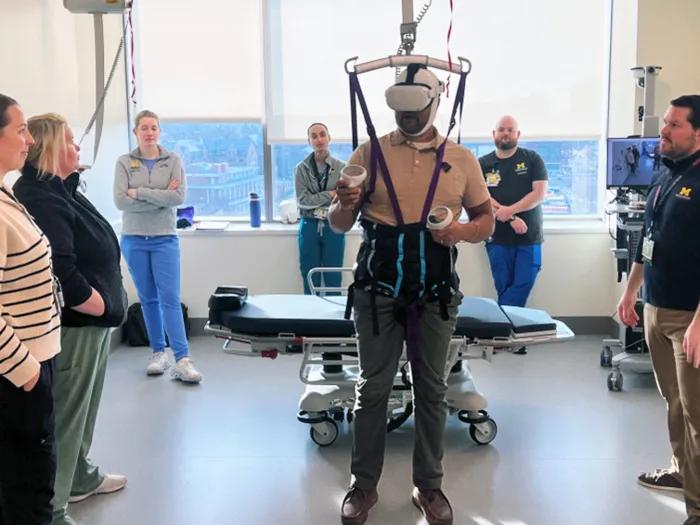
How new care models, within a new building launch, is helping optimize patient care