
Transgender college students report higher rates of sleep, mental health concerns
Study finds transgender college students are 2-3 times more likely to be diagnosed with sleep disorders, depression and anxiety, and have 3-4 times higher likelihood of suicidal behavior.
10:30 AM
Author |
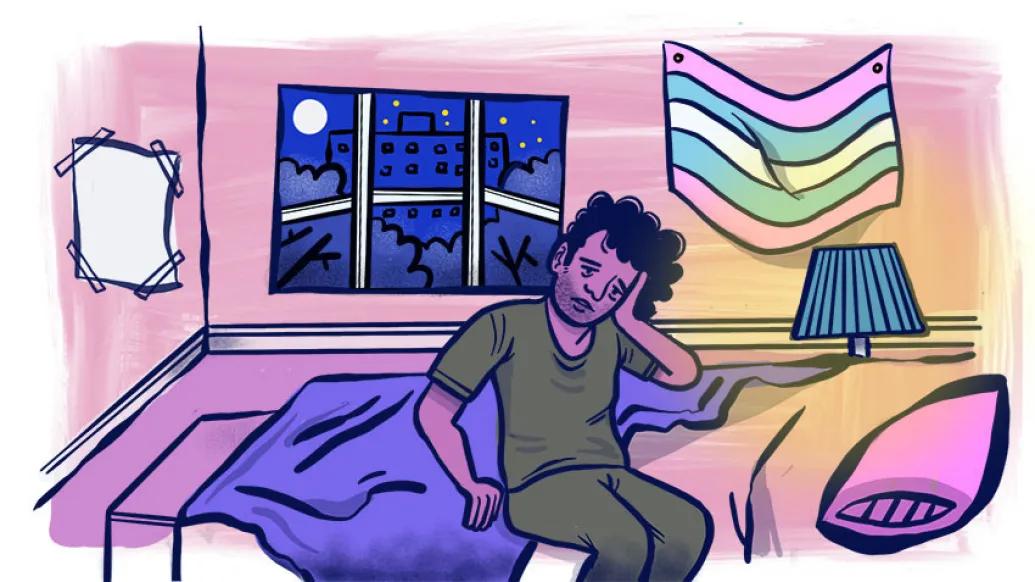
Transgender individuals are more likely to experience discrimination, isolation, and lack of social support. This, along with negative psychosocial challenges, such as being denied access to gender-neutral restrooms, combined with being a college student, and you have what associate professor of neurology, Shelley Hershner M.D., calls "a perfect storm" that can contribute to sleep disorders and other mental health concerns.
Hershner, who directs the University of Michigan Collegiate Sleep Disorders Clinic, studies sleep among college students, and now she and her colleagues are filling a void in research on a transgender individuals' association with sleep and mood disorders. Their 2021 study discovered that transgender college students have significantly higher odds of insomnia diagnosis, sleep and mood disorders, and suicidal behavior, in comparison to their cisgender--having a gender identity that aligns with the sex a person was assigned at birth--peers.
MORE FROM THE LAB: Subscribe to our weekly newsletter
The study was published in Nature and Science of Sleep, where Hershner and fellow authors analyzed 221,549 North American college students' self-reported data from The American College Health Association-National College Health Assessment II survey. This survey collects student data on health, health behaviors and perceptions.
Out of the 221,549 participants, 3,471 students reported identifying as transgender in the U.S., and 717 in Canada. The study showed that in comparison to cisgender students, transgender college students were: 35% more likely to have inadequate sleep; 51% more likely to have a hard time falling asleep; 41% more likely to feel sleepy during the day; and 245% more likely to be diagnosed, or receiving treatment, for a sleep disorder.
Like Podcasts? Add the Michigan Medicine News Break on iTunes or anywhere you listen to podcasts.
Sleep quality can impact mood, academic performance, quality of life, GPA, and school retention, Hershner explained.
"College students are already at significant risk for sleep and mood issues, and when you add additional stress of being transgender, marginalization, discrimination, and exclusion, it worsens their risk of being successful at a vulnerable time in their life," she said.
Researchers also found that the odds of depression and anxiety among transgender students in comparison to cisgender peers were also significant. According to their study, transgender individuals are 295% more likely to have a depression diagnosis and 253% more likely to have an anxiety diagnosis.
Hershner's research also confirmed previous studies that demonstrate that transgender students have higher odds of suicide attempts and suicidal thoughts in comparison to cisgender students. Hershner reported that transgender college students are 345% more likely to consider suicide and 421% more likely to attempt suicide.
For Hershner, the next steps include finding solutions and interventions to improve sleep among transgender college students. Future research is also needed on whether gender-affirming therapy can improve mood and sleep disorders.
Equally as important to more research?—Advocacy.
Hershner wants to use this information and additional resources to advocate for gender inclusive policies on college campuses.
Earlier this year, Michigan Medicine received a full score (100 points out of 100) on the Healthcare Equality Index, a national LGBTQ+ benchmarking tool developed by the Human Rights Campaign that evaluates healthcare systems' practices and policies for LGBTQ+ patients, visitors, and employees.
Hershner praises the rating along with the Advisory Committee for the Advancement of LGBTQ Health at Michigan Medicine, designed to help care and provide support for LGBTQIA+ patients, families and visitors. But her research indicates that more colleges and institutions must act to help support transgender people.
"Students need to be able to use their chosen name; they need to be able to declare their pronouns in health systems to avoid misgendering. There also needs to be gender inclusive bathrooms and gender inclusive housing so that roommates are not chosen simply by legal sex. "Nondiscrimination policies are crucial, and each state is going to have to decide where things go from a legislature standpoint," Hershner said.
See Also: LGBTQ+ Health: A Collaborative of Care
Paper authors include: Hershner, Shelley, M.D., associate professor, Department of Neurology, Sleep Disorders Center, University of Michigan, Ann Arbor, MI; Erica C Jansen, Department of Nutritional Sciences, University of Michigan School of Public Health; Ronald Gavidia, Sleep Disorders Center, Department of Neurology, University of Michigan; Lisa Matlen, Department of Pediatrics, Sleep Disorder Center, University of Michigan; Mary Hoban, American College Health Association, Research Office; and Galit Levi Dunietz, Sleep Disorders Center, Department of Neurology, University of Michigan.
Paper cited: "Associations Between Transgender Identity, Sleep, Mental Health and Suicidality Among a North American Cohort of College Students," Nature and Science of Sleep. DOI: 10.2147/NSS.S286131
Live your healthiest life: Get tips from top experts weekly. Subscribe to the Michigan Health blog newsletter
Headlines from the frontlines: The power of scientific discovery harnessed and delivered to your inbox every week. Subscribe to the Michigan Health Lab blog newsletter

Health Lab
Explore thousands of health news & research stories by visiting the Health Lab homepage for more.
Media Contact

Public Relations
Department of Communication at Michigan Medicine
Stay Informed
Want top health & research news weekly? Sign up for Health Lab’s newsletters today!
Featured News & Stories
Small Pauses, Bigger Impact: Mindfulness in Action

Giving Voice to Lived Experience in Dementia Research

How U-M helped bring depression out of the darkness

What’s changing in Medicaid and what can you do?

Small daily activities may help ease dementia caregivers’ stress

