Study Suggests Exercise After Concussion Improves Recovery
After sustaining a concussion, traditional treatment guidelines recommend strict rest, but a Michigan Medicine physician-researcher is challenging that concept with research that may advise otherwise.
9:04 PM
Author |
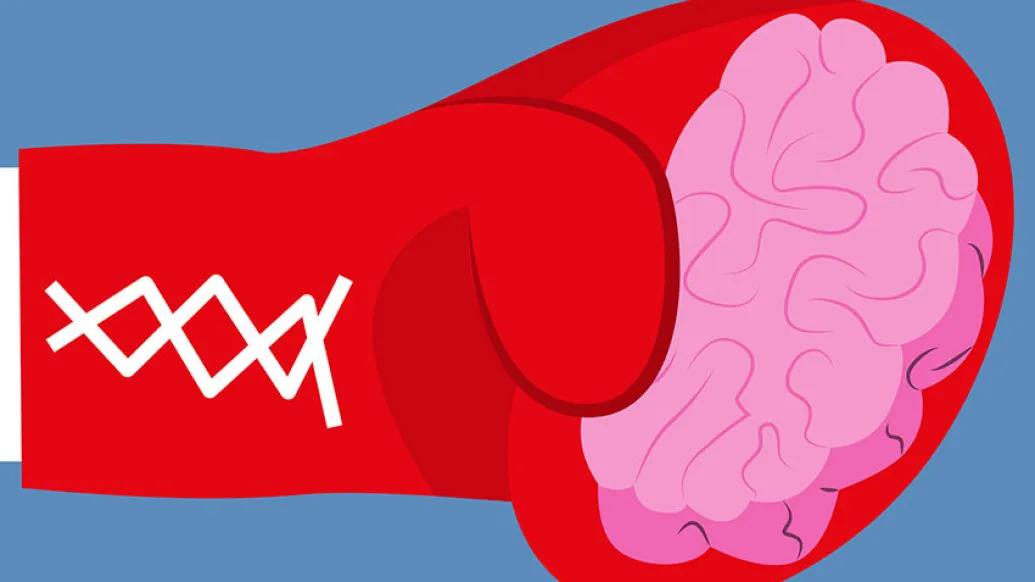
After a sports-related concussion, traditional recovery recommendations have previously called for weeks or months of rest, depending on the duration of a person's symptoms.
But Michael Popovich, M.D., M.P.H., a sports neurologist at Michigan NeuroSport, thinks this method could actually do more harm than good.
Recent studies have suggested that regular, daily activities during the initial days of a concussion may actually be safe, not worsen symptoms and even speed up recovery. The research also suggests supervised exercise challenges and mild to moderate levels of physical exertion during that same period could provide similar effects.
Even athletes with symptoms that lasted longer than four weeks benefited from active rehabilitation. However, too early or intense of a return to physical activity was associated with worsening symptoms and a prolonged recovery.
Although the most recent statement on sports-related concussions green lights returning to daily activities only 24 to 48 hours after physical and cognitive rest, a gray area remains in knowing the optimal timing, mode, duration, intensity and frequency.
An earlier return for athletes
In a recent Clinical Journal of Sport Medicine study on sports-related concussions, Popovich found more reason to encourage exercise during the healing process. His research also suggests there may even be additional mental and physical health benefits beyond a quicker recovery time.
Shutting a person down from sports, or even just their normal, daily activities, causes significant issues in the athletes we treat.
Of the 126 patients that participated in the retrospective study, those who underwent supervised exercise in the early, symptomatic stages of their concussion returned to their sport earlier (26.5 days) compared to those who didn't (35.1 days). There was also a later return for those who initiated exercise after 16 days. The 16-day timeframe was based on Michigan NeuroSport's average sports-related concussion follow-up visits, where supervised exercise was typically performed.
Certified athletic trainers and physicians oversaw what they deemed appropriate exercise no sooner than the first follow-up visit. They monitored each patient's heart rate, perceived exertion and severity of symptoms at two-minute intervals, with intensity gradually increasing.
Athletes started at a low intensity with exercise that required little head and body movement, like a stationary bike. Other exercise modalities included an elliptical machine, dynamic rotational exercises like the use of medicine balls, agility drills and sport-specific exercises when tolerated.
Exercise was only increased when symptoms didn't. If a patient reported symptoms, the intensity of the exercise was decreased or stopped altogether.
Popovich notes age seemed to be a significant factor, as older patients had an earlier return to their sport.
Mental health implications
Previous research has found that the brain experiences a multitude of benefits from exercise, including:
- Increased synaptic plasticity in the brain, which helps with learning and memory.
- Increased production of brain-derived neurotrophic factors, a protein in the brain and spinal cord that promotes the survival of nerve cells.
- Increased cortical connectivity, which relates to the stimulus and neuron firing pattern in brain response.
But just as noteworthy, he says, are the mental health benefits.
"Shutting a person down from sports, or even just their normal, daily activities, causes significant issues in the athletes we treat," Popovich says.
"Much of an athlete's life is defined by their sport," he adds. "Not addressing this psychological damage from a dramatic, prolonged lifestyle switch can create a systemic problem that prolongs concussion recovery."
Popovich explains that having to abstain from physical activity can dampen a person's mood, and when your mood is affected it can affect sleep, which affects cognition and can worsen concussion symptoms.
Neck strain, according to Popovich, is a common concurrent injury that contributes to symptoms like headaches, nausea, dizziness, trouble sleeping, and difficulty with cognitive processes.
"It's important to remember that sports-related concussion symptoms make regular, daily tasks feel difficult," Popovich says. "Every concussion is different, even in the same patient, but these symptoms can all affect a person's mood, on top of their emotions about being removed from a sport."
Popovich says he hopes this study busts the long-standing myth that you need to lie in a dark room if you're suffering from a sports-related concussion.
"Our study suggests it won't necessarily speed up the recovery process."
When a concussion evaluation is necessary, an outlined supervised exercise plan may help to see how a patient is recovering, and could serve as a test to confirm the patient is asymptomatic.

Health Lab
Explore thousands of health news & research stories by visiting the Health Lab homepage for more.
Media Contact

Public Relations
Department of Communication at Michigan Medicine
Stay Informed
Want top health & research news weekly? Sign up for Health Lab’s newsletters today!
Featured News & Stories

How U-M helped bring depression out of the darkness
Exploring the mind’s mysteries: 130 years of mental health care & innovation at U-M
Second ACL tear brings star athlete back to trusted surgeon
Torn ACL leads to life changing career direction

Immune system protein is a cancer killer on its own, new study shows