Socioeconomic factors may be more disruptive to young kid’s sleep than pandemic shutdown
Study of Midwestern families suggests social determinants of health, like household income and housing, may impact babies and toddlers’ sleep.
5:00 PM
Author |
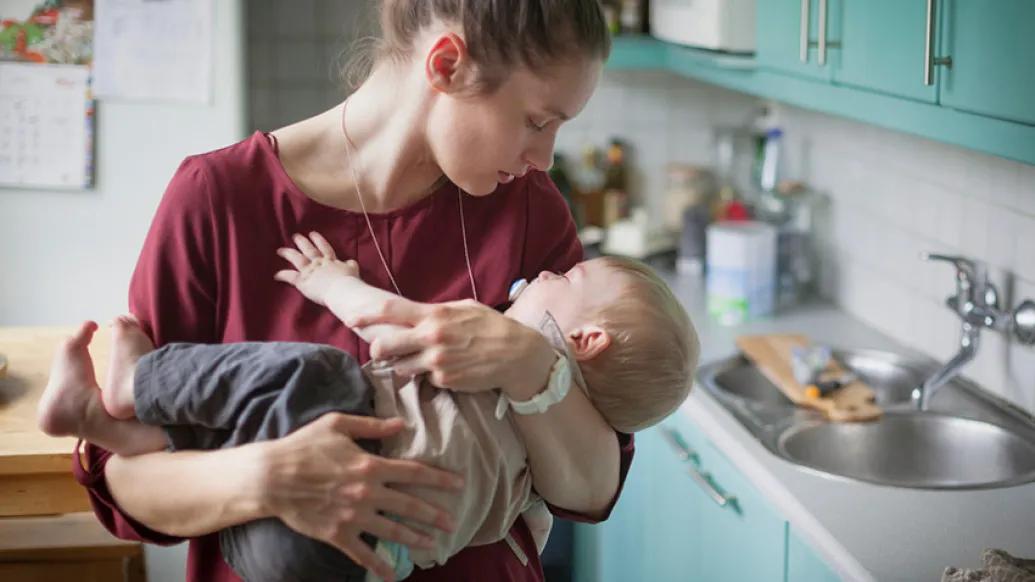
For babies and toddlers, social determinants of health – such as household income and housing – may have had a more significant association to sleep issues than the pandemic lockdown in 2020, a new study suggests.
Michigan Medicine researchers compared pre-pandemic parent-reported sleep data for children less than three years of age to responses about sleep from families of 594 children between March and December of 2020, mostly from the Midwestern United States.
Lead author Gita Gupta, M.D., M.S., a pediatric pulmonology fellow at University of Michigan Health C.S. Mott Children's Hospital, says doctors were hearing that the COVID-19 pandemic was disrupting children's sleep when the shutdown started. This was attributed to changes in the way space was being used at home with some people needing to use bedrooms as offices.
"Life for both parents and their children changed so dramatically at the beginning of the pandemic," she said. "Families were reporting that children were needing their parent's presence to fall asleep more, had worse sleep hygiene, and had a harder time napping."
"Overall, there seemed to be more frustration surrounding sleep both from the parent and the child," she added. "But despite pandemic-associated challenges, the actual impact on sleep for babies and toddlers appeared to be minimal. Social determinants of health, however, seemed to be linked sleep struggles."
Among the greatest predictors of sleep disparities were incomes and dwelling size, according to the findings in the Journal of Clinical Sleep Medicine.
Children from the highest household income backgrounds took about 20 minutes less to fall asleep than children from the lowest household incomes.
Some of the most vulnerable children in our society are also at risk of having insufficient or disordered sleep.Gita Gupta, M.D., M.S.
To put these results into context, Gupta notes, some common insomnia medications used in adults decrease the amount of time it takes to fall asleep by six to 15 minutes.
And room sharing could be one of the greatest culprits, as it was associated with an increase in the amount of time it took for a child to fall asleep. Parents of children who shared a room also had more frustration with their child's sleep compared to parents of children who had their own room, and room sharing also appeared to be linked to nap inconsistency.
"Some of the most vulnerable children in our society are also at risk of having insufficient or disordered sleep," Gupta said.
"We're seeing that social determinants of health are important factors to consider in research that involves the sleep of infants and toddlers. Hopefully, as we incorporate these factors into future work, we can generate better quality research and guidelines surrounding infant and toddler sleep."
On average, it took children about 10 minutes longer to fall asleep in the third study quarter between July and September 2020 compared to the pre-lockdown period. Gupta says this could be due to multiple social, economic, and political events that were occurring during that time.
Parents of older children were also more frustrated with their child's sleep compared to parents of younger children overall.
Other studies have suggested greater sleep disturbances in older-aged children and adolescents during the pandemic period.
"Sleep is an essential part of growth and development and impacts critical parts of children's health, including attention, behavior, learning, memory, and mental and physical health," said senior author and Mott pediatric neurologist Renée Shellhaas, M.D., M.S.
"Our findings highlight the need to further investigate how high-risk environments may negatively impact sleep for some children."
Additional authors include Louise O'Brien, Ph.D., M.S. and Louis Dang, M.D., Ph.D., of U-M.
Study cited: "Sleep of infants and toddlers during 12 months of the COVID-19 pandemic in the midwestern United States," Journal of Clinical Sleep Medicine. DOI: 10.5664/jcsm.9888
MORE FROM THE LAB: Subscribe to our weekly newsletter
Like Podcasts? Add the Michigan Medicine News Break on iTunes, Google Podcasts or anywhere you listen to podcasts.

Health Lab
Explore thousands of health news & research stories by visiting the Health Lab homepage for more.
Media Contact

Public Relations
Department of Communication at Michigan Medicine
Stay Informed
Want top health & research news weekly? Sign up for Health Lab’s newsletters today!
Featured News & Stories
A gift for Michigan’s most vulnerable babies

After 13 years of IV nutrition, teen finds freedom to just be a kid

Are you at risk of a genetic disease? Guidelines for testing should be updated, experts say

Small Pauses, Bigger Impact: Mindfulness in Action
From 20 seizures a day to more time for play: How personalized epilepsy care helped young patient