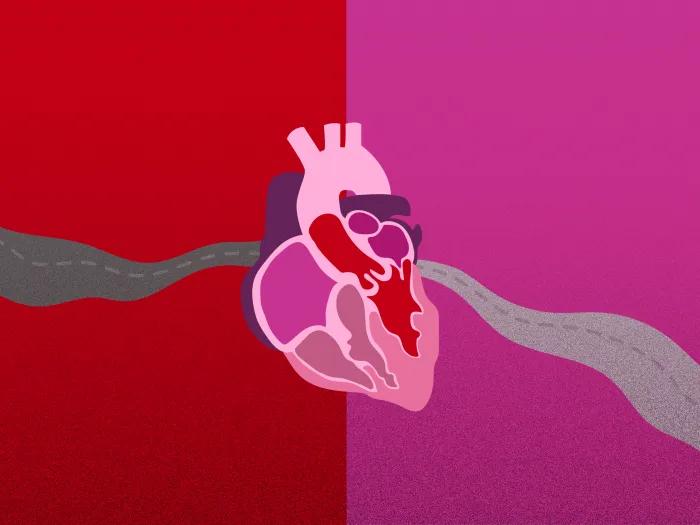
Registry Helps Move Aortic Dissection Care Forward
Diagnosis, treatments and outcomes for acute aortic dissection have evolved. An international registry reveals trends and the power of data.
4:10 PM
Author |
What began with a modest hospital grant at the University of Michigan in 1996 is now the world's leading source of data on diagnosis, treatments and outcomes for a rare and dangerous cardiac condition.
On Monday, Kim Eagle, M.D., a director of U-M's Frankel Cardiovascular Center, presented data from 9,000 patients gathered over nearly 25 years by the International Registry of Acute Aortic Dissection, known as IRAD. Only 3 in 100,000 people per year experience aortic dissection, in which the layers of the aorta tear apart, and both early diagnosis and swift treatment are critical.
LISTEN UP: Add the new Michigan Medicine News Break to your Alexa-enabled device, or subscribe to our daily audio updates on iTunes, Google Play and Stitcher.
A dissection often interferes with blood distribution to the rest of the body, risking function of important organs. In the more dangerous type of dissection, type A, about one-third of patients die within the first 24 hours without treatment, and 50 percent die within 48 hours, typically from aortic rupture.
Eagle presented lessons learned from the first quarter-century of IRAD during the featured clinical research session at the 2019 American College of Cardiology Scientific Session. The cardiologist and professor of internal medicine says he's proud to have grown this project into a global effort that is giving investigators, clinicians and surgeons valuable insight on the changes in aortic dissection care.
"Having such a large number of patients in our registry allows us to see what's working in our care plan and what we still need to do," Eagle says. "I think clinicians should be optimistic about the progress, including improved mortality, and they certainly should see the power of centers of excellence banding together to fight this rare condition."
Worldwide teamwork
IRAD brings together 55 active centers around the world, up from 12 when Eagle started it in 1996. Each center shares data on acute aortic dissection diagnosis, treatment, in-hospital mortality and five-year mortality.
Researchers can see trends happening across the world and track improving mortality rates.
SEE ALSO: Minimally Invasive Procedure Increases Options for Mitral Valve Repair
"Aortic dissection is a really devastating disease, and we need to keep working together to improve survival and morbidity," Eagle says. "Here at Michigan, we've had unique physicians, surgeons and imagers working in aortic dissection for many years, and as a result of that reputation we were able to create the IRAD effort. The Frankel CVC faculty's outstanding talent and reputation enable us to attract partnerships with such a large number of outstanding aortic centers worldwide."
The IRAD team also provides a hub of credible, current information for patients on the IRAD website, including a listing of aortic dissection centers of excellence.
"This is a disease that should be cared for by centers that treat a lot of them," Eagle says.
IRAD reveals changes in treatments, outcomes
The results from 9,000 patients covered overall data on the condition and specifics for both types of acute aortic dissections: type A, in the ascending aorta, and type B dissections, which occur in the descending aorta.
The data reveal nearly 90 percent of patients experiencing a type A dissection now receive surgical repair. In-hospital mortality is down to 16.3 percent, while surgical mortality is down to 13 percent, in trends mirrored by the improving outcomes at the Frankel CVC, Eagle says.
Five-year survival remains around 85 percent for both types of dissection.
MORE FROM MICHIGAN: Sign up for our weekly newsletter
For patients experiencing a type B dissection, nearly a third now receive endovascular therapy instead of open surgery. In-hospital mortality rates for type B are now 7.4 percent.
In addition, Eagle reported the most common risk factors overall are hypertension, smoking and atherosclerosis.
The second 25 years
Eagle concluded his ACC presentation with an important reminder: There is still a long way to go.
"We still see significant delays in getting diagnoses, and clinicians must tell a lot of our patients that we don't understand the underlying cause of their aortic dissection. Many patients don't have other risk factors beyond hypertension," Eagle says.
Additionally, he says, many patients' aortas dissect at a smaller size than what's recommended for prophylactic repair.
Eagle envisions exponential progress as the second 25 years of IRAD get underway.
SEE ALSO: Growth of Cardio-Obstetrics Care Presents Challenges, Opportunity
"I believe we'll have much better acute diagnostics using biomarkers, a much more complete genetic library to identify patients who might be at risk and a switch to endovascular techniques for most patients rather than open surgeries," he says.
"It's all dependent on continued commitment from the key partners in the IRAD journey: skilled providers taking great care of our dissection patients, large numbers of centers adding to our knowledge and understanding, dedicated supporters including families, donors and industry, who allow us to keep doing the work, and, most importantly, the patients who give a voice to their disease by consenting for research."

Health Lab
Explore thousands of health news & research stories by visiting the Health Lab homepage for more.
Media Contact

Public Relations
Department of Communication at Michigan Medicine
Stay Informed
Want top health & research news weekly? Sign up for Health Lab’s newsletters today!
Featured News & Stories

Digital alerts support timely treatment decisions of critically ill cardiac patients

Is the United States Lagging Behind Europe in Memory Improvement?
Reducing infections after heart surgery could save Medicare $441 million per year
Young father survives aortic dissection after delayed diagnosis
C.S. Mott Children’s Hospital first in country to implant expandable heart valve during FDA review phase