Parents: Keep Medical Marijuana Dispensaries Away from Children
A new survey examines families’ concerns about the facilities — and how proximity to schools, churches and day care centers could affect their children.
7:00 AM
Author |

The legalization of medical marijuana in about two-thirds of U.S. states has led to growing concern about how dispensaries may impact surrounding neighborhoods and communities.
And parents in a new national poll overwhelmingly agree on one place dispensaries shouldn't be allowed: anywhere near children.
LISTEN UP: Add the new Michigan Medicine News Break to your Alexa-enabled device, or subscribe to our daily audio updates on iTunes, Google Play and Stitcher.
Seven in 10 parents want to have a say in whether a dispensary is located near their child's school or day care, according to the latest University of Michigan C.S. Mott Children's Hospital National Poll on Children's Health. Most also want the dispensaries banned within a certain distance.
Highest on the list of concerns was the risk of impaired drivers — with nearly half of parents citing it as a significant worry.
Those fears aren't unfounded: A recent study found that more than half of people taking cannabis for chronic pain report driving while high.
SEE ALSO: Medical Marijuana Gets Wary Welcome from Older Adults, Poll Shows
"Medical marijuana has become legal in the majority of states, but there is wide variation in state and local policies that regulate the location and operation of dispensaries," says Sarah Clark, MPH, co-director of the Mott Poll.
"The majority of parents feel strongly that they should give local input on decisions regarding where dispensaries may open and also support limitations on how close dispensaries could be to children's areas."
Aside from the top concern involving drivers under the influence, some parents also worried about the possibility of a child finding and ingesting edible marijuana inadvertently left behind by a dispensary customer (48 percent), and teens having easier opportunities accessing marijuana (49 percent).
Other dispensary concerns included setting a bad example for kids (45 percent) and bringing violent crime to the area (35 percent).
Rules, regulation needed
Despite those sentiments, three-quarters of parents indicated general support for legal medical marijuana, including one-third of parents who support the option for children. Just 26 percent of parents opposed medical marijuana.
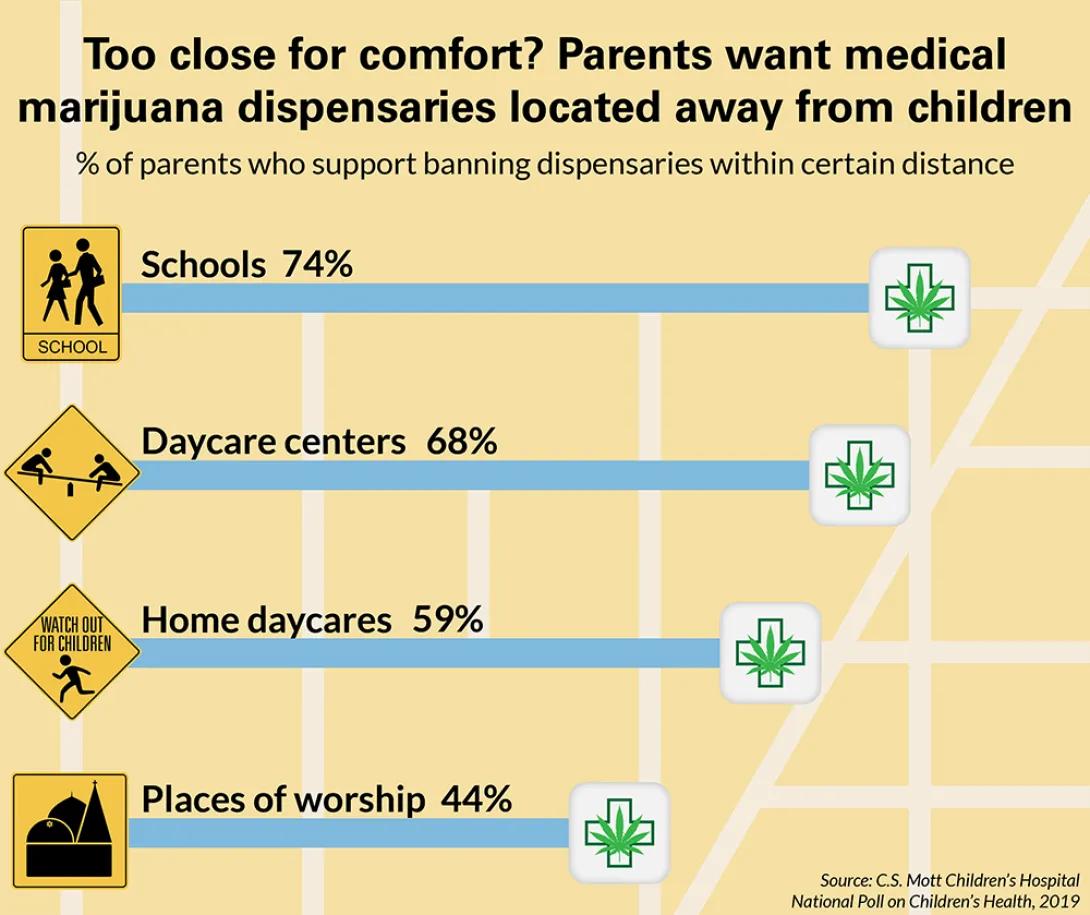
At the same time, most parents agreed that dispensaries should be banned within a certain distance of elementary schools, middle and high schools, and day care centers. Forty-four percent of parents also believed dispensaries should not be close to places of worship.
MORE FROM MICHIGAN: Sign up for our weekly newsletter
Support for such bans was equally strong among both mothers and fathers, younger and older parents, and parents with higher and lower incomes.
"Most parents seem to understand that marijuana can have legitimate medical benefits, but parents also have major concerns about the risks that medical marijuana dispensaries might pose to children," Clark says.
"When it comes to where dispensaries are located, many parents feel that any area near children is too close for comfort."
SEE ALSO: What Drives Patients to Use Medical Marijuana: Mostly Chronic Pain
Most parents (77 percent) agreed that medical marijuana dispensaries should have the same regulations as liquor stores for where they can be located. Meanwhile, 52 percent of parents said dispensaries should have the same rights as other businesses.
Nearly all parents (90 percent) felt dispensaries should undergo inspections to ensure they are following all regulations. Forty-five percent said that medical marijuana is legal in their state, and 24 percent knew there was at least one medical marijuana dispensary in their community.
But less than a fourth reported that their state or community has regulations about where dispensaries can be located; 59 percent didn't know if such regulations exist.
Most parents seem to understand that marijuana can have legitimate medical benefits, but parents also have major concerns about the risks that medical marijuana dispensaries might pose to children.Sarah Clark, MPH
Barriers to involvement
While most surveyed parents want to be consulted about locating a dispensary near their child's school or day care, this demand may prove difficult, Clark says.
There is no consistent framework across states and municipalities to regulate the location and operations of dispensaries. Some states, where applicable, may have added legal complexities differentiating the sale of medical versus recreational marijuana.
It may also be confusing about whether parents need to contact elected officials or zoning commissions, and if they should focus on the state or local level when an application is filed for a new dispensary.
Decisions about the location of new dispensaries could be made through a state law, a local zoning regulation or other action — if a public announcement is made at all.
"Parents who want to share their views about dispensaries before any open in their school's neighborhood may have limited opportunities to do so," Clark says. "They may not even be aware that a specific dispensary location is under consideration until the decision has already been made."
A lack of established standards may lead officials to enact policies that may not address parents' concerns, she adds.
"Parents who want to provide input about local dispensaries may need to take the initiative to learn about the rules for opening a dispensary in their community and what steps they should follow to be involved in these decisions," Clark says.

Health Lab
Explore thousands of health news & research stories by visiting the Health Lab homepage for more.
Media Contact

Public Relations
Department of Communication at Michigan Medicine
Stay Informed
Want top health & research news weekly? Sign up for Health Lab’s newsletters today!
Featured News & Stories

How to discuss health care and end-of-life wishes during the holidays

Court appointed medical guardian study reveals role in care of highly vulnerable older adults

What’s changing in Medicaid and what can you do?

Are you at risk of a genetic disease? Guidelines for testing should be updated, experts say
Small Pauses, Bigger Impact: Mindfulness in Action