
The More Doctors Interact, the Better Their Patients Do
Medicare data show that tight connections among physicians have more to do with heart bypass surgery patients’ survival than other factors.
4:00 PM
Author |
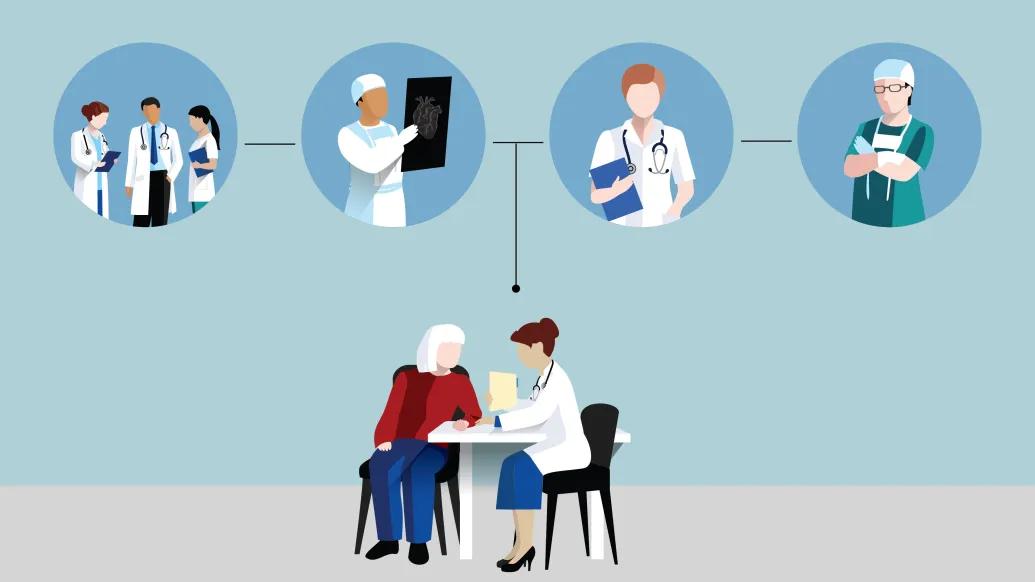
To get the best results for patients, it may pay for their doctors to keep a longtime football mantra in mind: the team, the team, the team.
In a new study, researchers find heart surgery patients' survival depends in part on the level of teamwork among the physicians who cared for them throughout surgery preparation, operation, hospitalization and recuperation.
MORE FROM THE LAB: Subscribe to our weekly newsletter
Using data from 251,000 older Americans who had heart bypass surgery, the University of Michigan Medical School team mapped the interactions among the 466,000 doctors who cared for them. The results showed the importance of tight physician "social networks" in patient outcomes.
The more often physicians had worked with one another in the past, the lower their current patients' chances were of ending up in the emergency department or the hospital, as well as their chances of dying, within two months of the operation.
"Surgical care is complex, involving multiple providers dispersed across locations over time," says John Hollingsworth, M.D., M.S., the lead author of the new paper and a urologist at U-M. "Our findings show that physician teamwork influences patient outcomes, even more than some measures of comorbid illness."
The results are published in Circulation: Cardiovascular Quality and Outcomes.
Measuring teamwork
The researchers' model was based on Medicare data that showed which physicians (across disciplines) treated the same patients 30 days before and 60 days after a hospitalization for surgery. The model included measures of the social and health care environments in the communities where the bypass surgeries occurred and data on each patient's 60-day outcome.
The results were striking. A 25 percent increase in the measure of teamwork was associated with 17 fewer readmissions for every 1,000 patients treated.
For comparison, using the same model, the researchers show that the same reduction in readmissions was seen for every 25 percent increase in a measure of education in the hospital's surrounding area; higher levels of education are already known to be associated with better surgical results. And a 25 percent increase in a measure of the complexity and severity of patients' conditions — called a Charlson score —accounted for only one extra readmission per 1,000 patients.
Our findings show that physician teamwork influences patient outcomes, even more than some measures of comorbid illness.John Hollingsworth, M.D., M.S.
Wide variation
Hollingsworth and his colleagues, including senior author and U-M cardiologist Brahmajee Nallamothu, M.D., M.P.H., note wide regional differences in the teamwork score. To illustrate, their paper shows a map of ties among physicians treating patients who had operations in 2011 in two Texas hospitals 90 miles apart — one in Waco and the other in Fort Worth.
SEE ALSO: Costly Care: Patient Complications and Bills Vary Widely by Hospital
The measure of teamwork among all the physicians who treated these patients across the eight-month span surrounding the operations was nearly five times higher among Waco physicians. The Fort Worth doctors rarely shared more than one patient in common, while a core set of Waco physicians shared many patients, with other Waco physicians interacting less often.
The teamwork effect persisted no matter how many bypass operations were performed at a given hospital, or the type of hospital. Large academic medical centers tended to have lower teamwork scores because they have far more patients referred to them by physicians outside their local areas. This may help explain why those hospitals don't always score high on Medicare's measures of patient outcomes, researchers say.
"A lot of the focus in improving care is focused on the acute hospitalization for an episode of care. We believe that this focus is too myopic because it ignores the care delivered prior to the hospital stay and after discharge," says Hollingsworth. "Efforts to improve teamwork, and outcomes, need to consider the entire care continuum."
Hollingsworth and Nallamothu, both members of the U-M Institute for Healthcare Policy and Innovation, worked with sociologists and a cardiac surgeon on the new paper, using funding from the Agency for Healthcare Research & Quality.
Taking the research to the clinical world
Next, researchers hope to test their model in other conditions and with other providers beyond physicians. But because only physician names are captured in the bills sent to Medicare, researchers will need to look for other ways to assess the impact of teamwork among nurses, nurse practitioners, physician assistants, physicians in residency training and front-end staff.
Researchers are already studying the effect further in physicians, using anthropology research techniques in the U-M Comprehensive Cancer Center. With funding from the National Science Foundation, they're observing the interactions among physicians who share patients to study how networks evolve on the ground level in medicine.
By understanding which factors influence physicians' ties, and the flow of patients among them, says Hollingsworth, they hope to point out opportunities to strengthen teamwork and improve patient outcomes. The effort has started in the U-M prostate cancer clinic, and the team is looking for other clinics to join in.

Health Lab
Explore thousands of health news & research stories by visiting the Health Lab homepage for more.
Media Contact

Public Relations
Department of Communication at Michigan Medicine
Stay Informed
Want top health & research news weekly? Sign up for Health Lab’s newsletters today!
Featured News & Stories

Top 7 tips for choosing Medicare prescription drug coverage for 2027

Many older adults make Medicare decisions quickly and most don’t change plans, poll finds

What’s the latest on 7-OH and kratom availability and addiction care?
Better prenatal care data could help prevent maternal complications, experts say
Many hospitals still don’t do enough to prevent UTIs from catheters

