Medicaid Expansion Improved Insurance Stability for Low-Income Pregnant Women
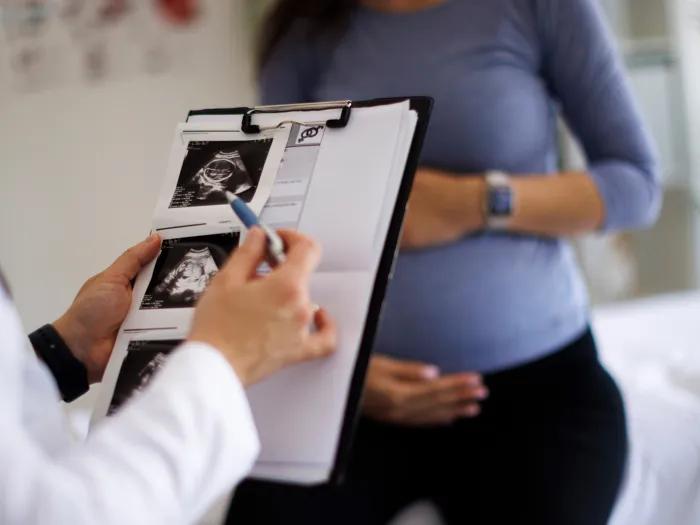
When states expanded Medicaid eligibility, pregnant people were less likely to have disruptions in health care insurance around the time of pregnancy.
5:00 AM
Author |

Gaps in insurance coverage between preconception and after childbirth can significantly impact access to high quality health care and health outcomes – for both new moms and their babies.
And this "insurance churn" – moving between different insurance plans or insurance and un-insurance – is especially common among low income pregnant patients and women of color.
But when states expanded Medicaid eligibility, pregnant people were more likely to have continuous health insurance coverage, a new study in Health Affairs finds.
Researchers followed 47,617 pregnant people from 2012 to 2017, comparing outcomes in states that expanded Medicaid, an optional piece of the Affordable Care Act, and those that didn't.
Medicaid expansion improved the stability of insurance coverage for low-income women in the months leading up to and right after their baby's birth. In states that expanded coverage, pregnant people's likelihood of losing insurance in the perinatal period dropped by 10 percentage points.
"Insurance disruptions particularly affect women who are low-income, are racial and ethnic minorities, and who have chronic health conditions. These populations are also at highest risk of pregnancy-related complications and deaths," says senior author Lindsay Admon, M.D., M.Sc., an obstetrician-gynecologist at Michigan Medicine Von Voigtlander Women's Hospital.
"Perinatal insurance eligibility expansions may be a powerful strategy for reducing the high rates of maternal morbidity and mortality in the United States."
The U.S. is one of the only developed countries with a rising maternal mortality rate, and the Centers for Disease Control and Prevention has identified lack of access to quality healthcare as a key contributor to pregnancy-related deaths.
Perinatal insurance eligibility expansions may be a powerful strategy for reducing the high rates of maternal morbidity and mortality in the United States.Lindsay Admon, M.D., M.Sc
The most common cause of maternal death in the country is complications occurring as a result of a mother's pre-existing, chronic condition.
Admon's previous research shows disruptions in insurance coverage also disproportionately affect racial and ethnic minority women before, during and after pregnancy.
LISTEN UP: Add the new Michigan Medicine News Break to your Alexa-enabled device, or subscribe to our daily updates on iTunes, Google Play and Stitcher.
Stabilizing insurance for low-income women can improve access to the care women need to avoid adverse events during pregnancy and postpartum, authors say.
"Insurance loss and change is common during the perinatal period because changes in employment, income, marital status, and Medicaid eligibility, often go hand-in-hand with pregnancy and childbirth," says lead author Jamie Daw, Ph.D., assistant professor of Health Policy and Management at Columbia Mailman School. "We find that Medicaid expansion stabilizes insurance for low-income women, which can improve access to the care women need to support their health and avoid adverse events during pregnancy and postpartum."
Paper cited: "Medicaid Expansion Improved Perinatal Insurance Continuity for Low-Income Women," Health Affairs. DOI: 10.1377/hlthaff.2019.01835

Health Lab
Explore thousands of health news & research stories by visiting the Health Lab homepage for more.
Media Contact

Public Relations
Department of Communication at Michigan Medicine
Stay Informed
Want top health & research news weekly? Sign up for Health Lab’s newsletters today!
Featured News & Stories

Depression in OBGYN residents needs more attention, study suggests
Better prenatal care data could help prevent maternal complications, experts say

What’s changing in Medicaid and what can you do?
PMOS is the New PCOS
PCOS has a new name