Many Older Adults, Especially Those with Health Issues, Feel Isolated
A poll of older adults finds physical and mental health issues, including hearing problems, as well as poor diet, exercise and sleep habits, are tied to loneliness.
7:01 AM
Author |
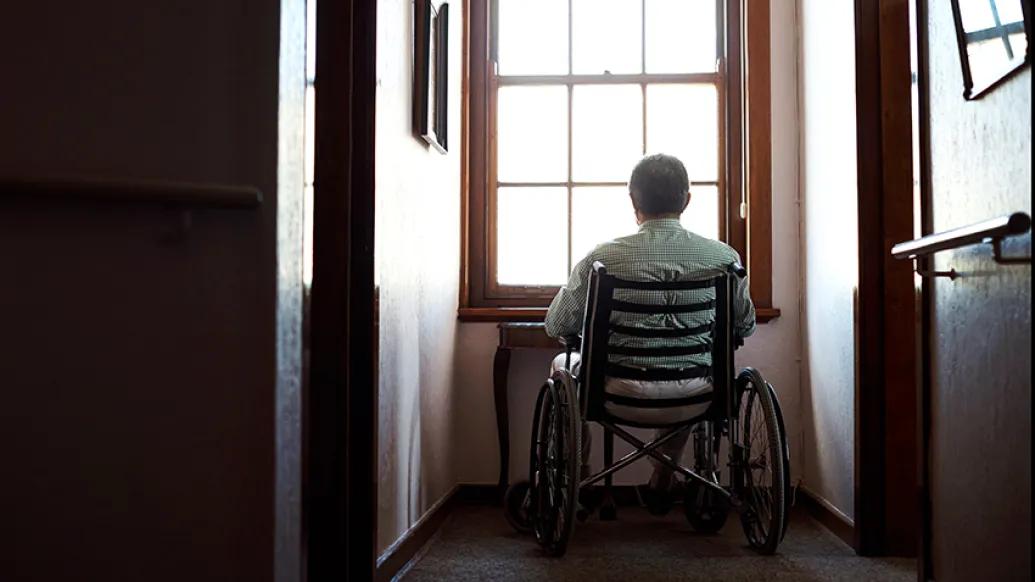
One in 4 older adults say they feel isolated from other people at least some of the time, and 1 in 3 say they lack regular companionship, according to a new national poll.
Those feelings of loneliness showed up most in people ages 50 to 80 who also reported they had health issues and unhealthy habits, the poll shows.
LISTEN UP: Add the new Michigan Medicine News Break to your Alexa-enabled device, or subscribe to our daily audio updates on iTunes, Google Play and Stitcher.
The new findings amplify research that has shown links between chronic loneliness and health issues ranging from memory loss to shorter lives.
In the new poll, people who said they had fair or poor physical health, mental health or hearing were more likely to report that they felt isolated or lacked companions.
Meanwhile, people who said they ate healthy diets, exercised, got enough sleep or didn't use tobacco were less likely to report feelings of loneliness.
As we grow older and mobility or hearing becomes more of a barrier, these poll data show the importance of maintaining and strengthening our ties to other people.Preeti Malani, M.D.
The new findings come from the National Poll on Healthy Aging, conducted by the University of Michigan Institute for Healthcare Policy and Innovation and sponsored by AARP and Michigan Medicine, U-M's academic medical center.
All the lonely people
"More than a quarter of poll respondents said they only had social contact once a week, or less, with family members they don't live with, or with friends and neighbors," says Erica Solway, Ph.D., the co-director of the poll and a social science researcher.
MORE FROM MICHIGAN: Sign up for our weekly newsletter
"These results indicate the importance of proactively reaching out to those in your community who may be at risk of feeling isolated and disconnected, especially those with or at risk of health issues," she says.
Poll director Preeti Malani, M.D., who has training in caring for older adults, notes that a growing body of research points to strong connections between health and loneliness — and to positive effects on health from increased social contact through volunteering, taking part in religious or community groups, and other activities.
SEE ALSO: Poll: Providers Aren't Doing Enough to Warn Older Patients About Opioids
"As we grow older and mobility or hearing becomes more of a barrier, these poll data show the importance of maintaining and strengthening our ties to other people," Malani says. "It also suggests that caregivers, spouses and partners, adult children and others involved in older adults' lives have a role to play in encouraging and facilitating these connections."
Increased risk for chronic loneliness
"We know that social isolation and loneliness are as bad for our health as obesity and smoking," says Alison Bryant, Ph.D., senior vice president of research for AARP. "AARP's own research shows that older adults who are unpaid caregivers, are low-income or that identify as LGBT are at an increased risk for chronic loneliness. This is such an important public health issue that AARP Foundation launched Connect2Affect to help combat isolation and loneliness among older adults."
AARP also recently released a Loneliness and Social Connections report on related topics, based on other data it gathered.
Other key findings
The poll explored many aspects of social connection and health and asked about feelings of companionship, feelings of social isolation and social contact among people ages 50 to 80. It found:
-
Those who were unemployed, lived in lower-income households, lived alone or had one or more children living with them were more likely to say they lacked companionship.
-
Living alone was highly associated with feeling lonely; 60 percent of those who lived alone reported feeling a lack of companionship, and 41 percent felt isolated.
-
36 percent of women said they lacked companionship often or some of the time, compared with 31 percent of men.
-
26 percent of adults who said they lacked companionship also said they were in fair or poor physical health, while 13 percent of people who said they hardly ever lacked companionship reported fair or poor physical health.
-
Of those who reported feeling isolated, 17 percent had fair or poor mental health, compared with only 2 percent of those who hardly ever felt isolated.
-
One in 5 respondents who reported feeling socially isolated said they had fair or poor hearing, compared with about 1 in 10 of those who said they hardly ever felt isolated.
The National Poll on Healthy Aging results are based on responses from a nationally representative sample of 2,051 adults ages 50 to 80 who answered a wide range of questions online. Questions were written, and data interpreted and compiled, by the IHPI team. Laptops and internet access were provided to poll respondents who did not already have them.
A full report of the findings and methodology is available at healthyagingpoll.org, along with past National Poll on Healthy Aging reports.

Health Lab
Explore thousands of health news & research stories by visiting the Health Lab homepage for more.
Media Contact

Public Relations
Department of Communication at Michigan Medicine
Stay Informed
Want top health & research news weekly? Sign up for Health Lab’s newsletters today!
Featured News & Stories

Weight loss and surgery restore patient’s throat after near-death brush with likely COVID
Research may help better predict outcomes in kids with congenital cytomegalovirus
Michigan’s aging brains need more protection, poll shows

Rx Kids linked to reductions in preterm births and low birthweights, fewer NICU admissions
LGBTQ+ people over 50 face more aging-related challenges