Lack of Communication Puts Older Adults at Risk of Clashes Between Medicines
Many adults haven’t talked to their doctors, pharmacists or nurses about drug interactions, a new national poll finds.
7:01 AM
Author |

Most older Americans take multiple medicines every day. But a new poll suggests they don't get — or seek — enough help to make sure those medicines mix safely.
MORE FROM THE LAB: Subscribe to our weekly newsletter
That lack of communication could be putting older adults at risk of health problems from interactions between their drugs, and between their prescription drugs and other substances such as over-the-counter medicines, supplements, food and alcohol.
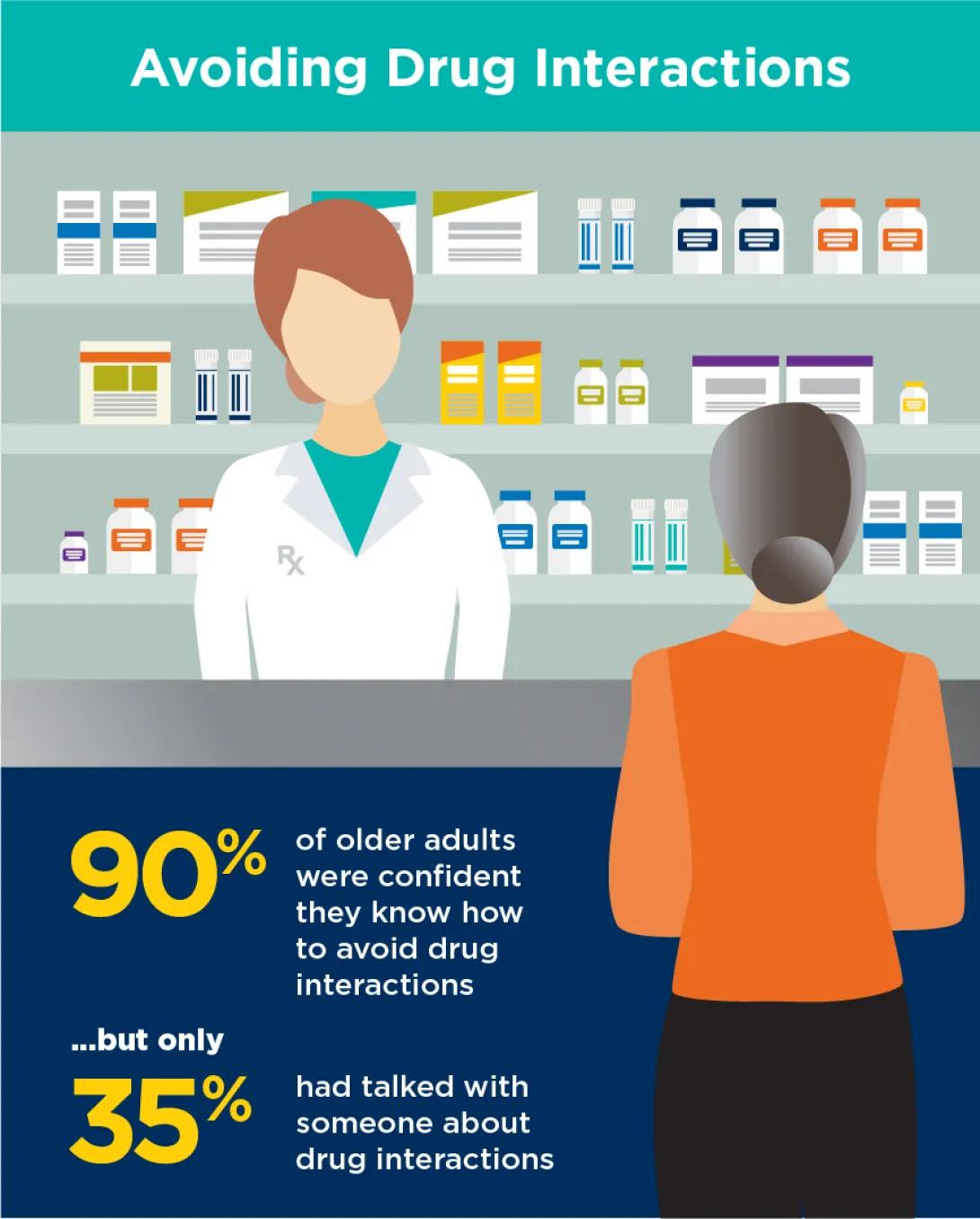
The new results, from the National Poll on Healthy Aging, show that only about 1 in 3 older Americans who take at least one prescription drug have talked to anyone about possible drug interactions in the past two years.
Even among those taking six or more medicines, only 44 percent had spoken to someone about possible drug interactions.
The results come from a nationally representative sample of 1,690 Americans ages 50 to 80. The poll was conducted by the University of Michigan Institute for Healthcare Policy and Innovation and sponsored by AARP and Michigan Medicine, U-M's academic medical center.
Interactions between drugs, and other substances, can put older people at a real risk of everything from low blood sugar to kidney damage and accidents caused by sleepiness.Preeti Malani, M.D.
Disjointed sources of care
Part of the reason for the lack of communication about drug interactions may lie in how older Americans get their health care and medicines. One in 5 poll respondents said they have used more than one pharmacy in the past two years, including both retail and mail-order pharmacies. Three in 5 see multiple doctors for their care.
Although 63 percent said their doctor and pharmacist are equally responsible for spotting and talking about possible drug interactions, only 36 percent said their pharmacist definitely knew about all the medications they're taking when they fill a prescription.
"Interactions between drugs, and other substances, can put older people at a real risk of everything from low blood sugar to kidney damage and accidents caused by sleepiness," says Preeti Malani, M.D., the director of the poll and a professor of internal medicine at the U-M Medical School.
"At the very least, a drug interaction could keep their medicine from absorbing properly," she adds. "It's important for anyone who takes medications to talk with a health care professional about these possibilities."
SEE ALSO: Sleep Aids Aren't Safe for Older Adults, but 1 in 3 Still Take Them
Malani notes that although 90 percent of poll respondents said they were confident they knew how to avoid drug interactions, only 21 percent were "very confident."
Given the wide range of prescription and over-the-counter drugs on the market, and the number of drugs that interact with supplements, alcohol and certain foods, Malani says it's hard for even medical professionals to catch all potential interactions.
Newer medical computer systems are helping by automatically flagging patients' records for potential interactions based on the names of their drugs, Malani says.
Also helpful is Medicare coverage for prescription drug reviews, called Medication Therapy Management, for people who take medicines for multiple chronic conditions. But not all medical computer systems talk to one another, and the patient's Medicare prescription drug benefit provider must approve an MTM review.
"Even with trackers and systems in place, patients need to be open with their providers and tell them all the medications and supplements they're taking, including herbal remedies," says Alison Bryant, Ph.D., senior vice president of research for AARP. "It's especially important for older adults to be vigilant about this because they tend to take multiple medications."
AARP has put together a free drug interaction tracker that can identify potential risks. It's available online, but it should be used in conjunction with patients' conversations with their health care providers and pharmacists.
Recommendations for patients and providers
Malani and her colleagues say it is up to patients, pharmacists and doctors alike to reduce drug interaction risks.
Patents should write down the names and dosages of the prescription medicines, supplements and over-the-counter drugs they take and bring it all to their doctors' appointments or pharmacies, she says. It is also important to be truthful about alcohol consumption when asked, because alcohol use can affect many medications. And patients shouldn't just stop taking a medicine if they think they're experiencing a side effect — they should also call their doctor's office or speak with a pharmacist first.
Meanwhile, health care providers should ask patients more about what medicines and supplements they take and counsel patients at risk of side effects using language they can understand.
The poll results are based on answers from those who said they took at least one prescription drug, among a nationally representative sample of about 2,000 people ages 50 to 80. The poll respondents answered a wide range of questions online. Questions were written, and data were interpreted and compiled, by the IHPI team. Laptops and internet access were provided to poll respondents who did not have it.

Health Lab
Explore thousands of health news & research stories by visiting the Health Lab homepage for more.
Media Contact

Public Relations
Department of Communication at Michigan Medicine
Stay Informed
Want top health & research news weekly? Sign up for Health Lab’s newsletters today!
Featured News & Stories
Top 7 tips for choosing Medicare prescription drug coverage for 2027

Many older adults make Medicare decisions quickly and most don’t change plans, poll finds
What’s the latest on 7-OH and kratom availability and addiction care?

Better prenatal care data could help prevent maternal complications, experts say
Many hospitals still don’t do enough to prevent UTIs from catheters