Concern About Loved Ones Might Motivate People to Mask Up and Get Vaccine
New research suggests the thought of being a protector overrides desire for personal freedoms when it comes to COVID-safety messages.
5:00 AM
Author |
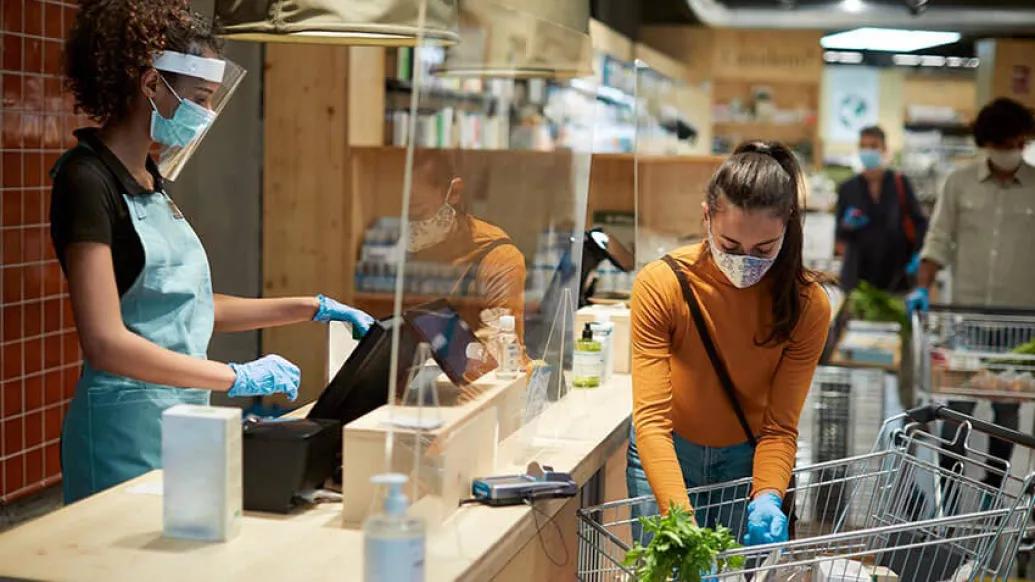
SEE ALSO: Be a Protector by Keeping Loved Ones Safe from COVID
While many people have listened to messaging about wearing a mask and following social distancing guidelines to limit the spread of COVID-19, resistance remains. A new study finds that appealing to people's concerns for their loved ones could overcome this resistance. And it may have implications for encouraging people to get the new vaccine.
In a recent survey, people who said social distancing and COVID-safety guidelines violated their personal freedoms responded more positively to these ideas when they felt a loved one might be at risk of severe illness for COVID-19.
LISTEN UP: Add the new Michigan Medicine News Break to your Alexa-enabled device, or subscribe to our daily updates on iTunes, Google Play and Stitcher.
"Emphasizing the benefits of being a protector for others (instead of yourself) looks to be more effective in promoting greater adherence to recommended practices," says study author Lawrence An, M.D., associate professor of general medicine at Michigan Medicine and co-director of the University of Michigan Rogel Cancer Center's Center for Health Communications Research.
MORE FROM THE LAB: Subscribe to our weekly newsletter
As the coronavirus pandemic continues to ravage the United States, messaging focused on shaming or pressuring people to wear a mask or avoid crowds are backfiring.
"People who respond negatively to being 'told' what to do are much less likely – by more than 50% – to routinely wear a mask. However, at the same time, concern for others increases mask wearing, especially among those who report greater negativity," An says.
An and colleagues surveyed 1,074 people across the United States about their attitudes toward the coronavirus. They discovered two distinct sets of attitudes toward social distancing:
-
Positive beliefs that largely mirror public health messaging
-
Negative beliefs, including the idea that social distancing violates individual rights and freedoms
Concern about a loved one's risk of severe COVID-19 infection was tied to both higher positive attitudes and lower negative attitudes toward social distancing. When people considered their own personal risk, they had higher positive attitudes, but it did not impact their negative attitudes.
"When people think about what protective behaviors to follow, negative beliefs – the perception of external control – override positive beliefs. This means that simply repeating that people should follow public health guidelines is unlikely to be effective," says study author Kenneth Resnicow, Ph.D., professor of health behavior and health education at the U-M School of Public Health and associate director of community outreach and engagement at the Rogel Cancer Center.
"However, our data show that when people consider being a protector for others, they approach risk differently. They are less likely to let their personal beliefs and politics discourage them from practicing COVID protection. Emphasizing the act of protecting others may help people who would otherwise be reluctant to practice COVID protection to feel independent and strong, rather than compliant or obedient," he says.
Like Podcasts? Add the Michigan Medicine News Break on iTunes or anywhere you listen to podcasts.
Recognizing that these distinct positive and negative attitudes about social distancing could help shape social distance policies and inform efforts to encourage people to follow them, An and Resnicow teamed up with CULTIQUE, an LA-based firm that advises the entertainment industry on cultural issues, to encourage messaging about protecting loved ones from the coronavirus in content, social media and news.
According to the latest data from the CDC, 40% of the population is considered at increased risk of severe illness from COVID-19. People with chronic health issues are 12 times more likely to die from COVID-19.
"For those who are caring for someone with cancer or other conditions, protecting your loved one is critical," An says.
Protectors can take responsibility for monitoring the at-risk person's COVID exposure and protecting them from the disease by limiting the person's exposure to others. This includes doing the shopping, maintaining cleaning protocols and PPE, and providing safe transportation to appointments.
"The prospect of losing someone is even more terrible knowing that we could be in the homestretch of this pandemic. With vaccines on the horizon, it's more important than ever to follow social distancing measures to help end COVID-19 sooner," Resnicow says.
Additional authors are Sarah Hawley, Ph.D.; M. Lee Van Horn, Ph.D.; Elizabeth Bacon, MPH; and Penny Yang.
Funding was from National Cancer Institute grants P30CA046592-29-S4 and P30CA046592, and a Google Focus Award.
Paper cited: "Development of a Coronavirus Social Distance Attitudes Scale," Patient Education and Counseling. DOI: 10.1016/j.pec.2020.11.027

Health Lab
Explore thousands of health news & research stories by visiting the Health Lab homepage for more.
Media Contact

Public Relations
Department of Communication at Michigan Medicine
Stay Informed
Want top health & research news weekly? Sign up for Health Lab’s newsletters today!
Featured News & Stories
Comprehensive DNA sequencing reveals hidden drivers of cancer
Many older adults make Medicare decisions quickly and most don’t change plans, poll finds
What’s the latest on 7-OH and kratom availability and addiction care?
A metabolic “switch” that could help reset scar-producing cells in scleroderma
Depression in OBGYN residents needs more attention, study suggests