Comparing outcomes between therapies for babies with hypoplastic left heart syndrome
Researchers look at whether the type of surgical shunt used in newborns with complex heart disease makes a difference by the time they’re adolescents.
10:30 AM
Author |
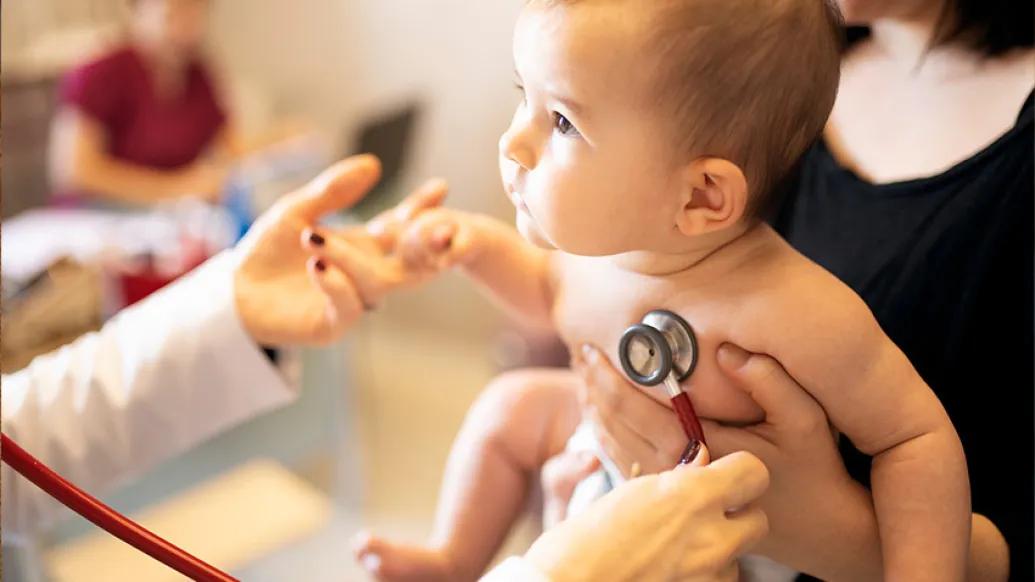
Babies born with a complex congenital heart condition known as hypoplastic left heart syndrome must undergo surgery within days of birth to survive.
One pivotal surgical step in their journey involves creating a path for their blood to reach their lungs.
Most babies with HLHS undergo a series of three heart surgeries that involve creating shunts, or alternative pathways, to pump blood both to the lungs and to the body. Surgeons can use one of two types of shunts during the first operation to achieve their goals.
Both techniques have advantages and disadvantages, but by the time newborns are adolescents, outcomes between the two groups are similar, suggests a new multi-site study led by University of Michigan Health C.S. Mott Children's Hospital.
"Our goal was to better understand heart health in children with hypoplastic left heart syndrome over time and learn whether there was an optimal shunt type for children with this condition," said senior author Caren Goldberg, M.D. M.S., Mott pediatric cardiologist and director of the Michigan Congenital Heart Outcomes Research and Discovery Program.
The findings were presented at the virtual American Heart Association scientific sessions where the study earned an outstanding research award.
Comparing shunts
Hypoplastic left heart syndrome, which has sometimes been referred to as "half a heart," leaves the left side of the heart critically underdeveloped and too small to perform its job of providing blood flow to the entire body.
Standard practice during these babies' first operation traditionally involved the Blalock-Taussig-Thomas shunt, also known as BTTS, which moves blood from the aorta to the pulmonary arteries to the lungs. From 2005-2008, however, the team at the U-M Congenital Heart Center worked with others around North America to enroll children in a clinical trial to compare this method to another option, a right ventricular-to-pulmonary artery shunt, or RVPAS.
Advances in care have improved survival rates tremendously for these children, but their risk of transplant and mortality continues through school age and into early adolescence.Caren Goldberg, M.D. M.S.
The RVPAS is placed directly from the right pumping chamber of the heart to the pulmonary arteries by making a cut in the heart muscle. Early results of this study showed that survival was better for those with an RVPAS.
MORE FROM THE LAB: Subscribe to our weekly newsletter
But by the time patients were 12, the type of shunt they received as babies had comparable impact in measures of complications, heart and exercise function and whether they survived or needed a heart transplant, according to the abstract.
While shunt type had minimal impact on long term outcomes in morbidly and mortality, there were some slight differences between the groups. For example, those with the RVPAS required more catheter interventions over the course of the study. While transplant-free survival was better for RVPAS at 12 months, by early school age shunt groups had similar transplant-free survival hazard rates.
The study, conducted through the Pediatric Heart Network, started with 549 babies in a randomized trial. This long term follow-up study is important in understanding how a child's early course, including shunt type, affects longer term outcomes, Goldberg says.
But further research is needed to better understand specific risk factors that may impact outcomes, such as underlying genetic findings and socioeconomic disadvantages and other environmental factors.
Decades ago nearly all babies born with hypoplastic left heart syndrome died within days of birth, Goldberg notes. Today, most survive well into early childhood and beyond.
But there's still more work to do to continue improving treatment for this high-risk group of young heart patients, she says.
"Advances in care have improved survival rates tremendously for these children, but their risk of transplant and mortality continues through school age and into early adolescence," Goldberg said. "This highlights the need to continue learning from each other through our ongoing collaborations and investing in innovative strategies to help these kids live their best lives for as long as possible."
The study was funded through the National Heart, Lung, and Blood Institute.
Like Podcasts? Add the Michigan Medicine News Break on iTunes, Google Podcasts or anywhere you listen to podcasts.

Health Lab
Explore thousands of health news & research stories by visiting the Health Lab homepage for more.
Media Contact

Public Relations
Department of Communication at Michigan Medicine
Stay Informed
Want top health & research news weekly? Sign up for Health Lab’s newsletters today!
Featured News & Stories

Gene editing is coming for common diseases. Are we ready?

4 in 5 parents say having a baby is too expensive

A pediatric epilepsy fundraiser that changes lives

Better prenatal care data could help prevent maternal complications, experts say

Digital alerts support timely treatment decisions of critically ill cardiac patients