
Cancer vs. COVID: When a Pandemic Upended Cancer Care
A Rogel Cancer Center team created a guide to help providers navigate difficult conversations due to the coronavirus.
9:19 AM
Author |
Editor's note: Information on the COVID-19 crisis is constantly changing. For the latest numbers and updates, keep checking the CDC's website. For the most up-to-date information from Michigan Medicine, visit the hospital's Coronavirus (COVID-19) webpage.
Interested in a COVID-19 clinical trial? Health research is critical to ending the COVID-19 pandemic. Our researchers are hard at work to find vaccines and other ways to potentially prevent and treat the disease and need your help. Sign up to be considered for a clinical trial at Michigan Medicine.
When COVID-19 struck, health care pivoted hard. Any unnecessary procedures or appointments were postponed. For people with cancer, that pivot was particularly shattering.
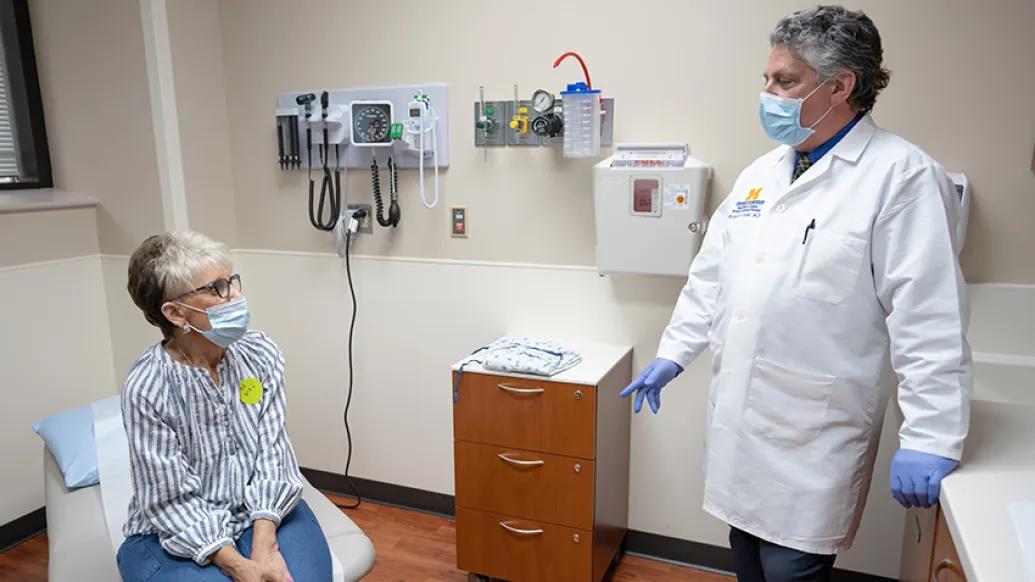
"COVID-19 changed the face of health care in the United States virtually overnight. Oncologists were discussing with their patients whether the benefit of coming in for treatment outweighed the risk of being exposed to the virus in the health care setting," says Laila A. Gharzai, M.D., LLM, a radiation oncology resident at Michigan Medicine.
"It was a challenging shift for physicians, and we personally wanted some help navigating these conversations," she says.
In response, Gharzai and colleagues interviewed eight physicians to identify specific communication challenges related to COVID-19 and surveyed 48 patients to get their perspective.
They identified three core communication strategies and applied them to eight specific scenarios impacting patients, including concerns around risk of COVID-19, delays in testing or treatment, changes to treatment and follow up care. Informed by the communication strategies, the team created examples of language that oncologists could use to respond to patients empathetically. Their results are published in JAMA Oncology.
"What impacted me most was hearing just how tough these conversations were. As oncologists, we are used to having tough conversations with our patients. COVID-related conversations took this to a whole other level, by incorporating a new challenge of having to view all of our decisions with a public health lens. This guide was important to give providers a quick resource when they needed it most," Gharzai says.
SEE ALSO: App Calculates Risk of Delaying Cancer Care During Pandemic
Patients' concerns ranged from their risk of getting coronavirus to fears that a delayed test could miss a growing cancer. Many patients felt they were being punished or ignored, as if their health needs were less important. And while the decisions were all made with a view toward keeping patients safe from the greater threat of COVID-19, cancer is not used to taking a backseat.
"Patients are understandably emotional when they receive a cancer diagnosis, even under normal circumstances. This emotional response was amplified by the stress of changes due to the pandemic," says Reshma Jagsi, M.D., D.Phil., Newman Family Professor and deputy chair of radiation oncology at Michigan Medicine and senior author on the paper.
"The practical language in the guide really helped me to reassure patients that I recognized their very appropriate emotions, that I care deeply about them, and that I was going to try to help," she says.
The team published their guidelines online in April, when COVID-19 was peaking in Michigan. It remains available to providers.
Kenneth Resnicow, Ph.D., and Lawrence C. An, M.D., are co-authors on the paper.
Paper cited: "Perspectives on Oncology-Specific Language During the Coronavirus Disease 2019 Pandemic: A Qualitative Analysis," JAMA Oncology. DOI: 10.1001/jamaoncol.2020.2980

Health Lab
Explore thousands of health news & research stories by visiting the Health Lab homepage for more.
Media Contact

Public Relations
Department of Communication at Michigan Medicine
Stay Informed
Want top health & research news weekly? Sign up for Health Lab’s newsletters today!
Featured News & Stories

Many older adults make Medicare decisions quickly and most don’t change plans, poll finds

What’s the latest on 7-OH and kratom availability and addiction care?

Better prenatal care data could help prevent maternal complications, experts say

Liver cancer can be preventable. Do you know the treatable risk factors?

Many hospitals still don’t do enough to prevent UTIs from catheters

