Black Box Warning Slows, but Doesn’t Stop, Codeine for Kids After Tonsil and Adenoid Removal
In a new study, 1 in 20 privately insured children were prescribed codeine after common surgeries, despite the FDA warning on significant safety risks.
7:00 AM
Author |

Despite an FDA black box warning against prescribing children codeine following tonsil and adenoid removal, 1 in 20 children undergoing these surgeries continued to receive the opioid, a new study suggests.
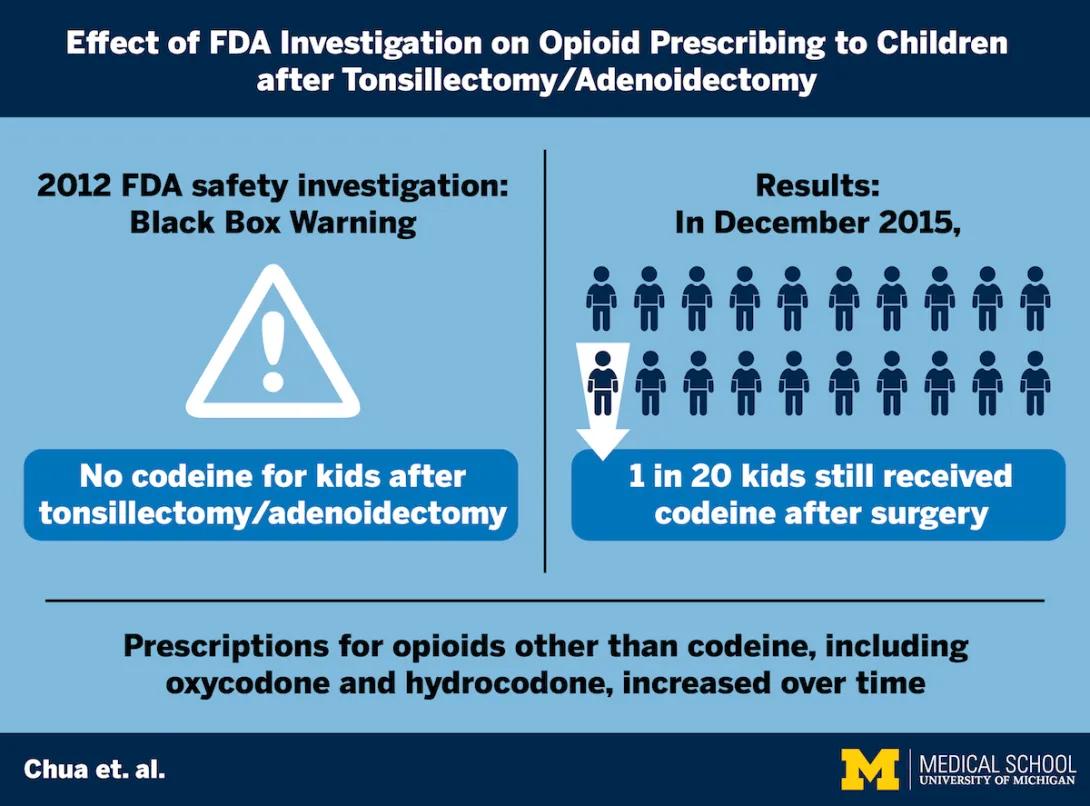
The FDA issued a warning regarding the significant safety risks of codeine use by children undergoing a tonsillectomy or adenoidectomy in 2013. While the move substantially decreased codeine prescribing, it did not completely eliminate the practice, researchers report in Pediatrics.
"The residual codeine prescribing is concerning since this should be a zero event," says lead author Kao-Ping Chua, M.D., Ph.D., a researcher and pediatrician at University of Michigan C.S. Mott Children's Hospital who conducted the study with colleagues at the University of Chicago and Harvard Medical School.
"We need to ensure children are not subjected to unnecessary potential harm when we have reasonable alternatives."
Researchers analyzed a national sample of claims from 362,992 privately insured children who had a tonsillectomy and/or adenoidectomy between 2010 and 2015. Following the FDA warning, codeine prescribing related to the common procedures decreased significantly, by roughly 13 percentage points. Yet, about 5 percent of children were still prescribed codeine following these surgeries in December 2015 — nearly three years after the black box warning.
In an additional analysis, researchers also found that the decreased use of codeine was accompanied by an increase in prescribing strong opioids, such as oxycodone and hydrocodone. This trend deserves further study, Chua notes.
"Though over-the-counter medications like ibuprofen are quite effective for pain after these surgeries, some children with more severe pain will require opioids like oxycodone and hydrocodone. The problem is that there are also concerns regarding the safety and abuse potential of these alternative opioids," says Chua, also a member of the Child Health Evaluation and Research Center.
Codeine's risks in children
Historically, codeine has been widely used to treat pain among children undergoing surgical removal of tonsils or adenoids. But in the past few decades, the FDA received several reports of respiratory depression and death among children prescribed codeine after these surgeries.
SEE ALSO: These Surgeons Wanted to Prescribe Fewer Opioids. So They Developed a Guide for All to Use
Most of these children were "ultra-metabolizers" who converted codeine rapidly to morphine in the liver, resulting in dangerously high blood morphine levels. As a result, the FDA initiated a safety investigation in August 2012 and ultimately issued a "black box warning" that specifically prohibited the use of codeine for children undergoing these surgeries.
In 2016, the American Academy of Pediatrics reinforced the warning and also called for the elimination of codeine use more broadly in pediatrics.
"The problem is we don't know how each patient metabolizes codeine. So every time a doctor prescribes codeine to a child, they are rolling the dice with the child's health," Chua says.
"Our findings suggest the need to increase efforts to eliminate inappropriate codeine prescribing and encourage the use of effective nonopioid medications following tonsil and adenoid removal in children."

Health Lab
Explore thousands of health news & research stories by visiting the Health Lab homepage for more.
Media Contact

Public Relations
Department of Communication at Michigan Medicine
Stay Informed
Want top health & research news weekly? Sign up for Health Lab’s newsletters today!
Featured News & Stories

Winning by default: Tonsillectomy study shows power of pre-set opioid Rx size

Digital alerts support timely treatment decisions of critically ill cardiac patients

More than half of U.S. adults now qualify for statins under new guidelines

Weight loss and surgery restore patient’s throat after near-death brush with likely COVID

7 things to know about Medicare’s new GLP-1 coverage