The Best Treatment for Laryngeal Cancer? This Approach Helps Decide
A new study finds exceptional long-term survival when a single dose of chemotherapy selects patients for chemoradiation or surgery.
11:00 AM
Author |
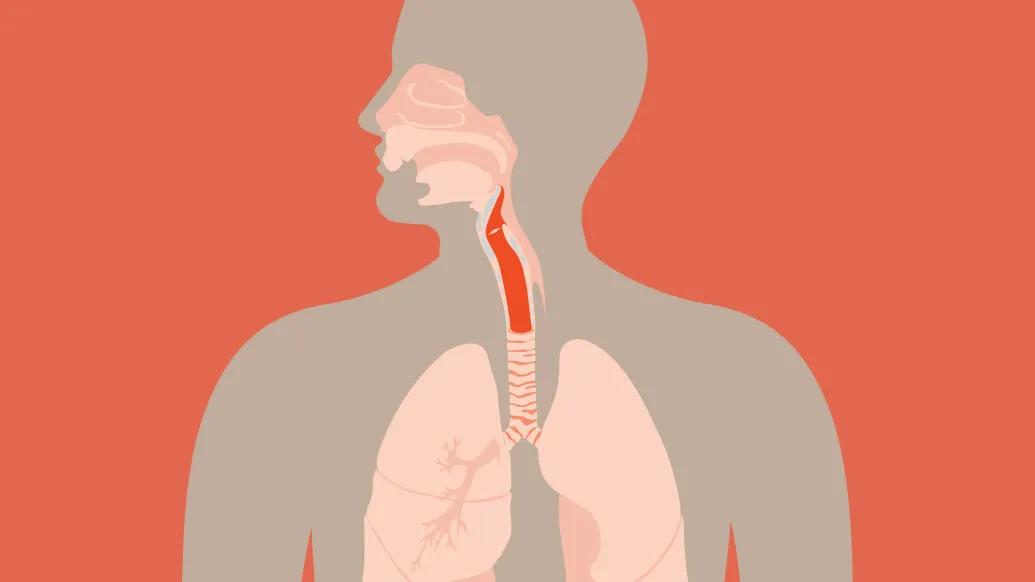
Even as treatment options for laryngeal cancer seemed to improve, survival rates did not. For the most advanced patients, 50 percent survival was the norm, whether patients had surgery to remove the voice box or alternative treatment with chemotherapy and radiation to try to avoid surgery.
MORE FROM THE LAB: Subscribe to our weekly newsletter
But the head and neck oncology team at the University of Michigan Rogel Cancer Center came up with a different approach: Give patients a single dose of chemotherapy and see who responds to it. The responders can continue with a combination of chemotherapy and radiation. The nonresponders can be referred immediately for surgery.
After a decade of using this approach, researchers are reporting "exceptional" survival rates nearing 80 percent, even for the most advanced patients. The team published its outcomes in JAMA Otolaryngology — Head and Neck Surgery.
"In trying to match the biology of the tumor to the treatment, all of the patients get better outcomes," says study author Gregory T. Wolf, M.D., professor and chair emeritus of otolaryngology — head and neck surgery at Michigan Medicine.
"This approach allows us to enhance quality of life for all of our patients. Many patients can spare their voice box by having chemotherapy and radiation. But that's only good if the treatment works. For patients who must go on to receive surgery, by selecting them upfront, we can spare them the complications that may occur when the voice box is removed following multiple cycles of chemotherapy with radiation," adds study author Francis Worden, M.D., professor of hematology/oncology.
The Michigan Medicine team first tested the idea in 1995. The researchers found that patients whose tumors shrank by more than half after one round of chemotherapy were more likely to do well with chemotherapy and radiation and have an excellent chance of saving the voice box. If the tumor did not respond after the first dose, patients were likely to fail on the chemotherapy and would do better going straight to surgery.
In a clinical trial, the researchers saw disease-specific survival rates of 80 percent in patients with advanced disease. This was unheard of. And it wasn't just those who responded to the chemotherapy. The nonresponders who were immediately referred for surgery had better outcomes, too.
"We adopted the treatment approach and started offering it to all our laryngeal cancer patients," Wolf says. The team also maintains long-term follow-up data on patients. Wolf suggested they look back to see whether patients were still maintaining such strong outcomes with this approach. The results surprised even him.
This adds ammunition to the idea that we need to pick individual therapies more carefully.Gregory T. Wolf, M.D.
Over 10 years, 153 patients with stages 3 and 4 laryngeal cancer were treated at Michigan Medicine, with about half receiving the induction chemotherapy. The remainder elected to proceed straight to surgery or chemoradiation without the induction dose.
SEE ALSO: How Immune Cells Could Guide Cancer Treatment Decisions
Average disease-specific survival at five years for the induction chemotherapy patients was 79 percent — equivalent to the results in patients with early stage disease, and significantly better than the 66 percent survival for patients who had chemoradiation without the induction strategy.
"This adds ammunition to the idea that we need to pick individual therapies more carefully. Both chemoradiation and surgery are difficult treatments with their share of challenging long-term effects. But if we tailor treatments to the individual biology of the tumor and characteristics of the patient, we'll get the best results," Wolf says.
The study did find lower functional preservation of the larynx in the induction chemotherapy group compared with those who elected chemoradiation. Two-thirds of the induction group achieved organ preservation, while more than three-quarters of the chemoradiation patients did.
Wolf notes, however, that chemoradiation often severely damages the larynx, which may cause problems with eating or swallowing years later.
The induction approach can be done anywhere, but it requires intense collaboration among surgeons, medical oncologists and radiation oncologists. All three specialties must be involved to assess the patient and refer to the appropriate therapy.
Even that single dose of chemotherapy can be debilitating and toxic for some patients. Wolf hopes future research will reveal a way to tailor treatment without the need for the induction chemotherapy.

Health Lab
Explore thousands of health news & research stories by visiting the Health Lab homepage for more.
Media Contact

Public Relations
Department of Communication at Michigan Medicine
Stay Informed
Want top health & research news weekly? Sign up for Health Lab’s newsletters today!
Featured News & Stories

New Way to Predict Complications After Larynx Cancer Surgery

Online resources and coaching helped people seek genetic testing for cancer

Liver cancer can be preventable. Do you know the treatable risk factors?

Prostate cancer and hereditary risk: A doctor explains the connection

Biomarkers aid cost-benefit analysis of head and neck cancer immunotherapy