A pharmacy role targeting pain management
A pain management clinical pharmacist-specialist describes what her unique job in the hospital entails.
5:00 AM
Author |
Some may think of pharmacists as generalists — professionals who can answer any question about medications, and even suggest the best over-the-counter remedy for minor bumps and bruises.
But some pharmacists are now highly specialized, which requires additional training and a focused residency, similar to clinicians.
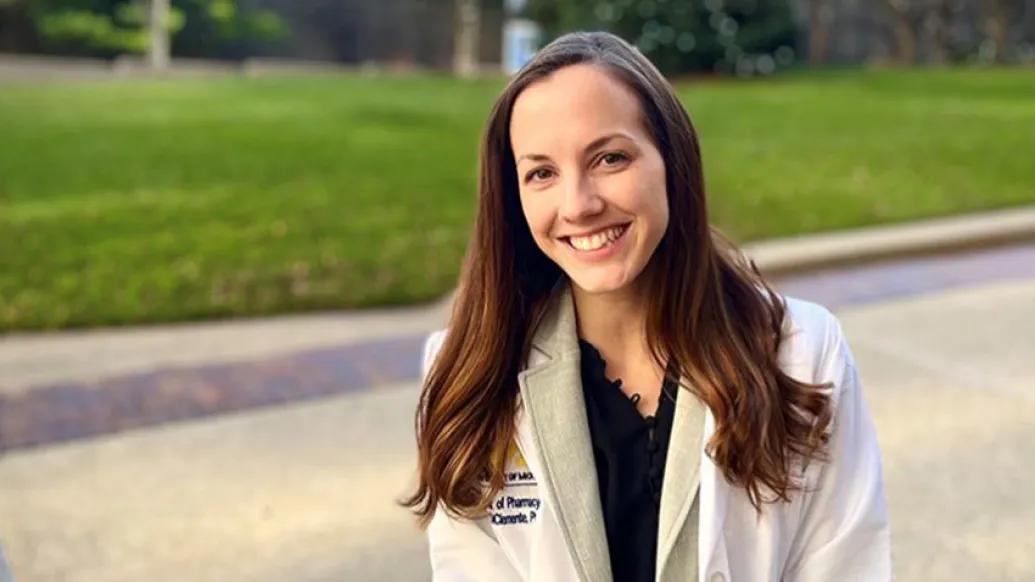
Jillian DiClemente, PharmD, is one such specialist.
As the University of Michigan Health's only full-time pain management clinical pharmacist-specialist, she provides clinical expertise about pain management medications to both inpatient and ambulatory care teams, serves as a member of the inpatient Adult Acute Pain Service and the Addiction Consult Team and offers expert advice on opioid management and opioid use disorder throughout the entire organization.
She also works to address institutional change through her involvement in seven committees, as well as the Rewrite the Script team, also known as RWTS — a group of physicians, nurses, therapists and volunteers dedicated to improving pain management, reducing the opioid crisis and building a supportive, non-stigmatizing approach to addiction.
Your role requires you to consult with many inpatient and ambulatory groups on a regular basis. How do you balance all of this?
DiClemente: One of my biggest challenges is that there is only one of me, so it feels like there isn't enough time in the day. Not everything is in my job description, but I make the time to take on additional roles so I can connect the dots to better understand how we care for these patients. For example, five of our pain committees cross over areas such as acute pain, palliative care and substance abuse. When we all work together, we can gain better alignment on how we manage pain across the organization.
Do you work mostly with patients or physicians?
DiClemente: Both. I often work directly with patients to help them understand why a change in medication is needed. I also meet with patients to perform pain assessments, monitor or optimize medication, and prepare patients for discharge with pain management planning. I also round with the Addiction Consult and Acute Pain teams daily, and I am often called upon to help physicians as they consider and initiate treatment for patients with chronic pain or opioid use disorder.
How do specialties like this change the role pharmacists play in clinical care?
DiClemente: I love how pharmacists can help pain management and the opioid crisis. I have seen a lot of patients who wanted to stop chronic opioid use for various reasons but didn't know how to. I have also seen pharmacists and physicians who were uncomfortable with how to taper or rotate opioid medications. Patients want to be heard and pharmacists are uniquely positioned to support a patient with long term chronic pain. A physician doesn't always have time, or a patient has the perception that their doctor won't have the time to listen. They are often more open to talking with pharmacists. And 99% of my recommendations are accepted and implemented by the caring physicians.
How is your work within the Rewrite the Script team different from past approaches to pain management?
DiClemente: Our philosophy is to really listen to patients about their pain. Patients have a very personal and emotional experience with pain, and how they cope with it is formed by how they experience or perceive pain. We also need to understand their pain history. Often patients have already been through a lot and have experienced many kinds of medications before we see them for the first time.
As a team lead I am also responsible for a set of 12 metrics for both in- and outpatient regarding opioid prescriptions. This allows us to see for the first time what opioid use looks like across the entire organization. Our goal is not necessarily to stop using opioids completely, but to determine their appropriate use and direct quality improvement measures toward safe opioid prescribing.
What is your biggest challenge in this role?
DiClemente: Stigma is a problem. Even if someone experienced IV drug use long ago, it will still be a part of their past history, and it still goes with them, even if they are not using it any longer. One of the biggest challenges in this role is having the capacity to provide just-in-time teaching for all of our health care team members to shift the way they approach medication management and assess patients with complex pain or opioid use disorder. It's also difficult knowing that approximately 30% of our inpatients experience uncontrolled pain, and we aren't always able to reach them.
Why did you decide to focus on this specialty?
DiClemente: My first year of residency was at Henry Ford Hospital in Detroit and I worked with my program director to create a pain and palliative care rotation because they did not offer one at the time. I instantly enjoyed working with that patient population and saw the essential role that pharmacists have in optimizing pain and symptom management medications. My love for this specialty grew during my second year of residency in pain and palliative care at The Johns Hopkins Hospital in Baltimore.
What do you love most about your job?
DiClemente: My job is so rewarding! First, I love making an impact every day with the patients I see. I recently worked with a patient who was experiencing severe pancreatitis pain. I helped coordinate care between the primary team, Acute Pain and Addiction Consult to implement a pain management plan for him.
I saw the patient a few days later and he said, "Thank you so much. I feel so much better." Those are great moments.
Secondly, it is rewarding to educate and support my colleagues in managing pain and I enjoy seeing them implement some of my patient care approaches and strategies after we have worked together.
This article was additionally edited by Allison Mi.

Health Lab
Explore thousands of health news & research stories by visiting the Health Lab homepage for more.
Media Contact

Public Relations
Department of Communication at Michigan Medicine
Stay Informed
Want top health & research news weekly? Sign up for Health Lab’s newsletters today!
Featured News & Stories

Common Drugs, Uncommon Risks? New Study Looks at Serious Health Problems After Short-Term Steroid Use

Top 7 tips for choosing Medicare prescription drug coverage for 2027
Who’s at risk for painful periods?
The Care Ecosystem: Supporting People Living with Dementia and Their Families
College of Pharmacy alum advances U-M Medical School addiction research