Rare cancer diagnosis inspires community of support
Jill and Michael Templeman turn gratitude for a remarkable recovery into long-term support for adrenocortical carcinoma research.
Author |
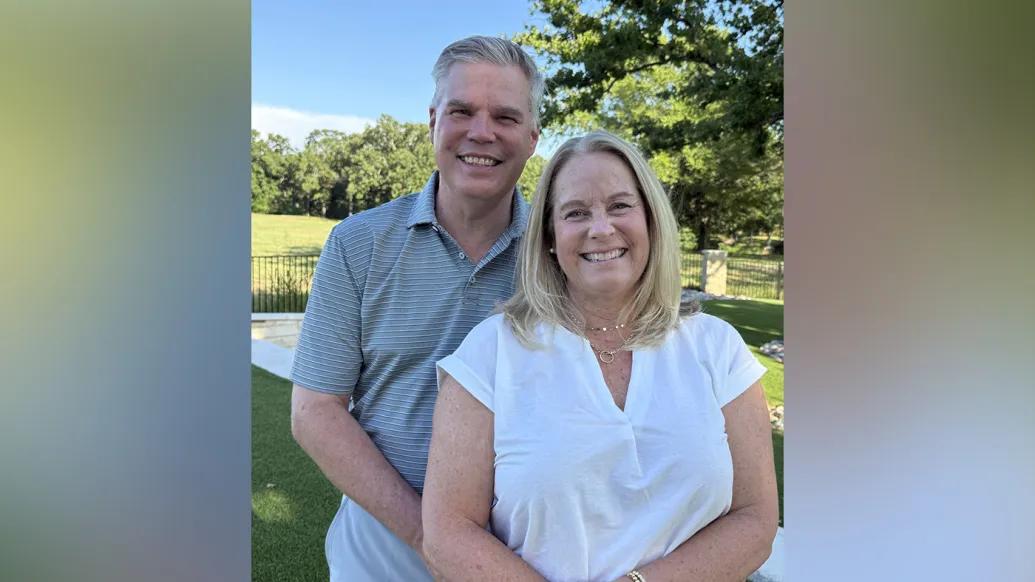
A few years ago, a stranger tried to stop Jill Templeman while she was shopping.
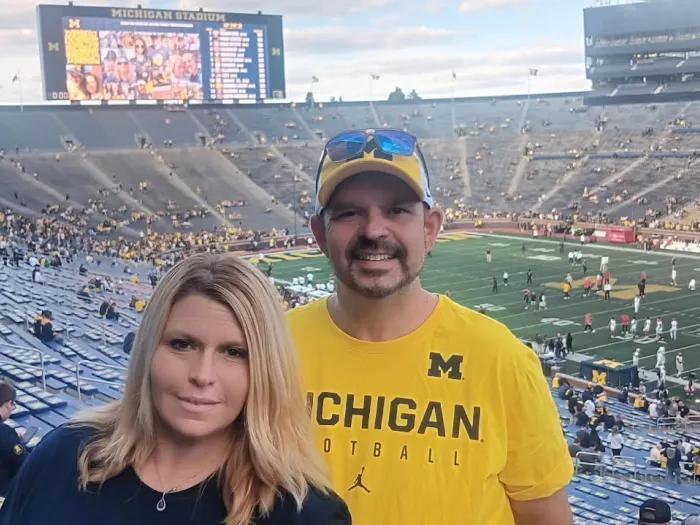
“I was walking out of Trader Joe’s wearing my Michigan hat, and some guy came up to me because he was a big Ohio State fan,” she says. “He gave me a hard time about Michigan. I said, ‘I didn’t go to Michigan.’”
The man asked why she was wearing the hat.
“I told him that they saved my life,” she says. “It stopped him.”
Several years earlier, Jill had been diagnosed with adrenocortical carcinoma (ACC), a cancer of the adrenal gland. As Templeman’s care team in California considered the best course of treatment, her surgeon at UCLA, Masha Livhits, M.D., sought input from Gary Hammer, M.D., Ph.D., an internationally-recognized leader in ACC at U-M who had recently completed a study relevant to Templeman’s care. This collaboration helped inform Templeman’s treatment plan, and today she is cancer free.
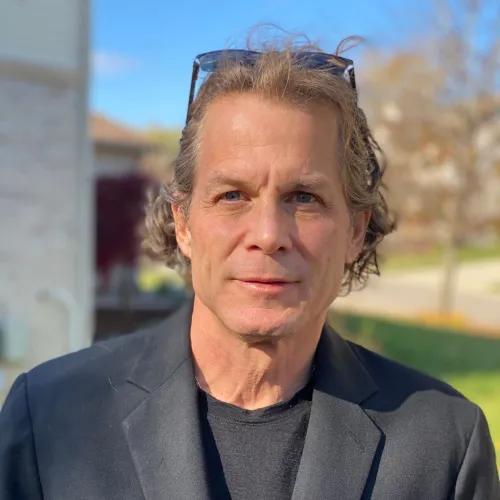
Hammer is the Millie Schembechler Professor of Adrenal Cancer and professor of internal medicine, molecular and integrative physiology, and cell and developmental biology in the U-M Medical School.
Now, Jill and her husband, Michael, are giving back by raising awareness and funding for Hammer’s ACC research. They hope to help others overcome this rare and often deadly disease.
A difficult diagnosis
Templeman was diagnosed with ACC in 2020 after experiencing abnormal hair growth and learning her testosterone levels were extremely high. Scans revealed a 13-centimeter tumor on her adrenal gland. At UCLA, Livhits performed an adrenalectomy to remove the tumor and Templeman's right adrenal gland. Pathology results indicated that the cancer was very aggressive, and Templeman moved into the next phase of treatment.
“My team at UCLA recommended throwing the book at it,” Templeman says. “They wanted to do radiation, oral chemotherapy, and infusion chemotherapy. I went on mitotane, which is an oral chemotherapy medication that directly attacks adrenal cells.”
After doing their own research, the Templemans were worried about the impact of radiation therapy on possible future treatments. They had read that scarring from radiation therapy could make surgery more difficult if Templeman’s cancer ever came back. They brought their questions to Livhits, and she told them she would consult with colleagues for additional input.
“A couple days later,” Templeman says, “she came back and said, ‘I reached out to Dr. Gary Hammer at the University of Michigan. He’s the guru of adrenal cancer research. His team has just completed a study on the effects of radiation on the adrenal bed after surgery.’
“The study showed that radiation reduced recurrences by about 50%,” Templeman says. “Dr. Hammer said I should absolutely do mitotane and radiation, so we said OK.”
After completing radiation therapy, Templeman met with Hammer over Zoom. He told her she was making great progress and that he did not recommend infusion chemotherapy at that time.
“I thought, ‘Oh my gosh, you’re my hero,’” Templeman says. “Infusion chemotherapy was very scary for me.”
In the right place
In 2021, the cancer was found to have spread to Templeman’s lungs, but it proved to be very slow growing, which is unusual for ACC. Eventually, the nodule was large enough to remove, and Templeman decided to travel to Michigan Medicine for treatment, during which a second nodule was found.
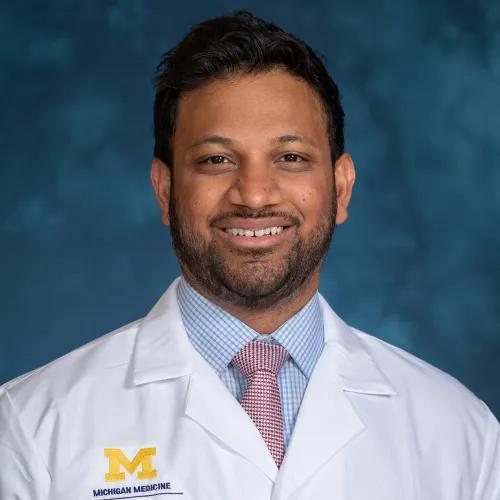
“One of my doctors at Michigan Medicine, Dr. Andrew Chang, removed the first nodule and began to watch the second,” Templeman says. “As it grew, Michigan Medicine’s tumor board and Dr. Shantanu Warhadpande recommended cryoablation, a minimally invasive procedure that uses cold to destroy abnormal cells. In a meeting with Warhadpande, it came up that the leading expert in lung ablations, Dr. Robert Suh, was coincidentally at UCLA, so I was referred back to my California treatment center.”
Back in California, Suh used thermal ablation to destroy the nodule, and the treatment was a success.
“I think I was in the right places at the right time and got the right referrals,” Templeman says. “We like to talk about Michigan and how great they’ve treated me, but also how they referred me back to UCLA when it was time. It has been a great partnership.”
Inspired to give back
In 2021, Templeman attended a research event at Michigan Medicine. She met other ACC patients and families, and the attendees toured labs — including Hammer’s — and heard the research teams discussing their work. She also learned about the lack of funding for rare cancer research.
Knowing that most other ACC patients don’t experience good outcomes, Templeman felt called to help.
“I feel like I’m here, I’m healthy, I’m a woman of faith, and I don’t think this is coincidental,” she says. “I think there’s something for me to do here.”
She told another event attendee that she was going to try to raise some money but that she didn’t know how much.
“He said, ‘You’d be surprised. You’ll raise $25,000 before you know it,’” Templeman says. “I said, ‘I don’t know about that.’”
Shortly after the event, the Templemans created the Jill Templeman Fund for ACC at Michigan Medicine and built a fundraising page to support Hammer’s work. They raised about $62,000 from family, friends, and work acquaintances over the next several years.
Inspired by a meaningful connection
In 2023, an unexpected connection gave Templeman a new focus.
The Templemans hosted a dinner at a local restaurant for people who had donated through their page. They invited Hammer to attend and discuss his research.
“It wasn’t so much a fundraising dinner as it was an opportunity to say, ‘We want you to know what your money is going toward,’ because we were asking them to give every year,” Templeman says.
Michael’s best friend mentioned to Hammer that one of his friends from childhood had died of ACC after working with Senator Ted Kennedy on legislation related to rare cancers. Hammer immediately knew who he was talking about.
“He stopped him and said, ‘Is that Rick Ally? He was my patient, and I was working with him on that legislation,’” Templeman says.
The connection surprised everyone and was very meaningful to the Templemans’ friends, who decided to join the Templemans in taking their next step in support of ACC research.
Continuing the search for a cure
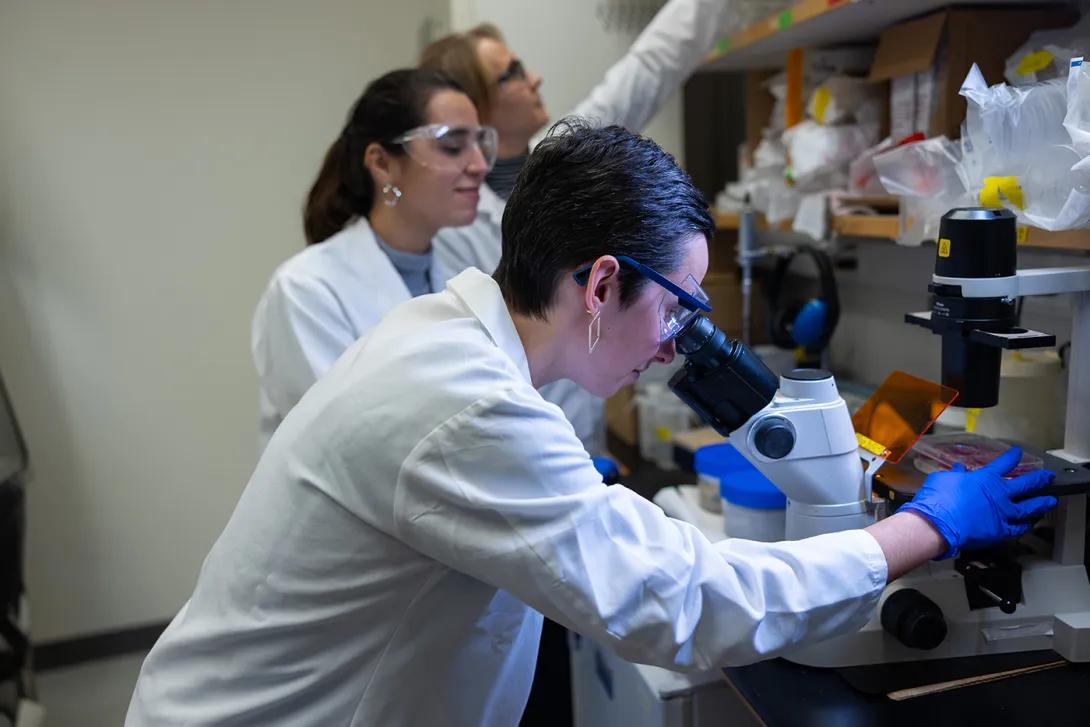
In 2026, the Templemans and their friends created an endowed fund, the Templeman Ally Fund for ACC Research, to provide lasting support for Hammer’s lab.
“Our goal is to raise $500,000 for the endowment,” Templeman says. “That will provide support for a graduate student or postdoctoral fellow in Dr. Hammer’s lab, in perpetuity. We’re excited that we can come alongside him, help this community, and hopefully find a cure. That’s what we need — a cure.”
“Trainees — undergraduates, graduate students, and post-doctoral fellows — are collectively the real engines of progress,” Hammer says. “They are young, creative, energized, and empowered to contribute new ideas to keep discovery moving forward, one experiment and one patient at a time. As the leaders and experts of tomorrow, they are absolutely critical to continued progress. Supporting their work will lead to decades of lasting impact.”
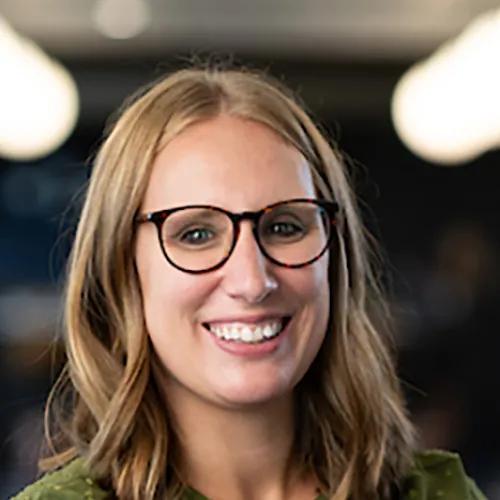
“It has been incredible,” says Jackie Rink, senior associate director of development in Michigan Medicine’s Office of Development. “I’ll add that Jill and Michael have been reaching out to friends and family about the Templeman Ally Fund, and the response has been amazing. It’s a testament to their connections and to the people who want to help do something.”
Templeman hopes her story encourages others to see themselves as part of the search for lifesaving treatments.
“You never know who you’re going to touch,” she says. “If you can fund a person, even for a year, every little bit helps. You don’t even have to fund the whole person. Those little pieces combine to make a whole. Every little bit helps. Every gift matters.”
If you are interested in joining the Templemans in supporting adrenocortical carcinoma research, please make a gift to the Templeman Ally Fund for ACC Research.
About the Look to Michigan campaign
This gift is part of Michigan Medicine’s Look to Michigan fundraising campaign, which aims to create transformative answers to health care’s biggest challenges for the benefit of people in our state and beyond. Building on 175 years of leadership in medicine and as part of the University of Michigan’s Look to Michigan strategic framework for impact, we are breaking new ground in patient care, research, medical and graduate education, health care facilities, and health advancement and community engagement. Together, we can improve and save lives. For more information, visit michiganmedicine.org/giving/look-to-michigan.
Philanthropy News
Discover how donors at Michigan Medicine drive advances in patient care, research, and education. See how philanthropy brings Michigan answers to patients and families.
In This Story
Andrew C Chang, MD
Professor
Gary D Hammer
Professor
Jackie Rink
Associate Director of Development
Shantanu Warhadpande, MD
Clinical Assistant Professor
Featured News & Stories
Continuing the legacy of a doctor’s doctor
Online resources and coaching helped people seek genetic testing for cancer
Family’s gift honors wife and mother, supports nephrology nurses

Comprehensive DNA sequencing reveals hidden drivers of cancer
‘Molecular glue’ stabilizes protein that inhibits development of non-small cell lung cancer and uterine cancer