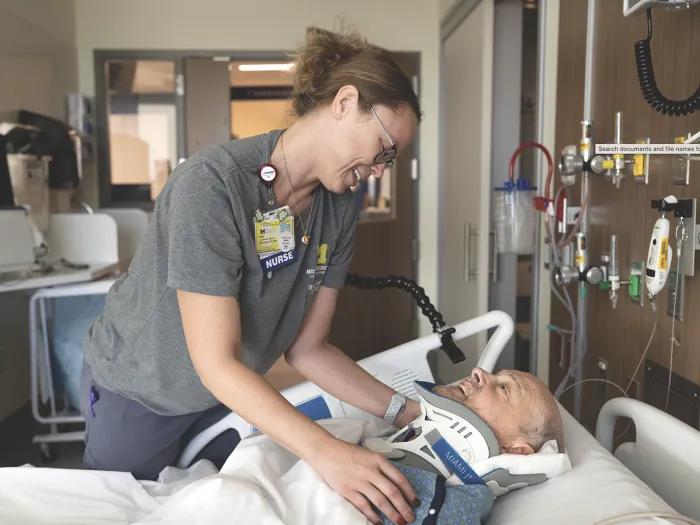
Mindful gift supports patient well-being
Inspired by their own experiences with mindfulness-based stress reduction, Bob and Debbie Merion help share the practice with others.
Author |

For alumni Bob Merion (M.D. 1979, Residency 1986) and Debbie Merion (M.S.W. 1978), mindfulness-based stress reduction (MBSR) is an important part of daily life and central to well-being.
Now they are helping to share the practice with others. Their gift to Michigan Medicine’s Integrative Family Medicine Program will give patients opportunities to learn evidence-based mindfulness practices that can improve mental, physical, and spiritual health.
A professor emeritus of surgery at the University of Michigan Medical School, Bob is former Chief of Michigan Medicine’s Section of Transplant Surgery and former Director of the Transplant Center. He began to practice meditation during the Covid-19 pandemic and found it greatly improved his ability to cope with stress and anxiety.
Debbie is an award-winning author, writing coach, educator, and longtime meditation practitioner. She first learned transcendental meditation during her college years and uses it as part of her toolbox to be calm and aware. Since 2003, Debbie has been mentored by writer Natalie Goldberg to combine writing and meditation and earned a Master of Fine Arts degree in creative non-fiction from Pine Manor College in 2014. Debbie uses these ideas to help herself and others feel the healthy fulfillment that comes from expressing yourself clearly.
Finding whole-person care
Having long enjoyed exploring healthy living options, Debbie transitioned her health care to Michigan Medicine’s Integrative Family Medicine program several years ago. She appreciates how the program embraces complementary therapies.
“I’ve been delighted to see how they will support non-medical methods, including discussing vitamins or other supplements as an alternative to taking medication,” she says. “And something which is so wonderful in the world of medicine these days — I don't feel rushed.”
Bob became a patient in Integrative Family Medicine more recently. As someone who spent his career practicing highly specialized medicine, the patient-centered, evidence-based approach is important to him.
“I always feel like I’m the most important person in the world at that moment for whichever caregiver I’m seeing in Integrative and Family Medicine,” he says, “and that means a lot, because it’s not something you can just write a script for and say, ‘Okay, go to CVS, get this filled, and hopefully it will be better.’ It takes conversation and discussion. And I also love that they really focus on the level of evidence to support various things.”
A practice becomes part of daily life
Like many during the Covid-19 pandemic, Bob was feeling more stressed than usual. He asked his integrative medicine provider for ideas on how to address it, and MBSR came up as an option. Bob had some exposure to MBSR through Debbie’s practice, but hadn’t pursued it in a dedicated way. He decided to give it a try, and it quickly became part of his daily life.
“I just fell in love with it, and I found that it really helped me,” he says. “I feel like it has really helped me emotionally and psychologically, in terms of stress reduction and anxiety reduction, and I think I’m a better person as a result of that. There isn’t a day when I don’t set aside time to meditate. It’s become that important in my life.”
“Everybody has feelings,” says Debbie. “We all have fear, we all have anxiety — we can’t exist without them. So we all have to figure out how to manage that.”
MBSR was developed by Jon Kabat-Zinn, Ph.D., at the University of Massachusetts Medical Center in the late 1970s. It includes meditation, yoga, discussion, and body awareness exercises as ways to manage stress and anxiety and improve health.
“The way he took his scientific background and combined it with a Buddhist meditation background — while taking out all of the religion and making it into a secular practice that everybody can benefit from — is very clever and interesting,” says Debbie.
Increasing access through philanthropy
With their long history of involvement and dedication to U-M, the Merions were looking for ways to give back. They asked Jill Schneiderhan, M.D., Clinical Associate Professor of Family Medicine, if there was anything they could do to support Integrative Family Medicine, and she connected them with Amy St. Amour, Associate Director of Development in Michigan Medicine’s Office of Development.
“We had some discussions, and one thing led to another,” says Bob. “And I think the real push over the goal line was Debbie, because I think she was enthralled with the idea of having a fund that could help integrative medicine and make mindfulness-based stress reduction available to more people and give it more visibility.”
“It was extremely exciting for me to learn about Bob and Debbie’s interest in mindfulness, as expanding access to MBSR has been one of our strategic initiatives for several years now,” says Schneiderhan. “The support from this gift has allowed us to make this a reality.”
The Debbie and Bob Merion Family Mindfulness Fund will support two six- to eight-week MBSR class cohorts for patients in 2026. They hope the classes will build momentum for a more extensive program that includes additional MBSR sessions, introductory classes, and more access for patients and community members.
“My hope is not only that this program will grow and that people will individually improve from it,” says Debbie, “but that the improvements will ripple out into the community, the Ann Arbor community, and the world.”
The Merions hope that their gift will help people manage stress and anxiety and experience more peace and meaning in their lives. Their story highlights how thoughtful philanthropy can transform personal experiences into positive change and opportunities for others.
If you would like to help share mindfulness practices with patients at Michigan Medicine, please make a gift to the Debbie and Bob Merion Family Mindfulness Fund. You can also support patient programming and learner and faculty training through the Integrative Family Medicine Enrichment Fund. Thank you for your generosity. To learn more about how you can make a difference in the Department of Family Medicine contact Amy St. Amour, Associate Director of Development, at [email protected] or 734-764-6777.
About the Look to Michigan campaign
This gift is part of Michigan Medicine’s Look to Michigan fundraising campaign, which aims to create transformative answers to health care’s biggest challenges for the benefit of people in our state and beyond. Building on 175 years of leadership in medicine and as part of the University of Michigan’s Look to Michigan strategic framework for impact, we are breaking new ground in patient care, research, medical and graduate education, health care facilities, and health advancement and community engagement. Together, we can improve and save lives. For more information, visit michiganmedicine.org/giving/look-to-michigan.
Philanthropy News
Discover how donors at Michigan Medicine drive advances in patient care, research, and education. See how philanthropy brings Michigan answers to patients and families.
In This Story
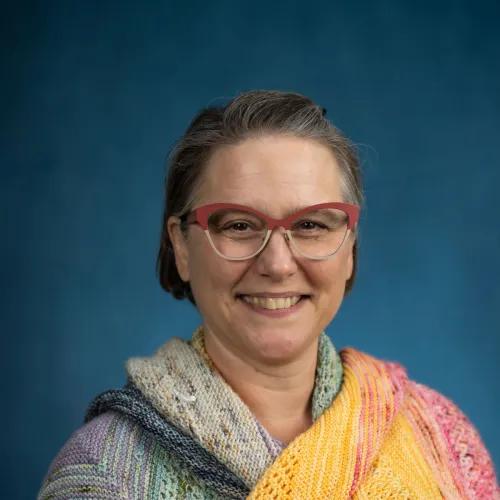
Jill Schneiderhan, MD
Clinical Associate Professor

Amy St. Amour
Associate Director of Development
Featured News & Stories

Long friendship inspires urology resident fund

Granger family continues support of local health care with major donation for new behavioral health hospital
Gifts advance colon cancer prevention and early detection

The Race to Uncover the Hidden Causes of Idiopathic Pulmonary Fibrosis

Shipt gift helps address food insecurity