From journalist to parent to advocate
Family’s cystic fibrosis experience inspires decades of advocacy and gift to help recruit, train, and retain the next generation of experts.
Author |
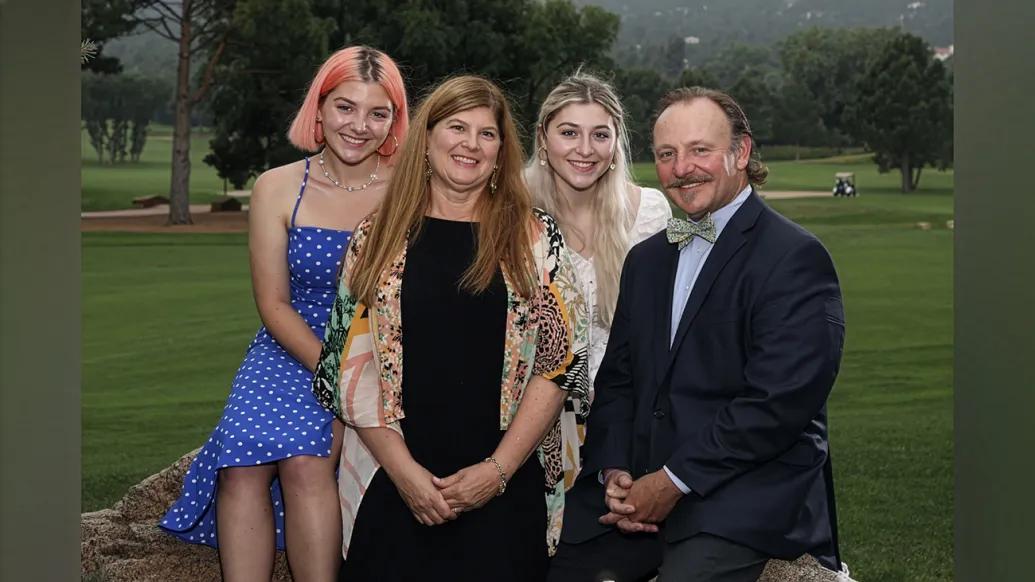
In 1989, when Laura Bonnell took a year off from journalism to work for United Way in Ann Arbor, she had no idea the experience would connect her to one of the most important breakthroughs in human genetics — and to a disease that would later affect her family and shape her life’s work.
Bonnell was working on a promotional piece about local agencies that received United Way funding. One of the featured areas was cystic fibrosis, so Bonnell connected with a member of the lab of Francis Collins, M.D., Ph.D., at the University of Michigan Medical School.
A professor of internal medicine and human genetics in the 1980s, Collins went on to oversee the Human Genome Project and was appointed director of the National Institutes of Health by President Barack Obama in 2009.
During his time at U-M, Collins and his team were working with Lap-Chee Tsui, Ph.D., at the Hospital for Sick Children in Toronto, on identifying genes that cause disease. Their first success came in May of 1989 when they isolated the gene for cystic fibrosis. This was a major breakthrough, and Bonnell was present at the August 1989 news conference when Collins and Tsui announced their discovery. It Happened at Michigan — A disease’s gene is discovered | The University Record
From awareness to diagnosis
Months later, Bonnell returned to journalism with no idea that cystic fibrosis would soon become part of her life again. She married her husband, Joe, and they had their first child, Molly, in 1994.
At first, the Bonnells thought Molly was healthy, but they became concerned when she developed digestive issues. Bonnell also noticed an unusually salty taste when she kissed Molly, triggering memories of a 1980s public health campaign that promoted early detection of cystic fibrosis.
“Molly had a lot of the symptoms,” Bonnell says, “and I remembered a ‘Kiss Your Baby’ campaign that Sherry Margolis did at Fox 2 News. If they taste salty, they might have cystic fibrosis. That’s how we diagnosed Molly.”
People who have cystic fibrosis can have high levels of sodium and chloride in their blood, so salty-tasting skin may be a symptom of the disease.
The Bonnells had Molly tested, and the results came back positive as they had expected. Bonnell and her husband hadn’t known they were carriers of the gene for the disease. Molly’s younger sister, Emily, was also diagnosed with cystic fibrosis a few years later.
Turning uncertainty into action
Bonnell started to become involved in the cystic fibrosis community. A few months after Molly’s diagnosis, the Cystic Fibrosis Foundation asked her to speak at an event.
“I was very emotional, and I started sobbing in the middle of my talk,” she says.
The Bonnells realized they were struggling to find the information and support they needed.
“I thought, ‘How can this be? I have so many questions. I’m still a reporter. That’s what I do — I have questions, and nobody to answer them, and not a single parent to talk to,’” Bonnell says.
This experience fueled Bonnell’s passion for helping other families living with cystic fibrosis. In 2010, she founded the Bonnell Foundation to offer parents and other caregivers the practical and emotional support she and her husband had wished for when their daughters were diagnosed.
One of the foundation’s offerings is a mentoring program connecting caregivers of children with cystic fibrosis to more experienced caregivers and adult patients to other adult patients. The goal is to offer emotional and practical support that helps people navigate the challenges of life with cystic fibrosis.
The foundation grew over the next several years, and Bonnell made it her full-time work in 2019. She also hosts the Living With Cystic Fibrosis podcast.
Reconnecting with Michigan Medicine
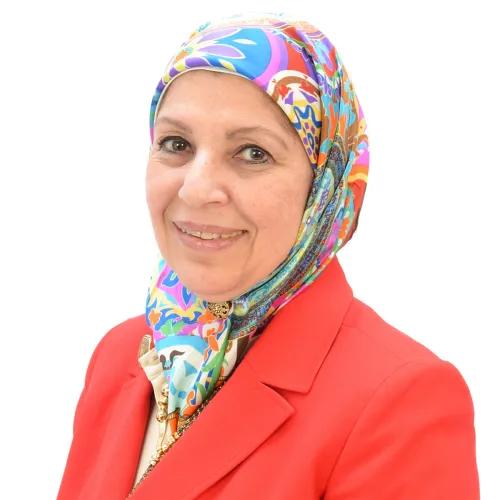
The first year the Bonnell Foundation held their annual calendar fundraiser, they donated the proceeds to support the work of Samya Nasr, M.D., Professor of Pediatrics, a pediatric pulmonologist who cared for her daughters at Michigan Medicine. Nasr’s clinical and scholarly work is focused on global health, respiratory diseases, and malnutrition.
“She impacts the cystic fibrosis world — not just Michigan, not just the country, but the world,” Bonnell says. “She is one of the smartest people I know and has a big impact on the cystic fibrosis community. She’s so fierce, she doesn’t back down, and she’s still fighting for our kids.”
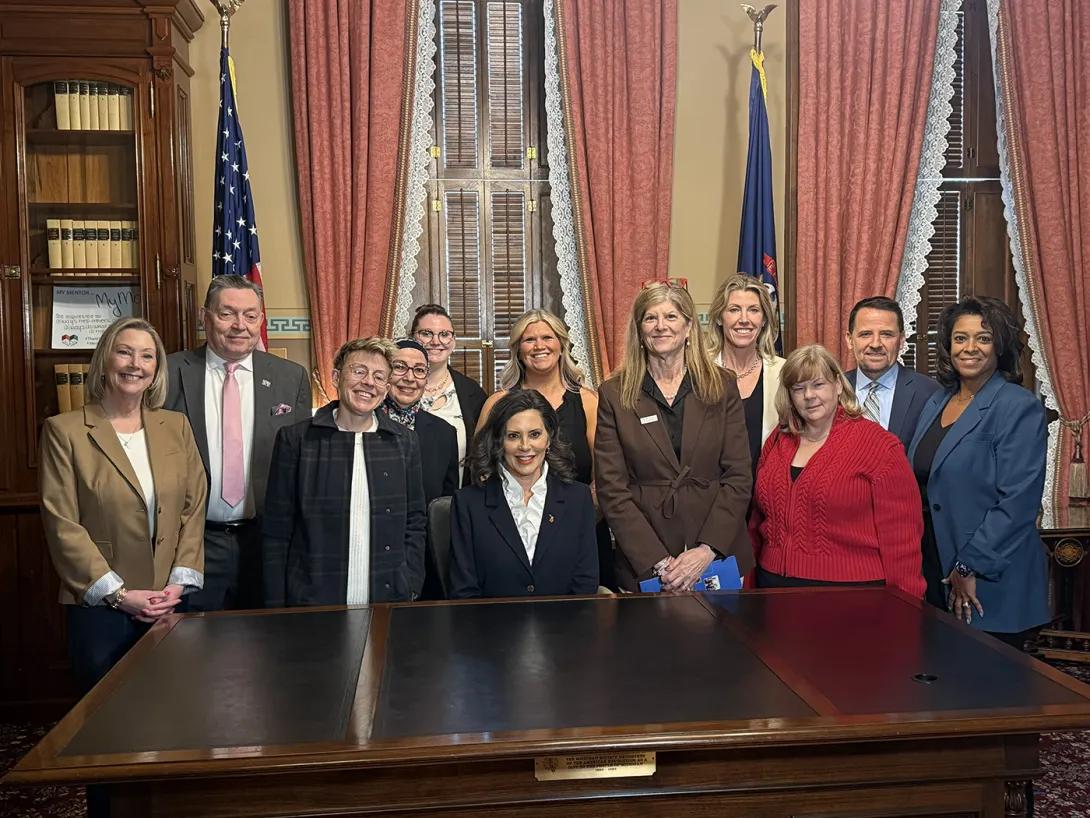
Bonnell’s partnership with Nasr goes beyond the lab and clinic. In May of 2026, they spent a day in Lansing advocating for cystic fibrosis research and treatment with Governor Gretchen Whitmer.
Investing in the next generation
Bonnell emphasizes the importance of encouraging and supporting the next generation of experts in cystic fibrosis research and care.
“There’s a lot of concern about who is going to keep the momentum going for cystic fibrosis — not only for adults like my kids, but for people born with cystic fibrosis now,” she says.
The Bonnell Foundation’s latest gift to the Division of Pediatric Pulmonology supports fellows and junior faculty who are pursuing research and educational projects focused on cystic fibrosis and global health. Bonnell hopes the knowledge and experience learners gain will fuel their interest in the disease and shape their future career paths.
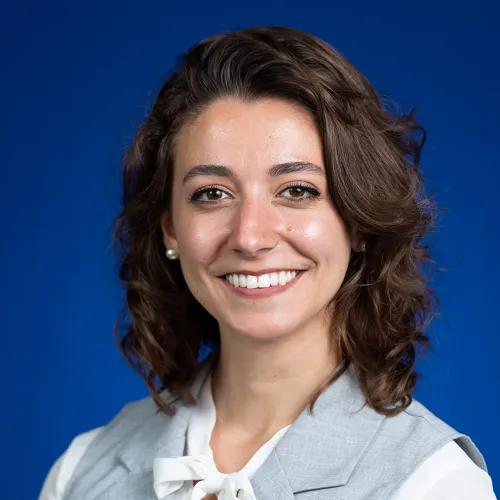
Bonnell worked with Kelly Bertoni, assistant director of development for children’s and women’s health in Michigan Medicine’s Office of Development, to plan the foundation’s gift.
“It’s challenging to recruit fellows for pediatric subspecialties,” says Bertoni, “and that’s a challenge across pediatric medicine right now. But the Bonnell Foundation’s support has enabled our fellows to have incredible opportunities, including international travel. It’s something that sets us apart from other institutions, and it’s a big attraction for learners.”
“It’s really important that they feel supported,” she says, “to get them into the fellowship program, keep them, and for them to experience what they need to make the decision.”
By supporting fellows and junior faculty, the Bonnell Foundation is building the future of cystic fibrosis research and care and ensuring that patients will continue to lead full, healthy lives.
“It’s an investment in Michigan,” Bonnell says. “It’s an investment in cystic fibrosis. It’s an investment in the University of Michigan. It makes us feel like we are doing something for the future to keep these doctors at the University of Michigan, and they will change the future for cystic fibrosis.”
If you would like to join Bonnell in supporting the next generation of experts and leaders in cystic fibrosis research and care, please consider making a gift to the Pediatric Pulmonary Gift Fund. If you have any questions or would like more information about how you can make a difference for people who are living with cystic fibrosis, contact Kelly Bertoni.
About the Look to Michigan campaign
This gift is part of Michigan Medicine’s Look to Michigan fundraising campaign, which aims to create transformative answers to health care’s biggest challenges for the benefit of people in our state and beyond. Building on 175 years of leadership in medicine and as part of the University of Michigan’s Look to Michigan strategic framework for impact, we are breaking new ground in patient care, research, medical and graduate education, health care facilities, and health advancement and community engagement. Together, we can improve and save lives. For more information, visit michiganmedicine.org/giving/look-to-michigan.
Philanthropy News
Discover how donors at Michigan Medicine drive advances in patient care, research, and education. See how philanthropy brings Michigan answers to patients and families.
In This Story
Kelly Bertoni
Assistant Director of Development
Samya Z Nasr, MB BCh
Professor
Featured News & Stories
Small comforts make a world of difference
High dose oxytocin protocol linked to lower postpartum hemorrhage rates
Beyond the White Coat: Disability, Neurodiversity and Advocacy in Medical School
Paralyzed from waist down as a child, patient walks across stage at high school graduation
Continuing the legacy of a doctor’s doctor