Giving in Gratitude: Rose O’Connor
Gift honors exceptional Parkinson's disease care and cutting-edge research in Michigan Medicine's Movement Disorders Program.
Author |
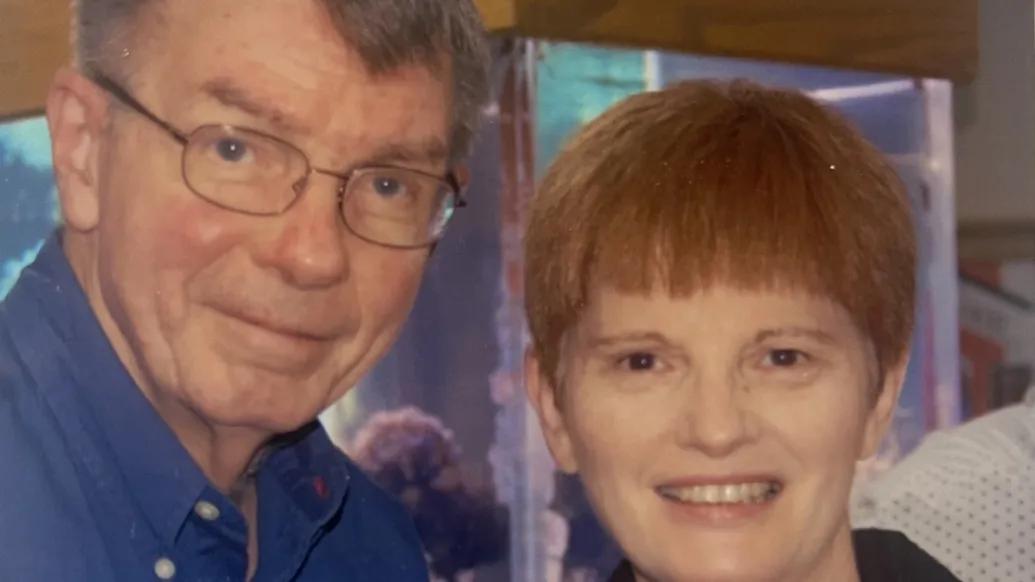
The U-M Health Movement Disorders Program offers the latest technologies, cutting-edge clinical trials, and multidisciplinary specialists who provide patients with the best quality of life possible. And Rose O’Connor of Plymouth, Michigan, is one of the program’s biggest fans. She recently made a gift to support the research of Daniel Leventhal, M.D., Ph.D., who is a clinical associate professor of neurology and of biomedical engineering, as well as an affiliate of the Michigan Neuroscience Institute.
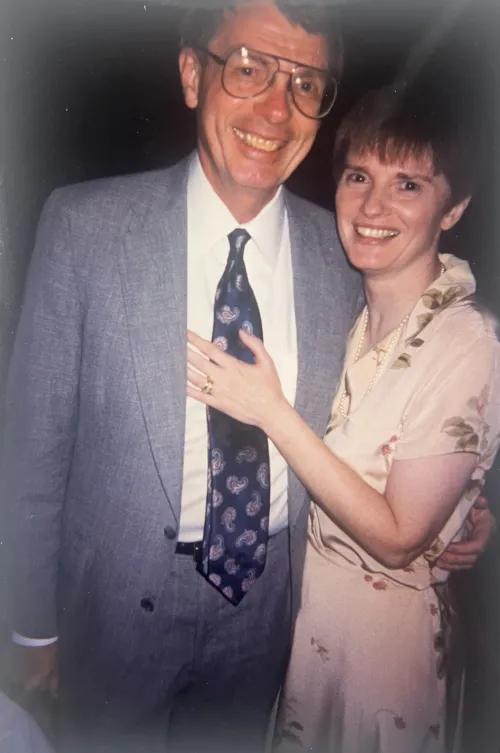
O’Connor made her gift for many reasons. Foremost was her gratitude to the Movement Disorders Program for the exceptional care her late husband, Lee Feldkamp, received. She is thankful to the people there who supported her and Feldkamp throughout their experience. “They were kind, patient, answered any questions,” she said. “From the moment of diagnosis, to keeping Lee comfortable – they were wonderful every step of the way.”
Supporting Dr. Leventhal’s research is meaningful to O’Connor as his work will help patients receive deep brain stimulation (DBS) surgery when they are asleep. “For some people, DBS surgery, currently performed while the patient is awake, can be intimidating and even frightening,” she said. If the procedure can be done while patients are sleeping, those with anxiety might be more likely to pursue it. O’Connor shared how Feldkamp benefited from DBS and was never afraid of having the procedure. As an engineer and inventor himself, he was fascinated by the technology and how it worked.
Feldkamp was born in Michigan and completed all his education at the University of Michigan, including his Ph.D. in nuclear engineering. O’Connor and Feldkamp first met at U-M while reading the kiosk in front of Hill Auditorium, which they referred to as “the scene of the crime.” After graduation, Feldkamp worked at Ford Motor Company and was able to pursue his own research even if it wasn’t directly related to the auto industry, though over time, research was mandated to become more clearly focused on specific automotive applications.
That period of his life was marked by scientific discovery, and Feldkamp ended up with several patents. Most notably, he created the algorithm for MicroCT, a form of computerized tomography. After pursuing possible uses for Ford, permission was given to transfer the technology to U-M, where Feldkamp partnered with scientists to provide enhanced bone imaging capability.
O’Connor’s pride in her husband is evident. “Lee was brave, a brilliant scientist, very generous, and a great leader and mentor to his research teams,” she says. She loves seeing the influence of his MicroCT work that continues to be used all over the world in many fields including medicine, archaeology, and even airport security. She also is heartened by the impact she sees through their philanthropy.
Feldkamp was a generous philanthropist, and O’Connor is continuing to support the areas across U-M that were important to him. She has planned gifts to the School of Music, Theatre and Dance because Feldkamp loved music. Students in the College of Engineering, where Feldkamp earned his Ph.D., will also benefit. Supporting the Movement Disorders Program was a natural choice due to the care Feldkamp received there for Parkinson’s disease. While O’Connor is diligent about giving to all three areas, what ultimately cemented her decision to support Leventhal’s research was knowing her gift could make a critical difference in advancing it. Without her support, his research could stall due to drastic cuts in funding from the National Institutes of Health.
O’Connor will be contributing to those areas through her trust while she is currently giving through direct, tax-free contributions from required minimum distributions from her IRA. She wants people to know that giving anything counts. She thought at first that her gifts weren’t significant – as they aren’t in the millions, but she is grateful to learn how impactful her giving has been and will continue to be. She wants to emphasize to everyone that giving in any capacity helps move the needle.
To learn more about supporting the Department of Neurology, please visit the department's giving page. You can also contact Kirsten Petriches, Sr. Associate Director of Development, at 734-763-5240 or [email protected] , or give directly to the Parkinson's & Movement Disorders Fund for Discovery.
About the Look to Michigan campaign
This gift is part of the Look to Michigan fundraising campaign, which aims to create transformative answers to health care’s biggest challenges for the benefit of people in our state and beyond. Building on 175 years of leadership in medicine and as part of the University of Michigan’s Vision 2034 strategic framework for impact, we are breaking new ground in patient care, research, medical and graduate education, health equity, and health care facilities. Together, we can improve and save lives. For more information, visit michiganmedicine.org/giving/look-to-michigan.
Philanthropy News
Discover how donors at Michigan Medicine drive advances in patient care, research, and education. See how philanthropy brings Michigan answers to patients and families.
In This Story
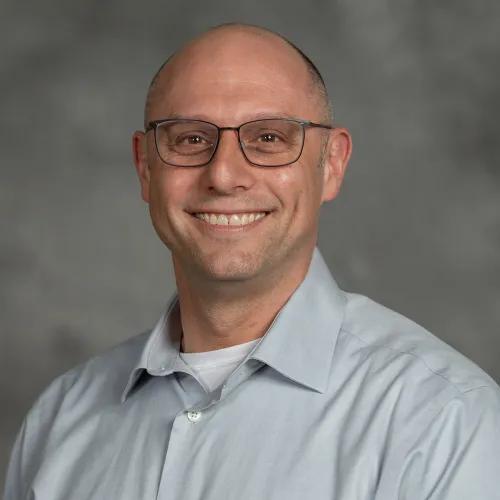
Daniel K Leventhal, MD, PhD
Clinical Associate Professor
Featured News & Stories

The Race to Uncover the Hidden Causes of Idiopathic Pulmonary Fibrosis
Helping an employee-turned-patient overcome a brain tumor

Shipt gift helps address food insecurity
Giving with gratitude: planned gifts support nursing, research, and patient care

Psychoactive substances and adverse side effects for patients with multiple sclerosis