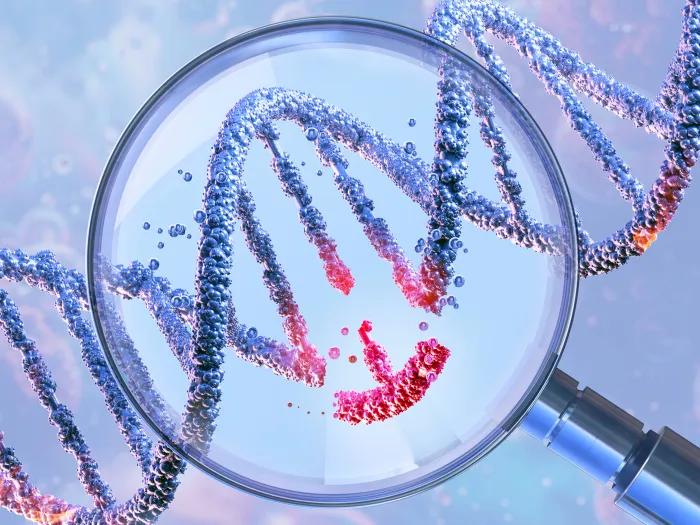
Gift Aims to Save Children’s Sight

Congenital eye disorders are the leading cause of childhood blindness worldwide, but properly diagnosing them is only part of the battle. Saving a child’s sight requires families to coordinate care between highly specialized physicians, which can be overwhelming. While prompt treatment can prevent blindness in most children, far too many kids still lose their sight because they lack access to the complex care they need.
Longtime W.K. Kellogg Eye Center donors Timothy and Laurie Wadhams wanted to help kids at risk of blindness. “I experienced challenges with my eyesight at an early age, and with successful treatment, was able to overcome them,” says Mr. Wadhams. “Laurie and I want to help ensure that treatments exist for all of the diseases that threaten vision.”
The Wadhams recently made a $5 million gift to the Kellogg Eye Center that is poised to change the landscape of children’s eye care by establishing a multidisciplinary programmatic center housed in the pediatric ophthalmology clinic. The goal of the Wadhams Family Center for Children’s Vision is to save and restore sight for children through leading-edge, multidisciplinary care from experts tackling the eye disorders that children are born with from every angle.
Lev Prasov, M.D., Ph.D., assistant professor of ophthalmology and visual sciences and of human genetics, will lead the center. His commitment to exploring the genetics of pediatric eye diseases is improving visual outcomes. “Not only has the Wadhams’ generosity supported cutting-edge research like mine, but their latest gift will help kids with congenital eye disorders get the care needed to save their sight.”
“The W.K Kellogg Eye Center is one of the nation’s few academic institutions that provides children with world-class care across all subspecialties, which means we can treat and advance research for even the most rare and complex diseases,” says Shahzad I. Mian, M.D., F. Bruce Fralick Professor of Ophthalmology and chair of the Department of Ophthalmology and Visual Sciences.
The Wadhams’ previous endowment gift created the Wadhams Family Foundation Children’s Vision Fund as part of the Paul R. Lichter, M.D., M.S. Vision Research Discovery Fund. Together, the fund and center will propel children’s vision care and research to greater heights. Thrilled by their latest gift, Dr. Lichter, past department chair of ophthalmology and visual sciences, founding director of the Kellogg Eye Center, and currently professor emeritus (active) said, “The Wadhams’ visionary investments have already contributed to scientific discovery. Their latest gift will make a life-changing difference for children facing vision loss.”
It is a sentiment with which Paul Lee, M.D., J.D., executive director, U-M Medical Group, senior associate dean, Clinical Affairs, and professor of ophthalmology and visual sciences, agrees, saying, “This investment by the Wadhams toward our shared goal of eliminating childhood vision loss will accelerate remarkable collaborations in research and care. Our fantastic faculty and teams at the Kellogg Eye Center work side-by-side with colleagues from across the University of Michigan campus and around the world.”
The Wadhams Family Center for Children’s Vision is the pinnacle of their ongoing support of children’s vision health, bringing their total giving to the Kellogg Eye Center to more than $6.5 million. When combined with their generosity to other areas across Michigan Medicine and the University of Michigan, their gifts total nearly $17 million. Former Masco Chief Executive Officer Timothy Wadhams and his wife, Laurie, reside in Ann Arbor. Masco is the one of the world’s largest manufacturers of home improvement and building products.
To support our efforts, click on the Wadhams Family Children’s Vision Fund and make your gift today!
Philanthropy News
Discover how donors at Michigan Medicine drive advances in patient care, research, and education. See how philanthropy brings Michigan answers to patients and families.
In This Story

Lev Prasov, MD, PhD
Associate Professor
Featured News & Stories
Going the extra 100 miles
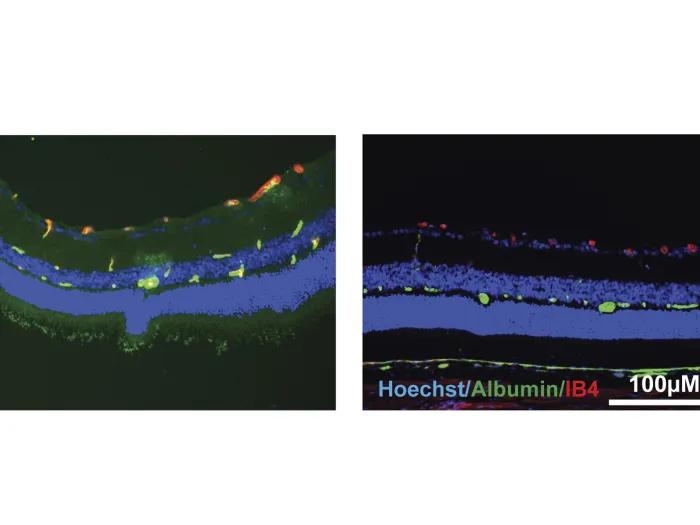
Treatment with norrin helped maintain healthy blood vessels, preserved vision in diabetic rats
Small comforts make a world of difference
Continuing the legacy of a doctor’s doctor
Family’s gift honors wife and mother, supports nephrology nurses