Foundation gift inspires additional gifts to strengthen youth mental health care
Author |
A $100,000 gift from the Annapurna Foundation is sparking a new U-M Health effort to ensure more Michigan youth receive mental health treatments proven to help them recover.
The Foundation’s investment, along with an additional $75,000 in gifts from Collyer Smith, Sam Kottamsu, Larry Gray, and the Ann Arbor Rotary Club, will provide the critical support for launching the Michigan Training Collaborative for Youth Mental Health at the Frances and Kenneth Eisenberg and Family Depression Center.
Past president of the Rotary Club of Ann Arbor Collyer Smith said that supporting youth mental health care resonated with club members. “From 2023 to 2024, the International Rotary’s theme was Create Hope in the World, which we felt this initiative exemplified.”
Children and adolescents across Michigan are experiencing rising rates of anxiety, depression, suicidal thoughts, and other serious mental health challenges. The good news is that effective treatments exist. The difficult part is making sure clinicians receive the specialized training, consultation, and support necessary to confidently deliver those treatments to the young people who need them.
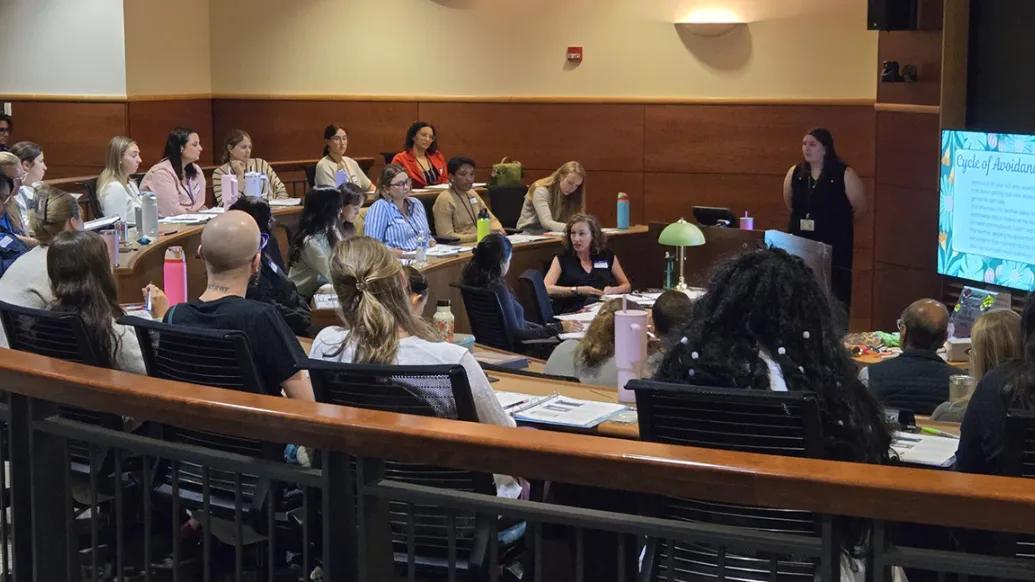
The Michigan Training Collaborative will help close this gap by building a network that equips local clinicians with evidence-based tools, expert guidance, and ongoing support. Rather than relying on one-time workshops, the collaborative will provide comprehensive training, along with ongoing opportunities for mentorship, peer learning, and consultation, so that clinicians can build their confidence, apply new skills in real time, and eventually sustain these effective treatment approaches in their own practice.
The collaborative is led by Michelle Kees, Ph.D., Clinical Associate Professor of Psychiatry at U-M Health and faculty lead of the Jenkins Family Community Outreach and Education Program in the Eisenberg Family Depression Center, and Emily Laird Bilek, Ph.D., Clinical Associate Professor of Psychiatry and child psychology lead for psychiatry.
“We know what works,” said Kees. “The challenge is making sure clinicians have the training and support they need to deliver those treatments. This visionary gift is a gamechanger. It is the catalyst we need to build a new model for Michigan’s behavioral health workforce and bring proven, effective mental health treatment closer to children and families across the state.”
The collaborative’s first phase will begin with community mental health clinicians in the Lansing region and focus on Exposure and Response Prevention (ERP), the gold-standard treatment for youth anxiety and obsessive-compulsive disorder.
“Training alone rarely changes practice,” said Bilek. “Clinicians have their own fears and hesitations about new practices like ERP. They need support beyond the classroom to build confidence and practice their skills as they begin using these treatments.”
Over time, the collaborative will expand to additional communities across Michigan and include training in other evidence-based treatments for youth mental health concerns, including depression therapies and suicide prevention. By investing in clinicians and building a statewide network of expertise, the collaborative will transform Michigan’s behavioral health workforce and create lasting changes in how young people access and receive the treatments that help them recover and thrive.
Your generosity makes a difference
If you would like to learn how you can make a difference for people who are living with depression and related disorders, please visit the Eisenberg Family Depression Center giving page. Thank you for your generous support.
About the Look to Michigan campaign
This gift is part of Michigan Medicine’s Look to Michigan fundraising campaign, which aims to create transformative answers to health care’s biggest challenges for the benefit of people in our state and beyond. Building on 175 years of leadership in medicine and as part of the University of Michigan’s Look to Michigan strategic framework for impact, we are breaking new ground in patient care, research, medical and graduate education, health care facilities, and health advancement and community engagement. Together, we can improve and save lives. For more information, visit michiganmedicine.org/giving/look-to-michigan.
Philanthropy News
Discover how donors at Michigan Medicine drive advances in patient care, research, and education. See how philanthropy brings Michigan answers to patients and families.
In This Story

Emily L Bilek
Clinical Associate Professor

Michelle Kees
Clinical Associate Professor
Featured News & Stories

How U-M helped bring depression out of the darkness

Giving Voice to Lived Experience in Dementia Research
Going the extra 100 miles

Small daily activities may help ease dementia caregivers’ stress

5 ways to manage politically induced stress