Cult for a Cure champions breast cancer research
Tushman family elevates lifesaving research with outstanding commitment to fundraising and advocacy.
Author |
After a frightening breast cancer diagnosis and remarkable recovery, advocating for and supporting breast cancer research is personal for Alyssa Tushman.
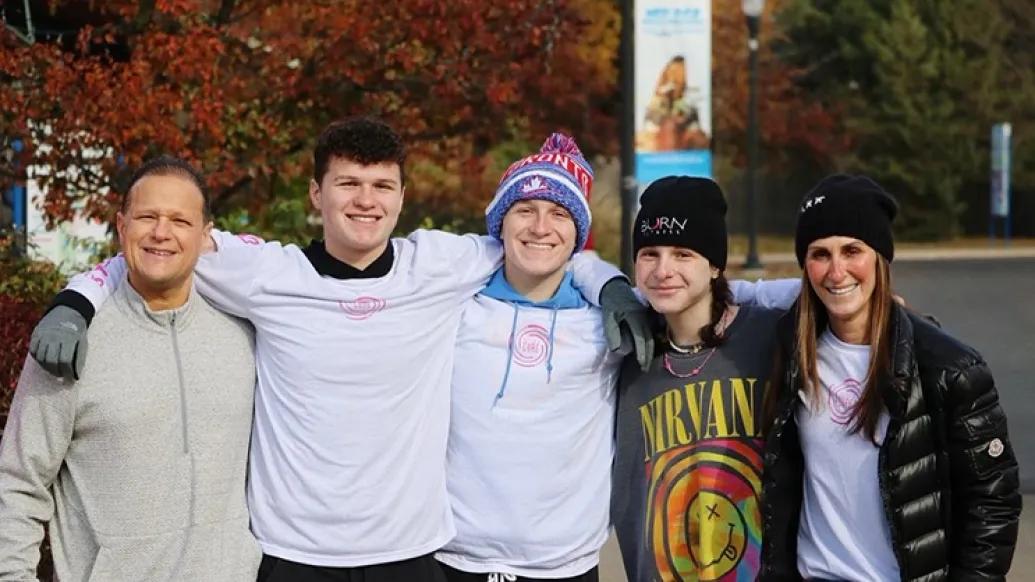
With a strong family legacy of giving, Tushman and her loved ones have organized Cult for a Cure, a yearly fundraising walk supporting the work of Daniel Hayes, M.D., professor emeritus of internal medicine, for over 10 years.
Now, as Hayes enters retirement, the next generation of Tushman’s family is stepping up to honor his lifesaving work and champion breast cancer research.
Hope and a lifesaving second opinion
Soon after giving birth to her first son over 20 years ago, Tushman noticed a lump in her breast and checked in with her doctor.
“He told me that I had nothing to worry about,” she says. “He sent me away with a million reasons why it couldn’t be cancer, along with an antibiotic to take if it didn’t go away.”
Several weeks later, the lump had quadrupled in size, and Tushman returned to the doctor.
“At that point, it was 12 centimeters in size,” she says. “We did the testing, and the rest is history. It came back positive as triple negative breast cancer.”
Tushman and her father immediately sought help from an oncologist, and the prognosis was grim.
“He looked at me like I was already dead,” she says. “He told me, ‘We can throw everything at this, but it’s not good.’ I don’t know if he had ever seen a tumor that large and aggressive in someone that young. I was scared out of my mind.”
Tushman’s father asked the doctor about getting a second opinion.
“He told us the doctor to see was Dan Hayes, a medical oncologist at the University of Michigan, but that we would never be able to see him in time,” says Tushman.
Tushman’s father called Hayes’s office and spoke with a nurse who arranged an appointment for the next day.
Tushman was relieved by the difference in care and attitude she encountered with Hayes and his team.
“When I met Dan and his team, the vibe was just different,” she says. “They took it as a challenge. You could feel their love and care, and you could also see that they were brilliant and they were in it to win it. And with cancer, that’s what you want.”
Finding strength and moving forward
Tushman began a year of chemotherapy, radiation, and surgery that was challenging at every level: physically, mentally, and emotionally.
Over the course of her treatment, Tushman appreciated the support, honesty, and wisdom of Hayes and his team. She also prioritized her mental health and spent a lot of time visualizing positive outcomes.
“When I was rocking my baby to sleep, I pictured myself at his wedding, college admission, everything,” she says. “I think you need to focus on what you want and your outcome. That is very important for your mental health.”
Tushman had an excellent response to treatment and was eventually in remission. She was determined to make the most of the rest of her life and decided it would not center on her cancer diagnosis.
“After that year of sheer hell and terror was over,” she says, “I made up my mind that I was not going to let this define me.”
Helping others through fundraising and advocacy
Tushman remained friends with Hayes and embraced life over the next several years. She had another son and a daughter and enjoyed her work as the owner of Burn Fitness.
Breast cancer advocacy remained a passion, and in 2016, Tushman, her family, and her gym team decided to organize a walk to raise money for Hayes’s research and patient care at the University of Michigan Health Rogel Cancer Center. They named it “Cult for a Cure” after a coworker’s joking reference to very high client retention at the gym.
“My partner at work came up with this great saying, that the only cult you should ever join is for a cure,” Tushman says.
Every year since, Cult for a Cure has been a highlight for the Tushman family, the Burn Fitness team, and their many friends and community members. It is widely known as a popular, warm, and friendly community event.
“Everyone wears pink,” says Tushman. “The men even wear pink tutus, and at my gym, we turn it pink and everyone wears pink all month.”
“Alyssa Tushman is a force of nature,” Hayes says. “She has been inspirational. The treatment she went through was tough, but she flew through without any major complications, and at this point, 20 years later, she is doing great with no evidence that it has, or will, return.
“And, she has taken lemons and made lemonade. The support that she and her team and friends have raised has helped us do cutting-edge research that, frankly, was too innovative to get any federal grants at the time. Rather, it established preliminary data that has let us go on to run more definitive, and even more highly speculative, research studies that we could not have done without the Cult for a Cure financial support.”
A family commitment
Tushman is deeply proud of how her children, now adults, have been involved in fundraising and advocacy for breast cancer research over the years.
“My kids have come to every event that I’ve ever hosted to raise money for breast cancer,” she says. “They have very fond memories of the community involvement and how lovely people are. These walks have been very beautiful events, and it is so nice for my kids to see how important community togetherness is, along with outreach and making a meaningful contribution to something that’s important in their lives.”
“There is an undeniable gravity to Alyssa,” says Amanda Knapp, senior associate director of development and breast cancer fundraising lead. “She took the mayhem of a terrifying breast cancer diagnosis and turned it into her life's mission. Her infectious passion inspires her children and peers to do more than just give, they follow her lead. She is far more than a survivor; she is a true catalyst for change.”
In 2025, the gym team was having difficulty finding the time to organize Cult for a Cure, and Tushman was thrilled when her son Brody volunteered to run the event.
“He put on the event at his school, Indiana University, which also happens to be Dan’s alma mater,” says Tushman. “It’s kind of destiny. And he and his fraternity brother organized the event and raised over $100,000. I’m really proud.”
Looking forward to future progress
Tushman is optimistic about the future of breast cancer research and emphasizes the importance of philanthropy at all levels.
“You can’t stop progress,” she says. “When I was diagnosed, metastatic breast cancer had about a 100% mortality rate in five years. But now, people with metastatic breast cancer are living 20, 30-plus years, and it’s only going to get better. That’s because of research. So the reason to donate is for progress and for life. If you love life, contribute to medical research.”
She also appreciates Michigan Medicine’s transparency on how donations are used.
“I receive reports of exactly what the money we donated pays for,” she says. “I think that’s really important. So if someone at a walk asks what fund we are supporting or what we are paying for, I can answer specifically and transparently. If they want to meet the person doing the work, they can talk to Dan Hayes. It’s really the transparency and the availability of people to explain.”
“I trained in the 1980s,” says Hayes. “In those days we had only four or five chemotherapy drugs and only two anti-estrogen agents to treat patients with breast cancer. Now we have so much more, including therapies against targets we didn’t even know about, like HER2, BRCA1/2, and a molecule called TROP2. We also didn’t have any good anti-nausea medications, and none of the treatments we use now to keep white blood cells up and prevent infections during chemotherapy.
“The advancements I’ve seen over the last 45 years are simply astonishing. We just published a paper looking at breast cancer survival rates around the world, and they are about twice as high as they were 20 to 30 years ago. All of this has happened because of the research that has been done around the world, supported by people like Alyssa and her family.”
As Hayes embarks on his retirement, Tushman wishes him the very best.
“I love him and owe him my life,” she says. “I hope he lives his very best life in retirement. I’m excited for him to be able to do everything he wants to do — be active, travel, spend time with his wife. I’m really excited for him, but this is a huge loss to our community, so it’s bittersweet. He’s a mentor, friend, scientist, and artist.”
Cult for a Cure and the Tushman family’s advocacy are powerful testaments to the importance of community to progress against breast cancer and other diseases. This compassion and commitment moves research forward and gives so many people hope for a healthier future.
If you are interested in supporting breast cancer research at the University of Michigan Health Rogal Cancer Center, please visit the giving page for the Weiser Family Center for Breast Cancer. Your support saves lives.
About the Look to Michigan campaign
Philanthropy News
Discover how donors at Michigan Medicine drive advances in patient care, research, and education. See how philanthropy brings Michigan answers to patients and families.
In This Story
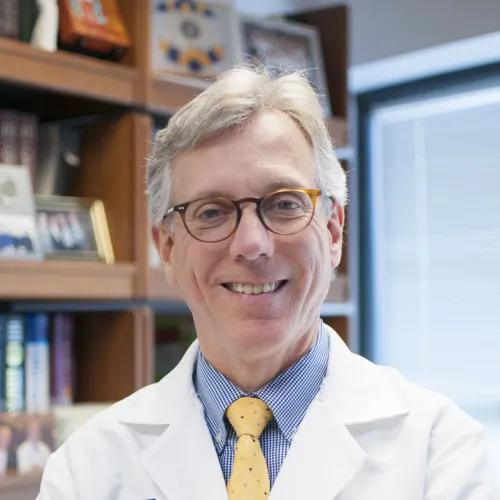
Daniel F Hayes, MD
Professor Emeritus/a
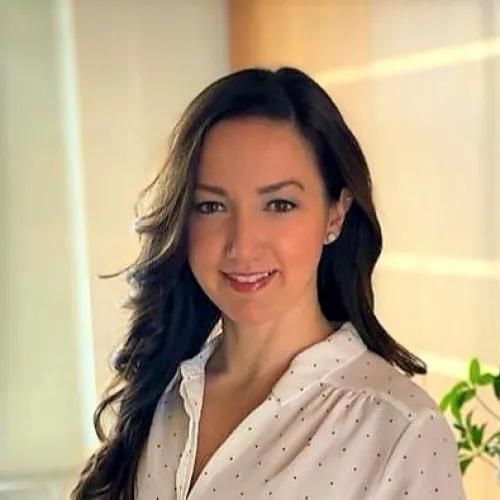
Amanda Knapp
Senior Associate Director of Development
Featured News & Stories
FDA-approved drug offers hope for patients with polycythemia vera, a rare bone marrow disorder
Pediatric patient treated for rare kidney cancer
Kellogg care inspires gift to vision research
Rare cancer diagnosis inspires community of support

Foundation gift inspires additional gifts to strengthen youth mental health care