Calming the Storm campaign fuels advances in life-changing epilepsy care for kids
Donor generosity leads to breakthroughs for Evalynn and other children at C.S. Mott Children's Hospital.
Author |
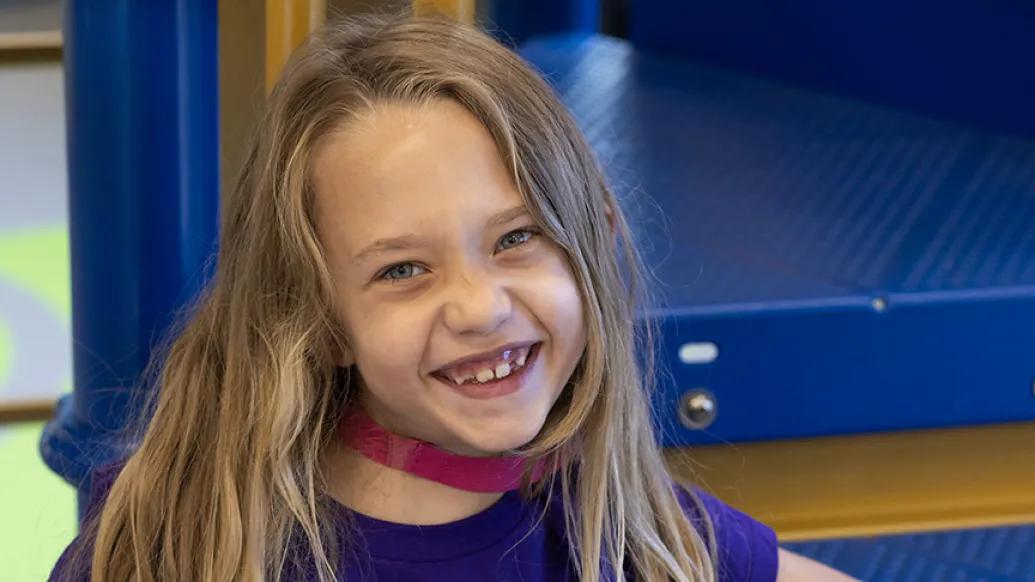
“Sometimes my brain has hiccups,” is how Evalynn explained epilepsy to her kindergarten classmates one day. She wanted them to know that if she acted funny — like staring blankly or not responding to her name — that it wasn’t her fault. Life for Evalynn, since she was four months old, meant sometimes having up to 20 seizures a day.
Her parents brought her to the emergency room as a baby after noticing what seemed like frequent startling and strange eye movements. But the EEG didn’t reveal anything unusual. It was only years later that her family learned at University of Michigan Health C.S. Mott Children’s Hospital that Evalynn’s seizures were coming from deep within her brain, making them hard to detect.
“I would have never imagined Evalynn was having seizures because to me that would mean you’re on the ground convulsing,” said Evalynn’s mother, Sascha. “I had no idea that it could be fluttering eyes, a blank stare, or a flushing face like she was experiencing.”
Calming the Storm of epilepsy
A seizure is an electrical storm in the brain that causes temporary changes in movement, awareness, or other important functions. Seizures can manifest in many ways and at varying intensities. For a child who has epilepsy, the risk of injury from seizures, the time it takes to recover, and public misunderstanding often end up affecting participation in school and social activities.
To raise support for pediatric epilepsy research and patient care during November — National Epilepsy Awareness Month — C.S. Mott Children’s Hospital invites people to join their Calming the Storm campaign during November.
There are several ways community members can contribute to Calming the Storm, including making a donation, purchasing a T-shirt, hosting in-person or online fundraisers, or simply spreading awareness on social media.
Life, uninterrupted
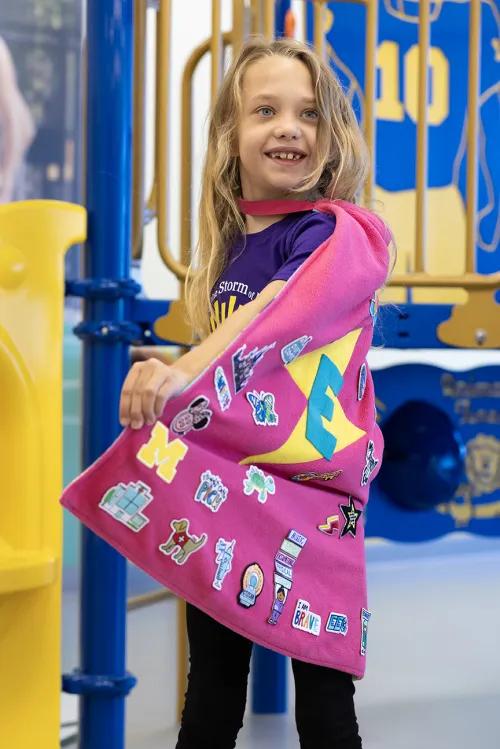
Investments in advancing pediatric epilepsy care and research can change the lives of children like Evalynn. After other treatments failed to make a lasting difference, Evalynn underwent two ablation surgeries — a type of surgery that uses heat to eliminate or remove abnormal tissue in the brain. It was a decision fraught with anxiety, but Sascha says, “We never gave up hope, and we had a great team of doctors we could trust.” Since her last surgery 11 months ago, Evalynn has been seizure free.
Although Evalynn experiences some weakness in her right ankle and wears a brace now, she’s back in school and racing around with her classmates. At 7 years old, she spends most of her free time playing dress up and with dolls, and she also loves all things Disney. Evalynn is living her best kid life now, uninterrupted by “brain hiccups.”
Visit the Calming the Storm website for more details on how to get involved and make a difference for kids like Evalynn.
Philanthropy News
Discover how donors at Michigan Medicine drive advances in patient care, research, and education. See how philanthropy brings Michigan answers to patients and families.
Featured News & Stories
Beyond the White Coat: The Med Student Tradition Behind Michigan’s Smoker
U-M alumni return from Central Asia to seek treatment for their child at Mott
C.S. Mott Children’s Hospital first in country to implant expandable heart valve during FDA review phase

Many parents face challenges getting kids to eat a healthy breakfast before school

5 things to know about ALS