Michael Broderick had just woken up after working in the ICU the previous night when he read the email: U-M medical students were being pulled from their rotations due to the coronavirus pandemic. Broderick understood the order was for student and patient safety, but its full implications were unclear. Like many of his fellow students, he was compelled to act.
"I rushed to the hospital to figure out how I could help hand off my patients and to get more information on what this meant," he says. "After saying goodbye to the residents, I walked home feeling kind of useless. Like many students, I felt that the skillset I had could benefit someone."
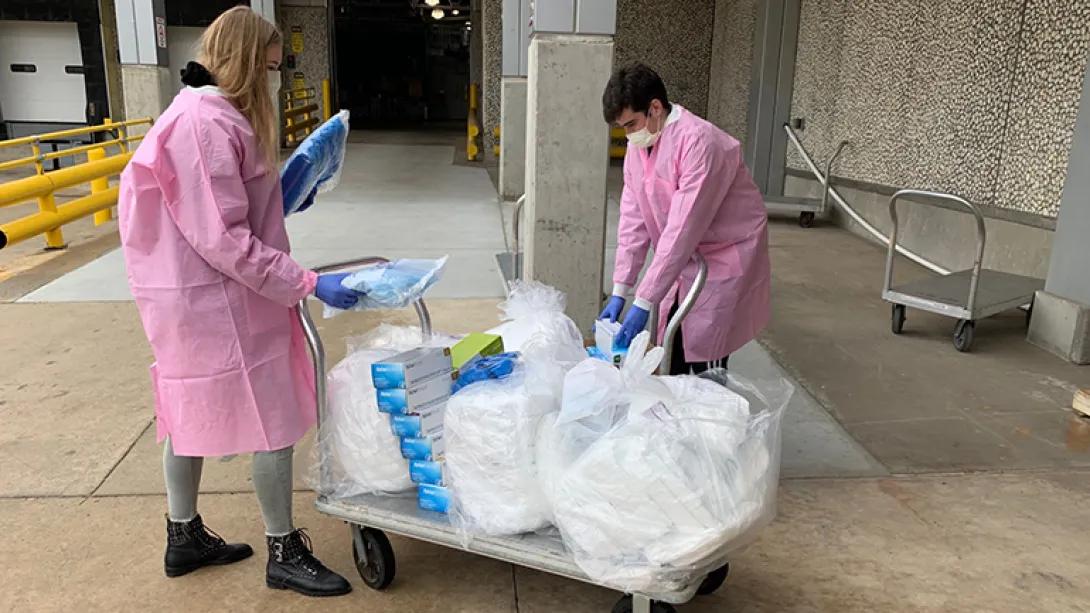
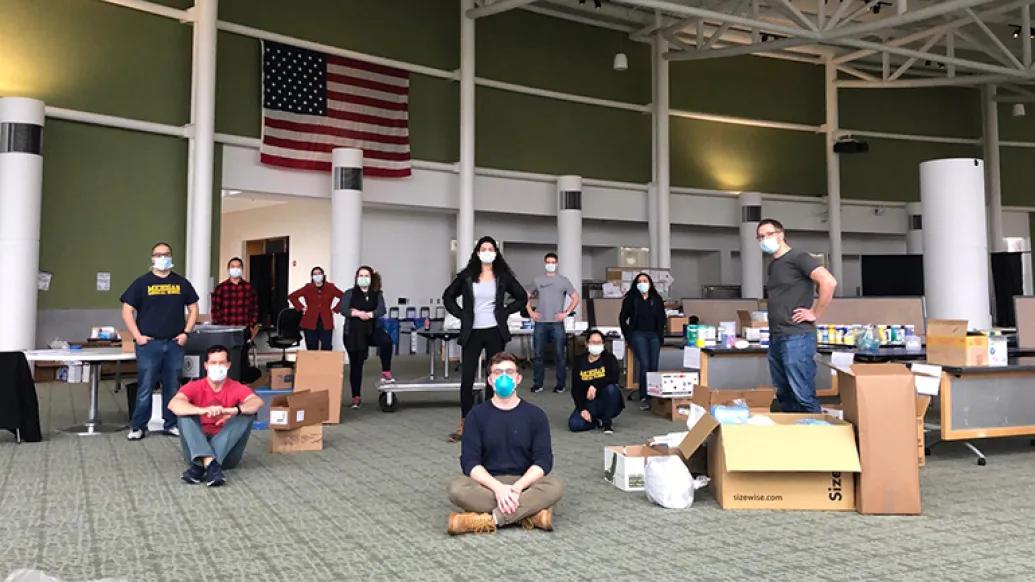
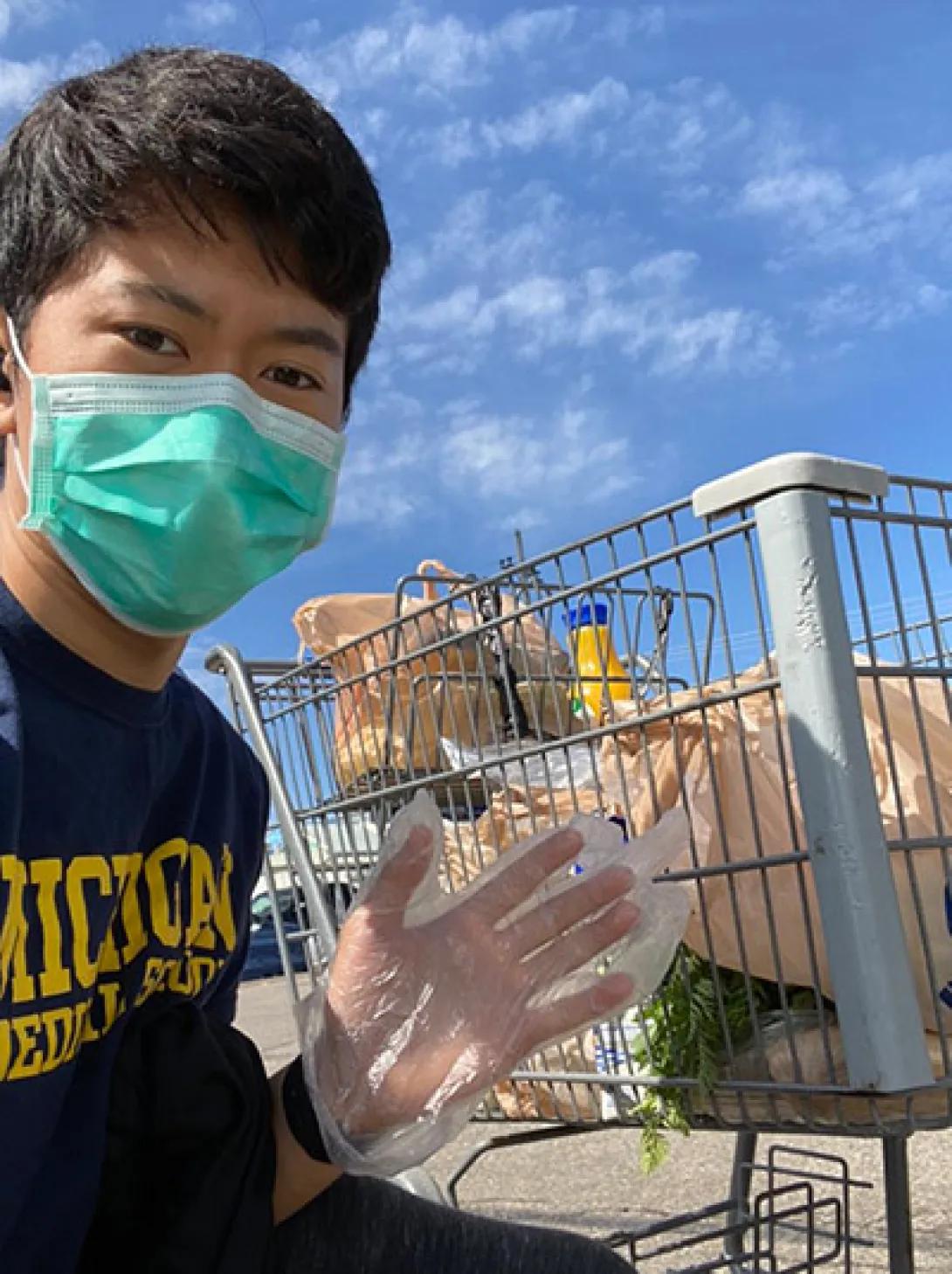
While COVID-19 has elicited feelings of uncertainty and anxiety, it also has inspired a groundswell of humanitarianism. When the pandemic impacted their world, U-M's medical students immediately wanted to make a difference — and they have. From sorting donated personal protective equipment (PPE) at the North Campus Research Complex (NCRC) to delivering groceries to vulnerable populations to rescheduling patient appointments, members of the quickly formed M-Response Corps have worked tirelessly to meet an endless stream of pandemic-related needs since mid-March.
Nadine Ibrahim, a fourth-year medical student, is one of four M-Response Corps co-leaders. She is both pragmatic and altruistic about the unanswered questions the pandemic raises for her. "No one planned this, and we don't know what the ramifications will be as far as our training for hospital rotations, but that isn't foremost on our minds right now. We are in medical school because we want to help people," she says.
When requests for help related to COVID-19 began to emerge and the list of students wanting to volunteer increased, Ibrahim knew something had to be done. She and fellow Medical School student leaders Broderick, Nicole Dayton, and Ali Hammoud formed M-Response Corps — and hit the ground running. A month later, 500 people had signed up — two-thirds of current U-M medical students.
In addition to helping deliver groceries and sort medical supplies, M-Response Corps volunteers have provided childcare to their fellow students, checked on geriatric patients by phone, and rescheduled numerous patient appointments. Some have helped obstetricians with virtual visits to pre- and post-natal patients, trained hospital staff on PPE protocol, and answered COVID-19-related phone calls.
"As a medical student, you sometimes feel at the bottom of the medical pyramid," Broderick said in spring, "but the last few weeks have allowed students to demonstrate that we are a powerful force for both patients and our fellow health care providers. Getting involved with volunteer efforts was a must for me, but helping to lead M-Response Corps has been a wonderful learning opportunity."
Faculty Guidance
Before connecting students with real-time needs, M-Response Corps vetted all requests. Deborah Berman (M.D. 1999, Residency 2003, Fellowship 2010), associate professor of obstetrics and gynecology and faculty director of the Medical School's M-Home Learning Community, has taken the lead in triaging requests. "Our students' safety is our top priority," Berman says. "Our vetting system ensures that with any request, student participation is safe, properly coordinated, and the appropriate and required training completed."
Berman is first in line to review requests for the team, which often arise from concerned physicians seeking assistance for their patients — such as the doctor asking M-Response Corps to help elderly individuals set up their patient portals.
To get the word out, M-Response Corps uses its Twitter feed to share photos of students in action and weekly statistics detailing their efforts. A mid-April post indicated volunteers placed 145 geriatric calls, trained more than 18,000 staff about proper PPE use, and delivered groceries to several homes. That same week three students helped with Street Medicine initiatives, nearly 20 students participated in the Childcare Brigade, and 40 students sorted supplies at the NCRC — a well-organized collection site that ensured huge numbers of donations could be sorted with amazing speed and accuracy.
Meeting in real life
Not surprisingly, long hours and intense work have strengthened connections among students. "Nadine and I have been working with each other daily, conferencing over Zoom or BlueJeans," Broderick says. "Others have also made new friendships completely virtually." He and Ibrahim only recently met in person for the first time. "My initial reaction was surprise as both she and her husband were much taller than I expected," Broderick says. "Clearly, 2-D conversations over a computer screen aren't like in-person interaction. It was wonderful to finally meet her in person."
Beyond the new friendships and experiences, Berman believes M-Response Corps volunteers are gaining life skills. "[The students] are truly remarkable. This was uncharted territory for them — as this pandemic has been for many of us — but they weren't deterred. They identified a need in our community and our medical system and are working together to be as helpful as possible during trying times."
Ibrahim agrees M-Response Corps has been life-changing. As she looked forward to beginning her residency in the Department of Otolaryngology – Head and Neck Surgery at U-M, which started in June, she was grateful for these experiences.
"We have a new understanding of infectious disease, its impact on public health, and the definition of high-risk, but also how powerful it is to connect with patients," she says. "They feel it, too. And, of course, there's a certain pride that comes from giving back."
A version of this article initially ran in Michigan Today.
Featured News & Stories
Small Pauses, Bigger Impact: Mindfulness in Action
Galens Tag Days celebrates 100 years of helping kids

Giving Voice to Lived Experience in Dementia Research

How U-M helped bring depression out of the darkness
Beyond the White Coat: Disability, Neurodiversity and Advocacy in Medical School