University of Michigan implants first-in-human Paradromics wireless brain-computer interface, designed to restore communication
The Connect-One clinical study will focus on the Connexus BCI device's long-term safety
9:00 AM
Author |
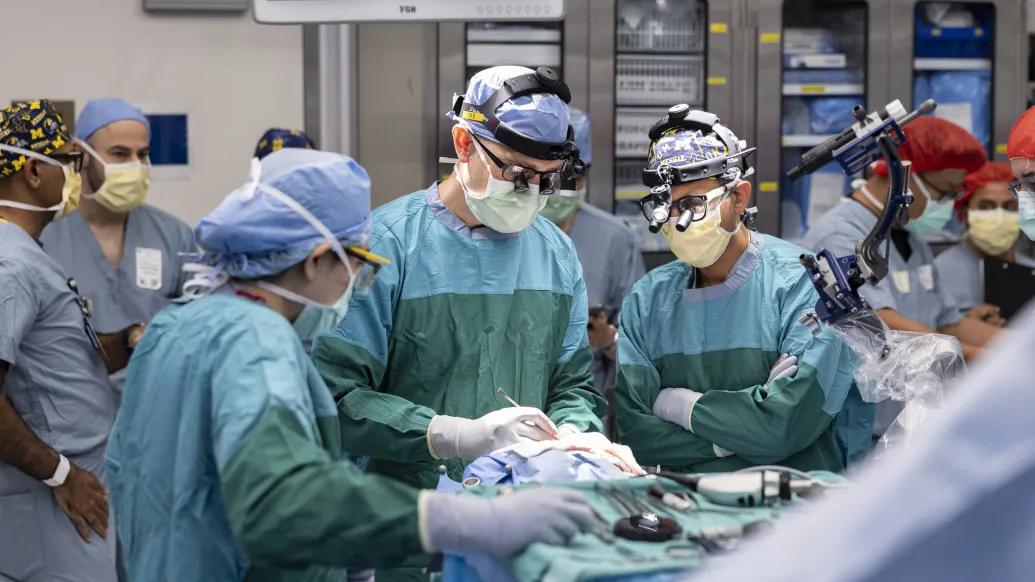
ANN ARBOR, Mich. — Neurosurgeons at University of Michigan Health completed the first-in-human implantation of a Paradromics Inc., wireless brain-computer interface, or BCI, as part of a national clinical trial for patients with difficulty speaking.
Matthew Willsey, M.D., Ph.D., a neurosurgeon and biomedical engineer, and Aditya S. Pandey, M.D., Chair of the U-M Health Department of Neurosurgery, implanted the Connexus BCI into a woman from Michigan.
The trial participant struggles to speak due to motor neuron disease.
The clinical trial, called the Connect-One Early Feasibility Study (EFS), will focus on the device’s long-term safety. It will also assess whether the BCI can restore the participant’s communication through synthesized text and speech, and help them control a computer.
“We are incredibly excited to investigate the potential of this wireless BCI to restore communication for people who have lost the ability to speak due to neurological disease or injury,” said Willsey, a Site Principal Investigator for the study who led the implant surgery.
“This has the potential to be a major step forward as we work toward our goal of helping treat people with paralysis who otherwise lack efficient and effective therapies for preserving communication.”
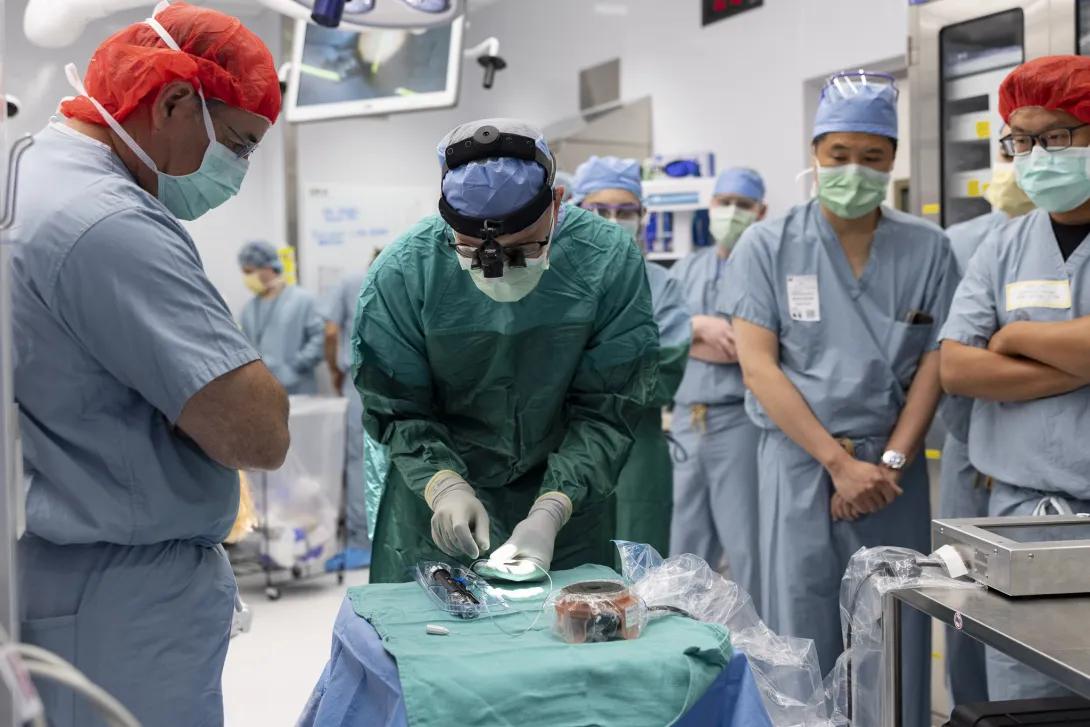
The Connexus BCI is one of only a few wireless, fully implantable BCIs being tested in the United States.
Like other BCIs, it is designed to decode brain signals and translate them into action by allowing the user to control a device with their thoughts.
The Paradromics device contains 421 microelectrodes that capture brain signals from individual neurons. Those signals travel to a small transceiver in the user’s chest that sends information to an external receiver.
“Enrolling our first participant at University of Michigan is a defining moment for our company and for the field,” said Matt Angle, Ph.D., CEO and founder of Paradromics.
“Our goal is to restore natural communication for people who have lost the ability to speak and help them stay connected with their loved ones. We’re proud to partner with University of Michigan Health on this first-in-human study as we build the foundation for the next generation of clinical BCIs.”
In June of 2025, Willsey and Oren Sagher, M.D., Director of Functional Neurosurgery at U-M Health, temporarily implanted the Connexus in a patient as part of epilepsy research which also confirmed that the device could be safely placed into the brain and record signals.
The U.S. Food and Drug Administration granted Paradromics an Investigational Device Exemption (IDE) to begin the Connect-One clinical study in November 2025. Michigan Medicine is one of three sites enrolling participants for the study.
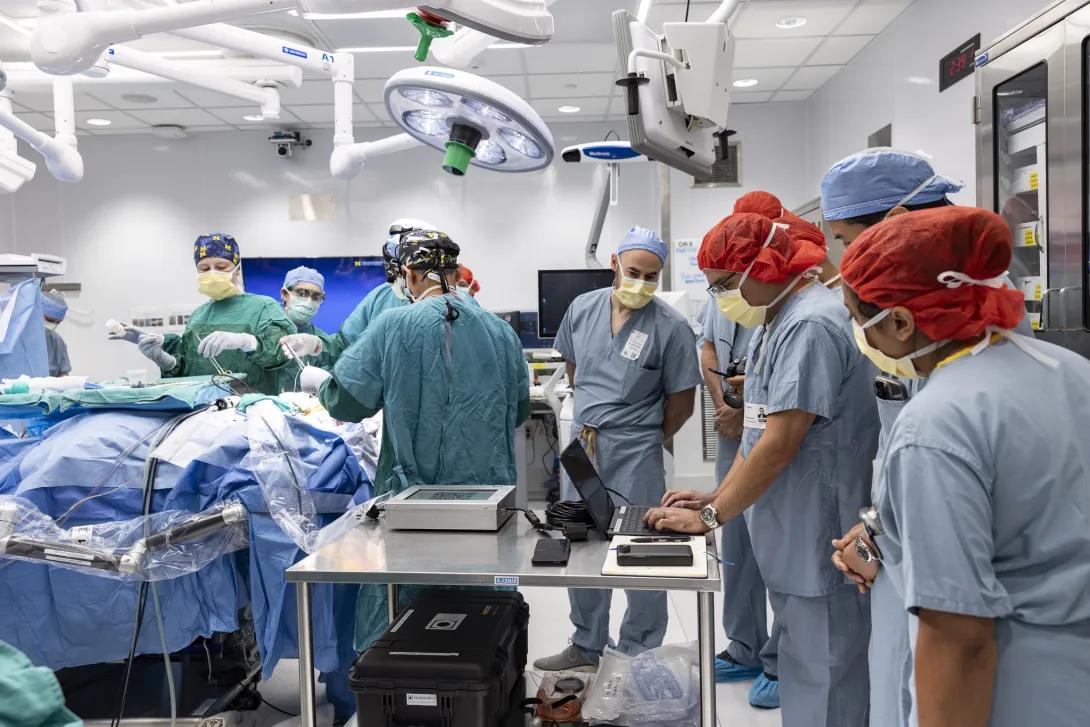
“The Paradromics device has incorporated decades of learning from intracortical BCI research, and this study represents the next big step to investigate whether a fully implanted and wireless BCI can restore communication,” said David M. Brandman, M.D., Ph.D., Lead Principal Investigator of the Connect-One Study and Associate Professor of Neurosurgery at University of California, Davis.
“I’m honored to be leading this study together with Drs. Willsey and Rubin.”
The participant will be followed for six years following the BCI implant. In addition to meeting with the study team regularly, she will continue to receive motor neuron disease care from the Stanford Morris ALS Clinic at U-M Health.
Motor neuron disorders are a group of diseases that impact the function of the brain, brainstem and spinal cord motor neurons. This includes amyotrophic lateral sclerosis (ALS), which is the most common motor neuron disorder, and primary lateral sclerosis (PLS).
Given the impact on effective communication for those living with such conditions, wireless BCI devices represent an important area of research.
“It is critical to preserve communication for all those living with motor neuron disease to keep individuals connected to their families and friends, and to preserve independence and quality of life,” said Stephen Goutman, M.D., M.S., Director of the Stanford Morris ALS Clinic, Associate Director of the Scott Pranger ALS Center and Harriet Hiller Research Professor at U-M.
“We are so fortunate to be able to partner with Dr. Willsey and the incredible neurosurgical team here at U-M Health as they work to bring these devices into the clinic and make motor neuron diseases more livable.”
Willsey is leading a new Brain-Computer Interface Clinic that opened at U-M Health in 2025.
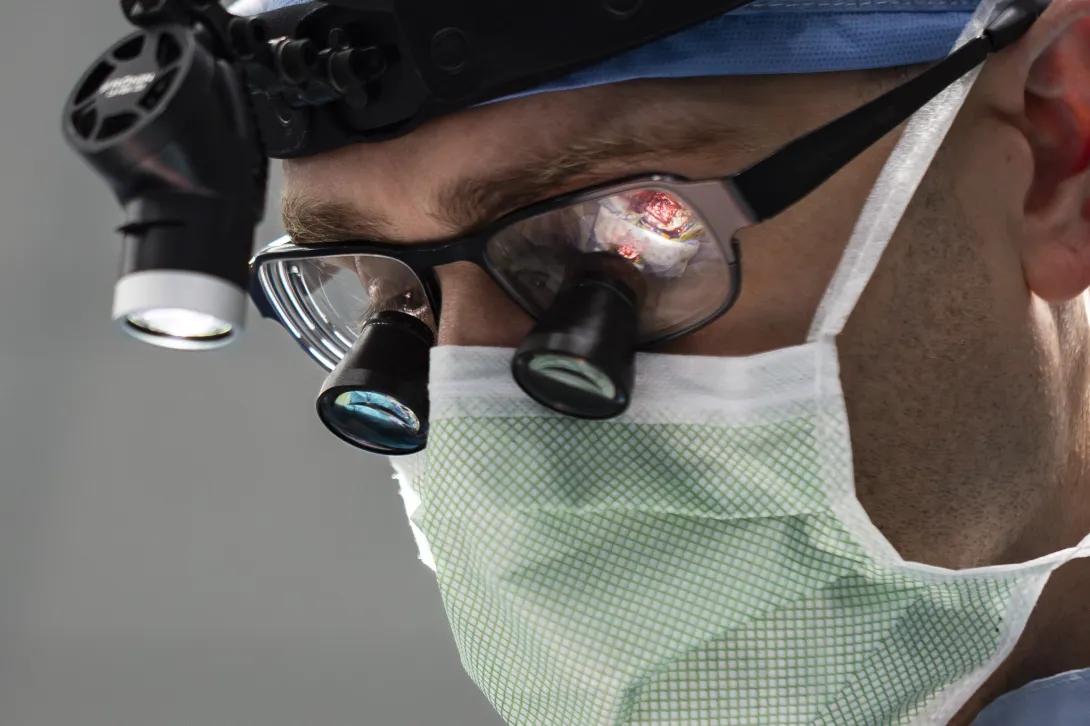
His lab, which is focused on developing the next generation of brain-computer interfaces, is the sponsor-investigator of a separate clinical trial testing a novel investigational BCI to restore movement and communication.
“Advances in brain-computer interfaces and neuromodulation are rapidly reshaping what is possible in the treatment of neurological disease,” Sagher said.
“Our clinician-scientists are committed to developing and advancing these technologies and ensuring that patients have access to the most innovative and effective therapies available. When patients come to Michigan Medicine for their care, they should know they are being treated at a center helping define the future of neuroscience and neurosurgical care.”
About Michigan Medicine: At Michigan Medicine, we advance health to serve Michigan and the world. We pursue excellence every day in our 12 hospitals and hundreds of clinics statewide, as well as educate the next generation of physicians, health professionals and scientists in our U-M Medical School.
Michigan Medicine includes the U-M Medical School and University of Michigan Health, which includes the C.S. Mott Children’s Hospital, Von Voigtlander Women’s Hospital, University Hospital, the Frankel Cardiovascular Center, Kellogg Eye Center, University of Michigan Health-West, University of Michigan-Sparrow and the Rogel Cancer Center. The U-M Medical School is one of the nation’s biomedical research powerhouses, with total research funding of more than $800 million.
*Connexus BCI is an investigational device limited by United States law to investigational use.
Clinicians and researchers Stefan Gavrilovski, M.S., CCC-SLP, Ron Ball, Matthew Mender, Ph.D., Joseph T. Costello, Ph.D., Vijay Tarnal, MBBS, FRCA, Karen Kluin, M.S., C.C.C., BC-ANCDS, Venkatakrishna Rajajee, MBBS, Deepa Malaiyandi, M.D., Matthew Cheney, OR staff members, and many additional healthcare professionals also participated in the study and/or care of the participant for the implant surgery.
More information on the trial (ID: NCT07357428) is available from ClinicalTrials.gov.
In This Story

Matthew S Willsey, MD, PhD
Assistant Professor

Stephen A Goutman, MD, MS, FAAN
Professor
Oren Sagher
Professor
Related
University of Michigan team leads first in-human recording with new wireless brain-computer interface
University of Michigan Health opens brain-computer interface clinic, among first in nation
Featured News & Stories

A pediatric epilepsy fundraiser that changes lives
Bigger data reveals the second, third and fourth switches controlling a gene
Is the United States Lagging Behind Europe in Memory Improvement?

Michigan Alzheimer's Disease Research Center receives $22M to advance efforts statewide

AI, Well-Being and the Human Connection