University of Michigan Health opens brain-computer interface clinic, among first in nation
Patients will be informed of potential to participate in clinical trials for new devices
9:00 AM
Author |
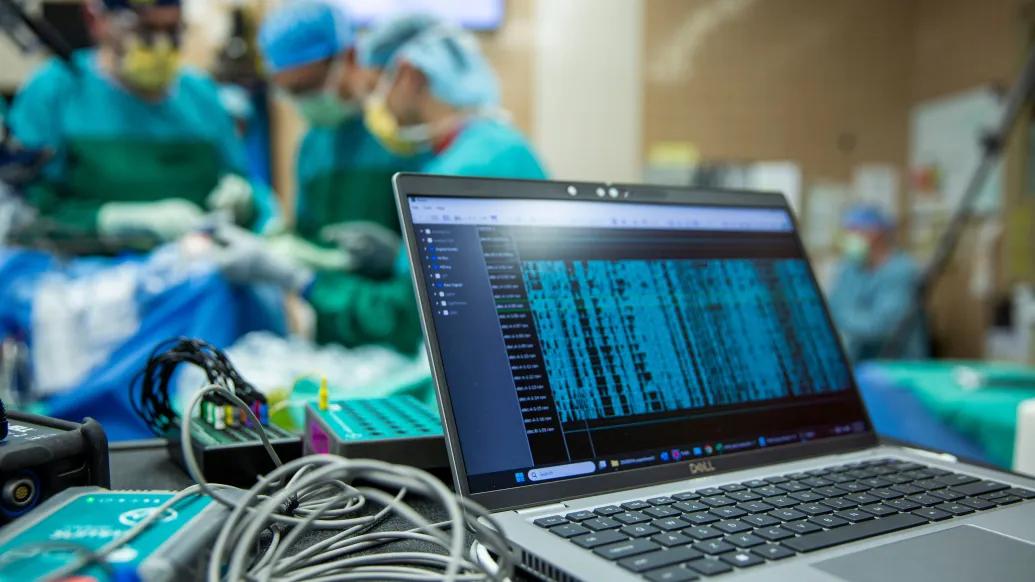
ANN ARBOR, Mich. — Neurosurgery leaders at University of Michigan Health have launched a brain-computer interface clinic for patients with motor and speech disabilities.
The health system is among the first in the nation to establish a clinic dedicated to brain-computer interfaces, commonly called BCIs, which decode and interpret brain signals to translate them into action.
The advanced technology has potential to recover functionality loss that occurs due to injury or disease.
“This is an exciting time for people with motor and speech disabilities, as we explore how BCIs could improve their quality of life,” said Matthew Willsey, M.D., Ph.D., a neurosurgeon and biomedical engineer at U-M Health who will lead the clinic.
“BCIs take signals from the brain and use them to restore speech as well as movement, either to a digital device or, potentially one day, to the body itself. This is a future therapy that many people used to think would be impossible.”
The Brain-Computer Interface Clinic will allow multidisciplinary collaboration between experts in neurosurgery, neurology, neurorehabilitation, neurocritical care and neuroanesthesia, as well as leaders in BCI technology research.
Clinicians will comprehensively evaluate patients with motor and speech disabilities caused by conditions including but not limited to stroke, spinal cord injury, ALS, and progressive muscle atrophy.
In addition to determining whether patients can receive interventions, such as vagus nerve stimulation for post-stroke weakness, providers will inform them of opportunities to enroll in current or future BCI clinical trials.
“Research into implantable BCIs is accelerating at breakneck speed,” said Aditya Pandey, M.D., chair of the Department of Neurosurgery.
“Our teams will ensure that patients will be given as much detail as possible about the potential to receive recently approved neural interfaces, like vagus nerve stimulators, and participate in cutting-edge clinical trials for the newest BCI technology to treat their functional deficits.”
In June 2025, Willsey led the first in-human recording from a new, wireless BCI that was temporarily implanted during a temporal lobectomy for epilepsy. The technology was developed by the Texas-based company Paradromics.
Willsey is a site principal investigator at U-M for the upcoming Connect-One clinical study of the Paradromics device. The study gained FDA approval in November 2025.
His team is leading another clinical trial that will assess the preliminary safety information for an investigational BCI device that also aims to restore motor and speech function.
“The BCI Clinic at U-M Health will be at the leading edge of the field, ready to assess the latest technology to achieve the goal of sharing groundbreaking therapies with our patients,” Willsey said.
About Michigan Medicine
At Michigan Medicine, we advance health to serve Michigan and the world. We pursue excellence every day in our 12 hospitals and hundreds of clinics statewide, as well as educate the next generation of physicians, health professionals and scientists in our U-M Medical School.
Michigan Medicine includes U-M Medical School and University of Michigan Health, which includes the C.S. Mott Children’s Hospital, Von Voigtlander Women’s Hospital, University Hospital, the D. Dan and Betty Kahn Health Care Pavilion, the Frankel Cardiovascular Center, Kellogg Eye Center, University of Michigan Health-West, University of Michigan Health-Sparrow and the Rogel Cancer Center. The U-M Medical School is one of the nation's biomedical research powerhouses, with total research awards of more than $800 million.
In This Story
Matthew S Willsey, MD, PhD
Assistant Professor

Aditya S Pandey, MD
Professor
Related
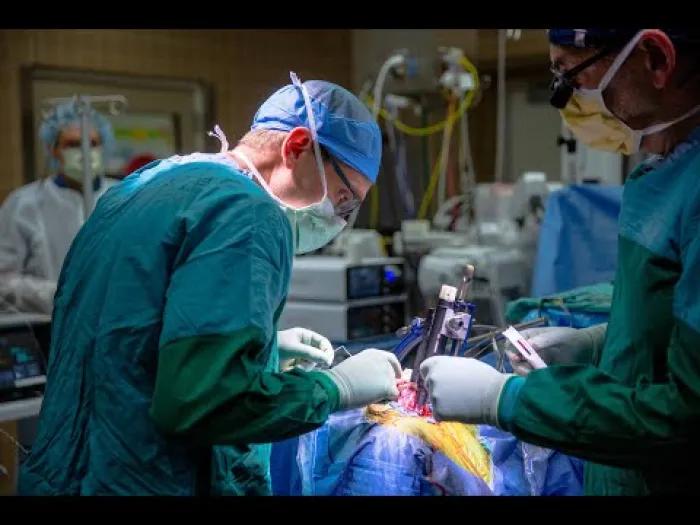
University of Michigan team leads first in-human recording with new wireless brain-computer interface
Featured News & Stories
The AI is listening: Implications of machine generated clinical notes on health care

A pediatric epilepsy fundraiser that changes lives
Digital alerts support timely treatment decisions of critically ill cardiac patients

Michigan Alzheimer's Disease Research Center receives $22M to advance efforts statewide
Engineered nanoparticles sensitize gliomas to radiotherapy