U-M partners with NIH ACTIV Initiative for clinical trial of blood clotting treatments for COVID-19
Author |
The University of Michigan is one of several academic medical centers partnering with the National Institutes of Health on three adaptive clinical trials to evaluate the safety and effectiveness of varying types of blood thinners to treat adults diagnosed with COVID-19.
The trials are part of the ongoing Accelerating COVID-19 Therapeutic Interventions and Vaccines (ACTIV) initiative. All three clinical trials will be coordinated and overseen by the National Heart, Lung, and Blood Institute (NHLBI), part of NIH, and funded through Operation Warp Speed.
Collectively known as ACTIV-4 Antithrombotics, the trials will provide critical insights that could help guide the care of patients with COVID-19, particularly those who suffer from life-threatening blood clots.
U-M will host a Mechanistic Studies Center to identify laboratory analyses to be done with samples collected by the trials and stored at a central biorepository.
“The goal is to gain an understanding of the pathologic mechanisms that are driving this disease—especially with regard to the dysfunction of the blood clotting system in COVID-19 patients that result in blood clots (thrombosis) in their lungs and elsewhere in their bodies,” says James Morrissey, Ph.D., professor of biological chemistry and internal medicine.
Researchers have noted that many patients who have died from COVID-19—the deadly disease caused by SARS-CoV-2—had formed blood clots throughout their bodies, including in their smallest blood vessels. This unusual clotting, one of many life-threatening effects of the disease, has caused multiple health complications, from organ damage to heart attack, stroke and pulmonary embolism.
Antithrombotics, also known as blood thinners or anticoagulants, keep blood protein and platelets from turning into clumps or sticking to each other, but doctors have not yet figured out if, and at what point during the course of the disease, blood thinners might be effective at treating patients with COVID-19.
The mechanistic studies will also provide insights into how these treatments modulate the blood clotting system in COVID-19 patients, adds Morrissey.
“There is currently no standard of care for anticoagulation in hospitalized COVID-19 patients, and there is a desperate need for clinical evidence to guide practice,” said NIH Director Francis S. Collins, M.D., Ph.D. “Conducting trials using multiple existing networks of research sites provides the scale and speed that will get us answers faster.”
“We must use therapies that support the natural inhibitors of clotting in the blood,” said Keith Hoots, M.D., director of NHLBI’s Division of Blood Disorders and Resources. “Heparin has shown promise, but we really need clinical trial data to determine how much blood thinner, or even anti-platelet medication, to give.”
“By leveraging the infrastructure and expertise of our existing research networks, we can more rapidly gather the scientific evidence needed to help prevent or treat these very serious complications caused by COVID-19,” said NHLBI Director Gary H. Gibbons, M.D. “Harnessing and integrating the assets within existing networks gives us an enormous head start and will allow us to get answers much sooner.”
Trial planning and development work is being done through a collaborative effort with a number of universities, including the University of Pittsburgh; University of Michigan, Ann Arbor; New York University, New York City; Brigham and Women’s Hospital, Boston; University of Illinois at Chicago; University of North Carolina at Chapel Hill; and The University of Vermont, Burlington.
NIH announced the ACTIV public-private partnership in April 2020 to develop a coordinated national research response to speed COVID-19 treatment and vaccine options. As part of this partnership, Bristol-Myers Squibb and Pfizer have agreed to donate the treatments for the trials for patients with COVID-19 who have not been hospitalized. Managed by the Foundation for the National Institutes of Health, ACTIV brings together multiple partners from government, industry, academia and non-profit organizations. For more information about this and other ACTIV therapeutic trials, visit the ACTIV Therapeutics page.
About the National Heart, Lung, and Blood Institute (NHLBI): NHLBI is the global leader in conducting and supporting research in heart, lung, and blood diseases and sleep disorders that advances scientific knowledge, improves public health, and saves lives. For more information, visit https://www.nhlbi.nih.gov/.
Media Contact

Public Relations
Department of Communication at Michigan Medicine
Featured News & Stories

Shipt gift helps address food insecurity

Stopping Ewing sarcoma relapses where they start
University of Michigan Health recognized as a ‘top hospital’ for excellence in environmental sustainability
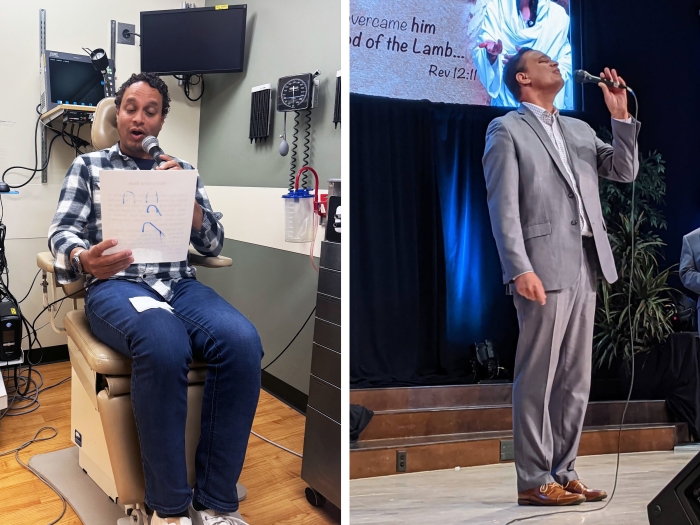
After near-fatal car crash, singer regains voice at U-M Vocal Health Center

Rx Kids linked to reductions in preterm births and low birthweights, fewer NICU admissions