National study underway to test new mechanical heart pump, led by U-M Frankel Cardiovascular Center
Trial will compare investigational BrioVAD System to HeartMate 3 Left Ventricular Assist System, currently the only available LVAD for short- and long-term use in patients with advanced heart failure
Author |
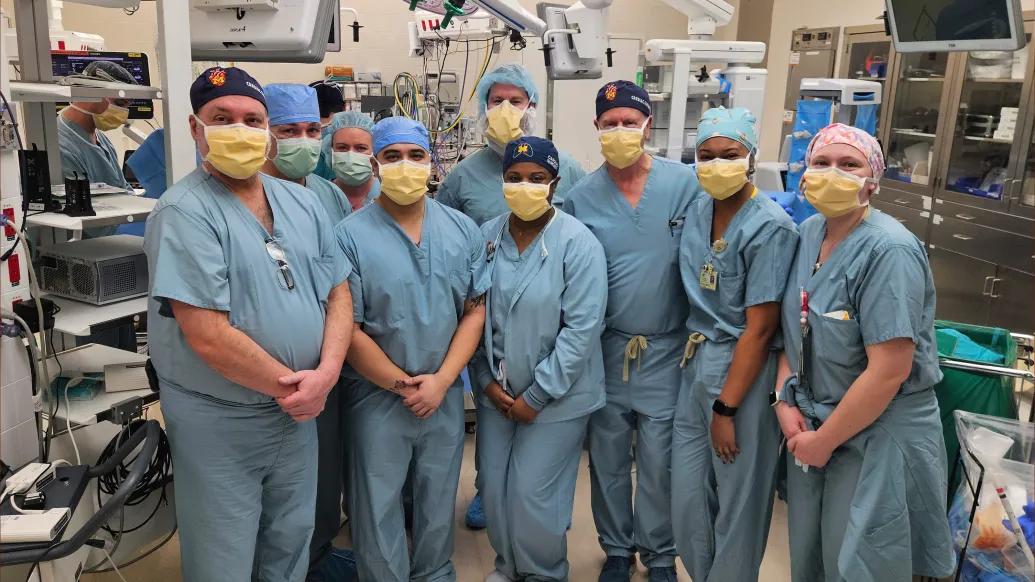
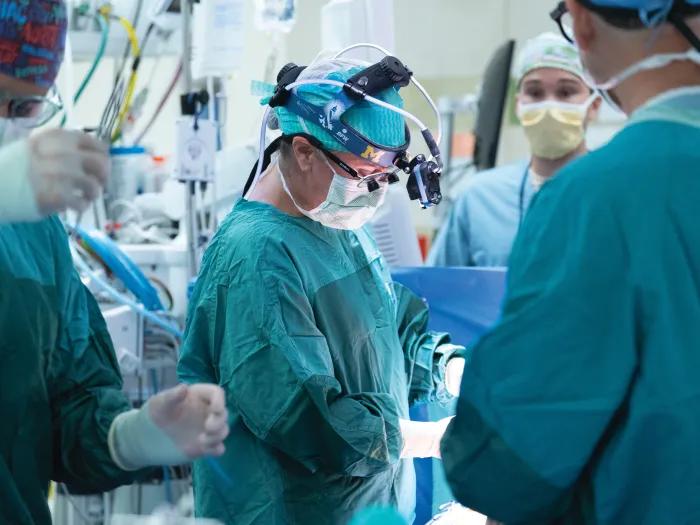
ANN ARBOR, Mich. — A cardiac surgery and heart failure team at the University of Michigan implanted a novel mechanical heart pump into a patient as part of a clinical trial that will compare it to the only device currently used to treat end-stage heart failure.
“This trial presents an opportunity to assess novel technology as we explore a potential new treatment for advanced heart failure — a life-threatening condition with extremely limited therapeutic opportunities available,” said Francis Pagani, M.D., Ph.D., national lead investigator for the trial and cardiac surgeon at the U-M Health Frankel Cardiovascular Center.
Of 6 million Americans with heart failure, thousands are either waiting for a heart transplant or need a transplant but are not eligible.
Doctors often treat these patients with a ventricular assist device, an implantable heart pump that assists the weak muscle of the heart’s left ventricle in pumping blood throughout the body. Once used as a stopgap before transplant, VADs are now increasingly used as an alternative long-term therapy in place of heart transplantation.
The study, called INNOVATE (Investigation of a Novel, magNetically levitated VAD for the treatment of refractOry left Ventricular heArT failure), is the first test of the BrioVAD, a LVAD developed by BrioHealth Solutions, Inc.
The first patient to receive the BrioVAD at U-M was a woman from Monroe, Mich.
The trial aims to enroll participants with heart failure whose left ventricles have weakened to 25% or less of normal blood-pumping power – a measure called left ventricular ejection fraction. To qualify, patients must have worsening heart failure despite receiving optimal treatment with medications.
Two-thirds of the participants will be randomly assigned to receive the BrioVAD, while one-third will receive Abbott’s HeartMate 3, which is the only device regularly offered to patients as a short- and long-term treatment at this time.
The HeartMate 3 was first approved by the U.S. Food and Drug Administration in 2017. The BrioVAD has received an investigational device exemption from the FDA for use in the INNOVATE trial directly comparing the two devices, and it has been approved for commercial use in China.
Abbott announced in January 2024 that it would stop producing its other FDA-approved LVAD offering, the HeartMate II, by 2026.
“Having only one device on the market for any condition is not ideal for patients,” said Abbas Bitar, M.D., principal site investigator for the trial and clinical assistant professor of internal medicine-cardiology at U-M Medical School.
“If a malfunction or supply chain issue were to arise, patients would be left without an option. It’s vitally important to have other choices available for our patients in that event.”
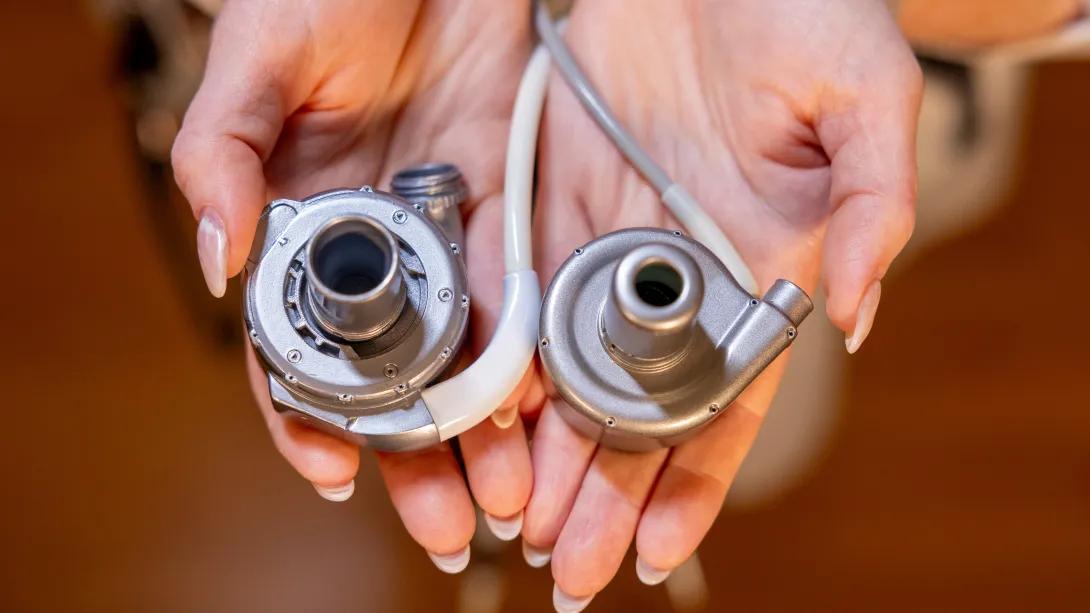
Both the BrioVAD and HeartMate 3 use a technology that magnetically levitates a rotor inside the pump housing, to reduce damage as it turns and pumps blood to the body. The new device spins at a slightly slower speed in an effort to further reduce harm to the blood, according to BrioHealth Solutions.
The BrioVAD pump is around 20% smaller than the HeartMate 3 and has a slightly narrower driveline, the cable that runs from the pump through the skin to the battery pack worn outside the body.
HeartMate 3’s pair of batteries provides up to 17 hours of uninterrupted power. BrioVAD offers up to 12 hours of charge; however, it only uses one battery and is less for the patient to carry.
In April 2024, the U.S. Food and Drug Administration recalled HeartMate II and HeartMate 3 due to a buildup of biological material that caused blockages as blood exits the device pump.
“Despite the recall, HeartMate 3 has achieved the best outcomes to date for patients with no other option for treatment and has set new, higher standards of patient outcomes to compare to all future devices,” Pagani said.
“It has a very low rate of adverse outcomes compared to past VADs that had traditionally high complication burdens, including driveline infections and strokes.”
Eventually, up to 40 U.S. health systems are expected to take part in the trial. The goal is to have a total of 780 participants enrolled in INNOVATE.
“While the use of VADs has grown over the years, the therapy has still not been adopted as widely as it could,” said Robert B. Hawkins, M.D., M.Sc., assistant professor of cardiac surgery at U-M Medical School.
“We look forward to assessing this new technology head-to-head with the current standard, in hopes of improving lives for patients across the country.”
BrioHealth Solutions is sponsoring the INNOVATE clinical trial. For Dr. Pagani’s role as national principal investigator, the University of Michigan receives funding from BrioHealth Solutions to support his time involved with the INNOVATE clinical trial.
In This Story

Abbas Bitar, MD
Clinical Assistant Professor

Francis D Pagani
Professor

Robert Bruce Hawkins II, MD, MSc
Assistant Professor
Featured News & Stories
Reducing infections after heart surgery could save Medicare $441 million per year
Young father survives aortic dissection after delayed diagnosis
C.S. Mott Children’s Hospital first in country to implant expandable heart valve during FDA review phase

Born with half a heart, headed to college with a full life

The Questions That Shape the Future of Medicine