Michigan Medicine resists significant cuts by Blue Cross Blue Shield of Michigan that would limit patient access
No immediate changes for patients as health system seeks to protect access and secure fair payment for its complex, high-quality services
2:30 PM
Author |
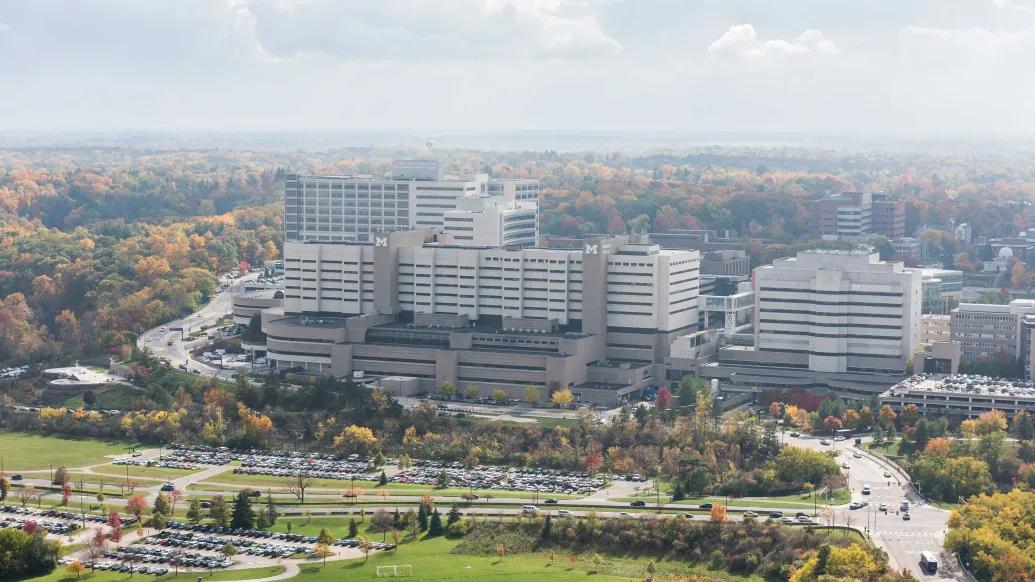
ANN ARBOR, Mich. – Following months of contract renewal negotiations with Blue Cross Blue Shield of Michigan (BCBSM), Michigan Medicine and University of Michigan Health (U-M Health) are informing patients about potential impacts that could result in changes for those insured by certain BCBSM commercial health plans if an agreement is not reached by June 30, 2026.
Despite months of good faith negotiations, BCBSM proposed an unacceptable 30% reduction in reimbursement for the world-class care at Michigan Medicine. Unfortunately, this unsustainable offer forced U-M Health to provide BCBSM with a required 120-day notice setting a June 30 deadline by which the organizations must reach a new agreement. The health system reiterated in the notice it is committed to reaching an agreement with the insurer before that deadline.
Nothing changes for patients with BCBSM commercial plans today, and the contract renewal involves only the hospitals and health centers of University of Michigan Health's academic medical center: University Hospital, C.S. Mott Children's Hospital, Von Voigtlander Women's Hospital, D. Dan and Betty Kahn Health Care Pavilion and Frankel Cardiovascular Center, as well as its associated physicians and outpatient clinics. The renewal discussions do not include the hospitals and health centers of UM Health-Sparrow and UM Health-West, nor the physician group U-M Health Partners.
Medicare Advantage and Medicaid plans are not part of the contract negotiations, nor is The University of Michigan Health Plan that covers employees, faculty, staff and retirees.
The decision to set a deadline comes after repeated efforts to arrive at an agreement that includes fair reimbursement for the highly complex health care that the state’s only academic health system provides to patients with BCBSM insurance. Michigan Medicine has also offered to continue to meet stringent safety, quality and outcome standards as part of the agreement.
“Our priority is — and always will be — our patients,” said David Miller, M.D., M.P.H., CEO of Michigan Medicine and Executive Vice President for Medical Affairs at the University of Michigan.
“We are advocating for an agreement that allows our nurses, physicians and care teams to maintain the high-quality, specialized care patients depend on, while we also ensure that care is accessible and affordable for patients across the state of Michigan.”
Hospitals in Michigan are chronically underpaid, receiving the third lowest rates in the country. BCBSM reimburses U-M Health at rates that are 22% lower than reimbursement rates from all other major commercial insurance partners in the state.
BCBSM has falsely stated that Michigan Medicine has asked for a 44% increase in reimbursement. The most recent proposal from BCBSM cut payments to Michigan Medicine by 30% — an unsustainable reduction.
BCBSM’s claims about Michigan Medicine's proposals are false. Michigan Medicine is proposing either single-digit annual increases, which would still leave BCBSM paying well below other insurers in Michigan, or extending our current contract and tying any future increases to proven quality and cost outcomes for patients.
“We’re not asking BCBSM for unreasonable reimbursement,” said Julie Ishak, DNP, RN, NP-BC, CENP, Chief Nurse and Operations Executive.
“We’re just asking for fairer treatment and an agreement that protects patients and the nurses, physicians and staff who represent our commitment to advance health for all Michiganders.”
University of Michigan Health is the state’s only academic health system and the sole provider of many complex services in the state, including pediatric heart transplants, rare disease care, the state’s only psychiatric emergency department and more. Its hospitals are consistently recognized as among the nation’s best, including ranking in more specialties than any other Michigan hospital and ranking among the top ten hospitals in the nation for three of those specialties by U.S. News & World Report.
“Patients and their families rely on Michigan Medicine for the most complex, highly expert medical care available in the state,” Miller said.
“And we want to partner with BCBSM to protect access to that care today and for years to come.”
Patients and community members can find the latest updates, frequently asked questions, and additional resources at uofmhealth.org/bcbsm. This information will be updated regularly as negotiations continue.
About Michigan Medicine and University of Michigan Health
At Michigan Medicine, we advance health to serve Michigan and the world. We pursue excellence every day in our 12 hospitals and hundreds of clinics statewide, as well as educate the next generation of physicians, health professionals and scientists in our U-M Medical School.
Michigan Medicine includes U-M Medical School and University of Michigan Health, which includes the C.S. Mott Children’s Hospital, Von Voigtlander Women’s Hospital, University Hospital, the Frankel Cardiovascular Center, the D. Dan and Betty Kahn Health Care Pavilion, Kellogg Eye Center, University of Michigan Health-West, University of Michigan Health-Sparrow and the Rogel Cancer Center. The U-M Medical School is one of the nation's biomedical research powerhouses, with total research awards of more than $800 million.
More information is available at www.michiganmedicine.org
Featured News & Stories

U-M Board of Regents approves construction of Nathan and Catherine Forbes Sports Medicine Institute

Many older adults make Medicare decisions quickly and most don’t change plans, poll finds
Who gets Alzheimer’s drugs? Race, vulnerability and health status shape access

What’s the latest on 7-OH and kratom availability and addiction care?

A metabolic “switch” that could help reset scar-producing cells in scleroderma