
How U-M helped bring depression out of the darkness
The founding of the nation's first depression center in 2001 paved the way for many more nationwide, and helped spur research and reduce stigma
10:00 AM
Author |

For centuries, if someone was diagnosed with cancer, people talked about in whispers, if at all.
But by the late 20th century, that stigma had all but vanished.
Part of the reason? Major medical centers, including the one at the University of Michigan, had created cancer centers devoted to research-fueled patient care, advanced laboratories, and outreach to boost awareness and early detection.
Other conditions, from heart disease to dementia, also got the same coordinated approach.
Depression finally got its turn in 2001, when the nation’s first Depression Center was created at U-M after a vote by the Board of Regents on November 15.
At the time, depression was as stigmatized as cancer had once been. Few people discussed their diagnosis openly.
Millions of Americans with depression and many more worldwide went untreated, despite recent advances in antidepressant medications and psychotherapy, and a 2001 World Health Organization report calling it the world’s leading cause of disability.
The new center aimed to change that, through research to improve care, and stigma-busting outreach.
John Greden, M.D., the chair of the Medical School’s Department of Psychiatry at the time, led the charge to create the center, together with mental health researchers and clinicians from multiple U-M departments and schools.
Today, nearly 280 faculty across dozens of U-M departments, schools and colleges belong to the center, which helps fuel their teams’ innovation and collaboration to advance depression research.
It runs multiple outreach programs, including an annual conference on college student mental health that launched in spring 2003, and specialized education and awareness programs for schools and workplaces.
In 2021, the center was renamed the Frances and Kenneth Eisenberg and Family Depression Center, in honor of donors whose $30 million in giving to the center greatly accelerated its mission. In 2025, the Eisenbergs renewed their support with an additional $15 million in support of the Center.

Other donors who had experienced the toll of depression and bipolar disorder on their own families have also been crucial to the center’s growth, including Waltraud “Wally” Prechter, who with her late husband Heinz had been key to the center’s origin.
The center is now led by Srijan Sen, M.D., Ph.D., a psychiatrist and neuroscientist who was earning his medical and doctoral degrees at U-M when the center was founded, and now holds a professorship named for the Eisenbergs. He took over the reins from Greden in 2021.
Just as cancer centers sprouted across America in the late 20th century, the U-M center sparked the creation of 29 other centers like it in the U.S. and Mexico.
Connected through the National Network of Depression Centers, which was formed in 2008 in Ann Arbor, they share resources and data to move depression research and care forward.
While mental health research and care at U-M stretched back to the 1880s, it had never been organized into a university-level effort to bring together researchers, clinicians and learners from many disciplines. The Depression Center aimed to complement the basic neuroscience focus of what was then known as the Mental Health Research Institute, now the Michigan Neuroscience Institute.
Another key aspect of the Depression Center’s early effort was sharing information about depression at a time when finding easy-to-understand information was difficult for the public. Even though information is much easier to find today, the recently expanded and updated Depression Center Toolkit offers free tools for those experiencing depression and those who want to help a loved one.
The center’s founding was a key driver for the Rachel Upjohn Building on the East Medical Campus, which opened in 2006 and is named for another key donor, Rachel Mary Upjohn Meader. It became the home for many U-M mental health researchers and clinical studies, as well as for outpatient mental health care from U-M Health’s Adult Psychiatry, Neuropsychology and Child/Adolescent Psychiatry clinics.
Over the past 25 years, the center has helped launch initiatives that have gone on to have broad impact including the Healthy Minds Study, TRAILS, MC3, the Intern Health Study, and the Prechter Longitudinal Study of Bipolar Disorder, extending its reach across research, education and clinical care.
Looking back, Greden says, “The stigma today is nothing like it once was. We’ve come a long way and made huge progress.” He notes that today’s young people are incredibly open about their mental health by comparison with people in 2001, and that screening for depression is now routine in primary care settings. “But we have work to do yet.”
Sen agrees, and notes that research on depression’s many contributing risk factors, and treatment outcomes, has laid a foundation for what the center’s members can achieve going forward, with support from the center’s research services and funding.
Building on that foundation, the center is expanding its focus on precision prevention: identifying each person’s vulnerabilities and developing interventions, policies and environments that reduce the risk of depression, while continuing to improve treatment.
“In 25 years, I hope that we have a lot less depression and anxiety in the world,” Sen said. “But we need to do more upstream to make progress.”
Media Contact

Public Relations
Department of Communication at Michigan Medicine
In This Story

John F Greden
Professor Emeritus/a

Srijan Sen
Center Director
Related
U-M Depression Center to be named for Eisenberg family, in recognition of $30M in giving
U-M Depression Center enters 20th year with new director and focus on next-generation research
Featured News & Stories

New anti-cancer strategy shows promise in preclinical studies

More babies with hypoplastic left heart syndrome surviving critical period between surgeries

Giving Voice to Lived Experience in Dementia Research
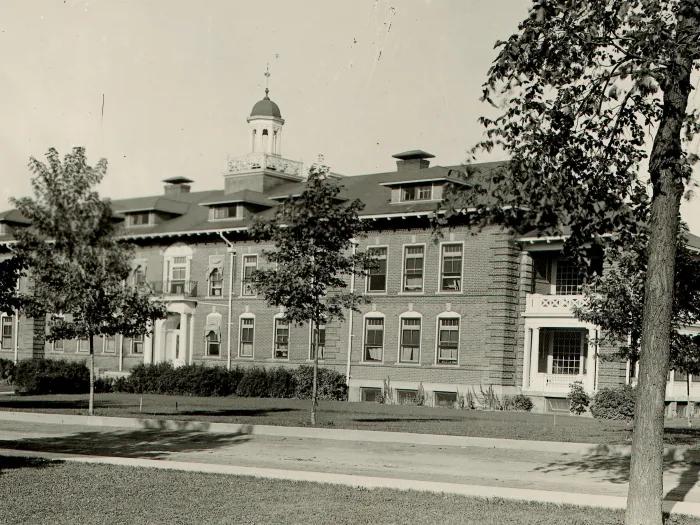
Exploring the mind’s mysteries: 130 years of mental health care & innovation at U-M

Small daily activities may help ease dementia caregivers’ stress

