George Mashour, M.D., Ph.D. appointed senior associate dean for faculty and faculty development
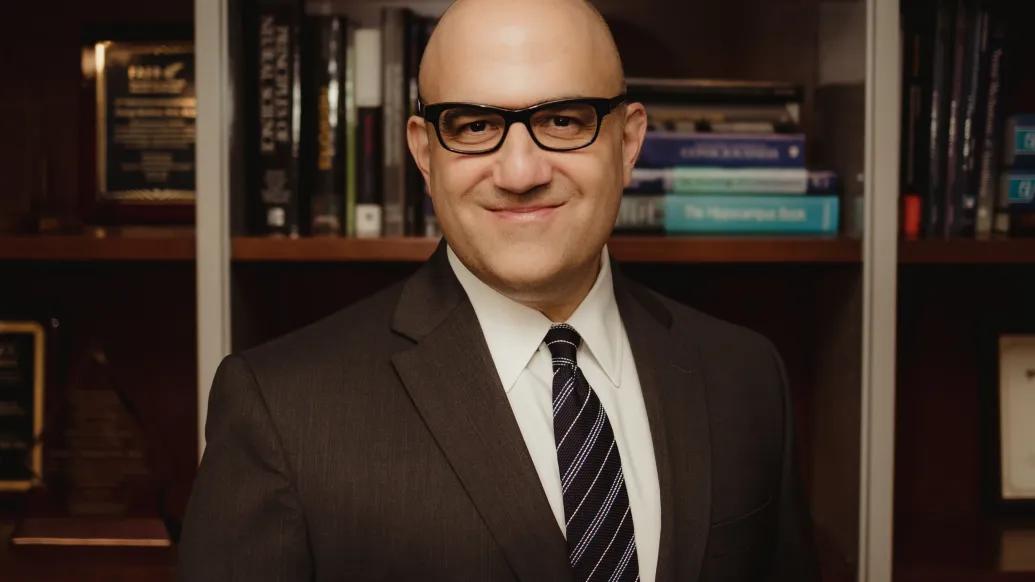
George A. Mashour, M.D., Ph.D., has been appointed senior associate dean for faculty and faculty development of the University of Michigan Medical School by the U-M Board of Regents, effective May 1, 2024.
Mashour served as chair of the U-M Medical School Department of Anesthesiology and the Robert B. Sweet Professor of Anesthesiology since December 2019. Prior to his chair appointment, he served as associate dean for clinical and translational research and director of the Michigan Institute for Clinical and Health Research (MICHR). In 2022, he founded the Michigan Psychedelic Center, which he directs. He also founded the U-M Center for Consciousness Science in 2014.
“The expertise, energy, and dedication of our incredible faculty members play a central role in actualizing our tripartite mission of clinical care, education, and research. I feel privileged and grateful to be able to serve them as senior associate dean for faculty and faculty development,” said Mashour.
Mashour received his medical degree and doctorate in neuroscience from Georgetown University and studied neuroscience as a Fulbright Scholar in Berlin and Bonn. After completing residency and chief residency at Harvard Medical School and Massachusetts General Hospital, he pursued a neurosurgical anesthesiology fellowship at Michigan Medicine.
In 2007, Mashour was appointed assistant professor in the departments of anesthesiology and neurosurgery, with an additional faculty appointment in the Neuroscience Graduate Program. He was promoted to professor in 2017 and appointed professor of pharmacology in 2021.
Mashour is an internationally recognized expert on the neurobiology of consciousness and unconsciousness. He conducts NIH-funded neuroscience research across the translational spectrum, from computational models to laboratory science to clinical trials.
He recently served as president of the Association of University Anesthesiologists and as a trustee of the International Anesthesia Research Society. His many awards and honors include the Excellence in Research Award from the American Society of Anesthesiologists, election as a Fellow of the American Association for the Advancement of Science, and election to the National Academy of Medicine.
Mashour succeeds Brian Zink, M.D., professor of emergency medicine, who served in the position from September 2019 to December 2023 and Laurel Moore, M.D., clinical professor of anesthesiology and neurosurgery, who served in an interim role since January 2024.
Featured News & Stories
$3.9 million NIH grant to fuel U-M effort to develop first targeted therapy for fatal childhood brain disorder

Digital alerts support timely treatment decisions of critically ill cardiac patients

Commentary: Global health research makes America richer and healthier
Bigger data reveals the second, third, and fourth switches controlling a gene

What’s changing in Medicaid and what can you do?