Children with craniofacial differences receive Parisian-themed Glamour Day experience
Annual event for patients at U-M Health C.S. Mott Children's Hospital offers pampering, confidence-building and connection for children and teens
10:30 AM
Author |
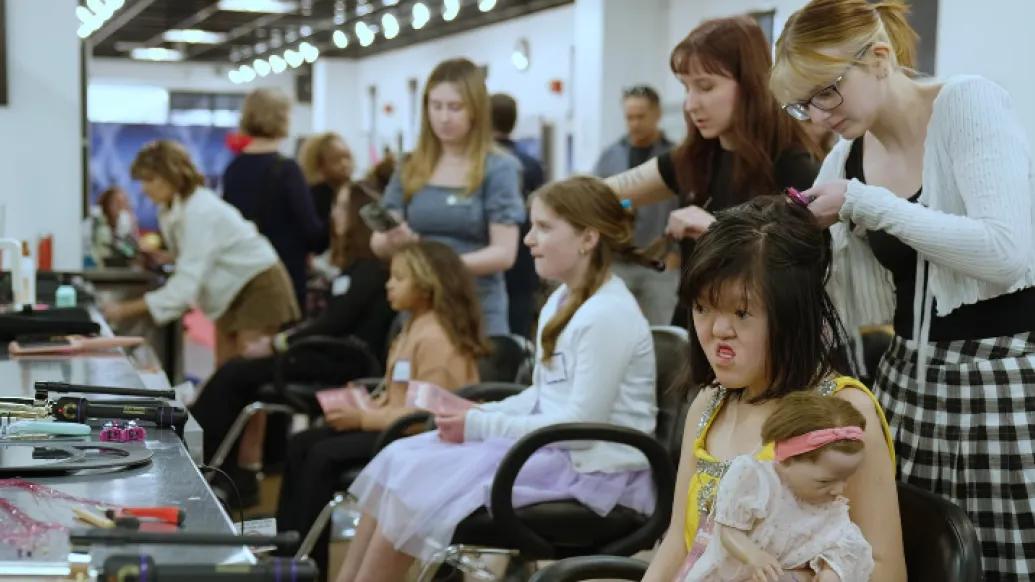
ANN ARBOR, Mich. – Patients from the Craniofacial Anomalies Program at University of Michigan Health C.S. Mott Children’s Hospital recently received the red-carpet treatment during the annual Glamour Day event.
Participants ages 8-18 were able to choose from new hairstyles, manicures, pedicures and makeovers provided by stylists from the Douglas J. Aveda Institute in Ann Arbor.
New this year was a Parisian theme and “boutique” featuring dresses and rompers donated by Just Between Friends Livonia/Novi. Children can select outfits for photo shoots and a runway walk following their makeovers.
Naomi Hadar (Levinshtein) from myFace in New York also attended to speak with children and parents about her lived experience growing up with cleft lip and palate.
Craniofacial anomalies, including cleft lip and palate, are conditions present at birth that can range from mild to severe differences in the growth and development of the head and facial bones. Some conditions require surgery or ongoing medical care.
Program providers and organizers say events like Glamour Day give children an opportunity to connect with peers who share similar experiences while building confidence and friendships.
"Many of these kids have experienced a long journey, including multiple operations and lots of doctor's appointments,” said Christian Vercler, M.D., director of the Craniofacial Anomalies Program at Mott. “This is a wonderful opportunity for our patients to meet and connect with other kids in the program in a fun and supportive environment.”
Learn more about the Craniofacial Anomalies Program at C.S. Mott Children's Hospital and see highlights from previous Glamour Day events.
Featured News & Stories

Mindful gift supports patient well-being

CRISPR acts as commander-in-chief for backup defenses in bacteria

University of Michigan Professional Nurse Council ratifies contract with University of Michigan Health

What should you know before starting a GLP-1?

E-bikes are faster than ever. Are families prepared for the risks?