Breakthrough T1D U-M-OHSU Cardiorenal Center of Excellence to focus on heart and kidney disease in type 1 diabetes
12:00 PM
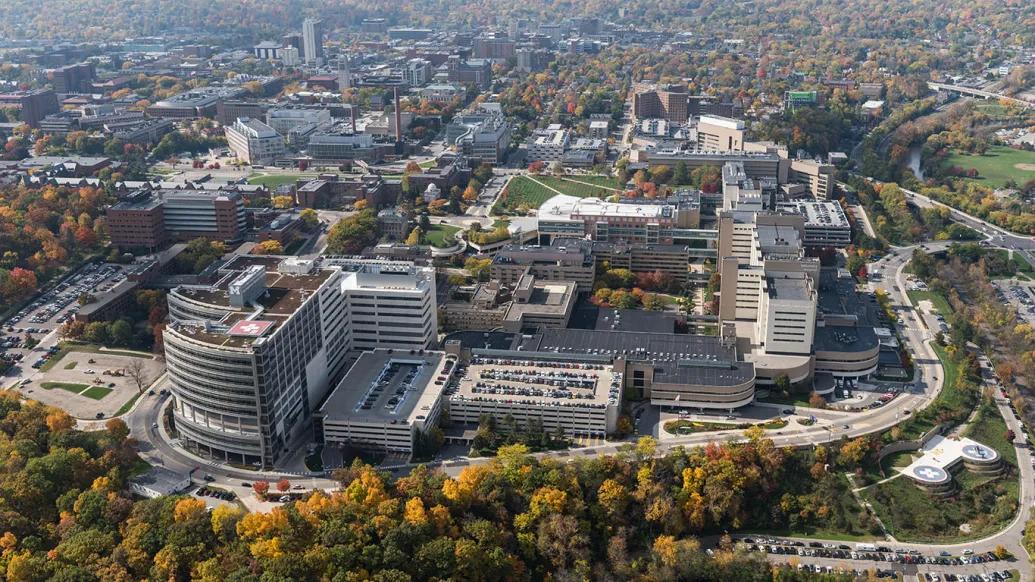
NEW YORK, April 23, 2025 — Breakthrough T1D, formerly JDRF, the leading global type 1 diabetes (T1D) research and advocacy organization, has awarded more than $2.8 million over three years for the Breakthrough T1D Center of Excellence at the University of Michigan and Oregon Health & Science University, creating the Breakthrough T1D U-M-OHSU Cardiorenal Center of Excellence. This funding will expand the existing University of Michigan Center of Excellence to include Oregon Health & Science University and create a joint Center of Excellence that will build on the work completed over the last five years at U-M. It will be led by Matthias Kretzler, M.D., with the University of Michigan, and Rodica Pop-Busui, M.D., Ph.D., with Oregon Health & Science University.
The Breakthrough T1D Center of Excellence at the University of Michigan has conducted research across focus areas, including beta cell replacement therapies, automated insulin delivery systems, psychosocial health, metabolic control, and long-term complications of the eye, heart, and kidney from T1D. Building on the advances in our understanding of heart and kidney complications in T1D, the new joint Center of Excellence will address a critical research gap by establishing an innovative and efficient clinical trial platform that will be used to test several heart and kidney therapies in people living with T1D. It will also advance work started by the University of Michigan Center of Excellence in precision medicine with the ultimate goal of treating the right person with the right therapy at the right time.
“The Breakthrough T1D Center of Excellence at the University of Michigan has advanced our understanding of heart and kidney disease in type 1 diabetes,” said Breakthrough T1D Research Director Jonathan Rosen, Ph.D. “The stage is now set for the Breakthrough T1D U-M-OHSU Cardiorenal Center of Excellence to apply these learnings in an innovative clinical trial testing promising heart and kidney therapies in people with T1D. Such trials are urgently needed because there are few therapeutic options available today.”
“This Breakthrough T1D Center of Excellence represents a bold step forward in our commitment to advancing cutting-edge research for people with type 1 diabetes, and thus expediting true personalized care for patients,” Dr. Pop-Busui said. “With this new partnership, we are creating a collaborative hub where scientific discovery and clinical innovation come together to reverse cardiorenal disease in people with type 1 diabetes. Together, we can help transform the future of health.”
The Harold Schnitzer Diabetes Health Center at OHSU was established in 2007 and endowed by the Harold & Arlene Schnitzer CARE Foundation to advance knowledge and care for people with diabetes. It is the only diabetes center in the Pacific Northwest that provides specialized and outstanding clinical care for children and adults living with T1D in one location. It has state-of-the-art infrastructure and a track record of direct integration of clinical research at the point of care in one location, which will enable a rapid launch of the new Center of Excellence activities and clinical trials.
“We are profoundly honored to receive this significant investment from Breakthrough T1D to establish the U-M-OHSU Center of Excellence,” said Dr. Kretzler at the University of Michigan. “This award is a testament to the significant contributions we have made in understanding the molecular mechanisms leading to cardiovascular and kidney complications in type 1 diabetes. Our collaboration with Oregon Health & Science University will accelerate the translation of these scientific insights into tangible therapies that can improve the lives of those living with T1D. Together, we will pave the way for expanding treatment options through innovations in clinical trials, leading to the implementation of precision medicine for T1D, ensuring that every person receives the optimal treatment for their condition at the right time.”
Breakthrough T1D Centers of Excellence align with the organization’s research strategy and seek to leverage world-class institutions and researchers’ expertise, specialty, and resources to accelerate T1D treatments and therapies. Bringing together leading experts from diverse fields and multiple institutions, each Breakthrough T1D Center of Excellence builds on established expertise to accelerate T1D advances. The Center of Excellence model is designed to maximize resources, remove barriers, link research efforts worldwide, develop the next generation of scientific leadership, and foster maximum collaboration to drive progress as quickly as possible.
The Breakthrough T1D U-M-OHSU Cardiorenal Center of Excellence is one of five Breakthrough T1D Centers of Excellence around the world, powering advances to deliver cures and life-improving breakthroughs for T1D.
About Breakthrough T1D, Formerly JDRF
As the leading global type 1 diabetes research and advocacy organization, Breakthrough T1D helps make everyday life with type 1 diabetes better while driving toward cures. We do this by investing in the most promising research, advocating for progress by working with government to address issues that impact the T1D community, and helping educate and empower individuals facing this condition.
About Type 1 Diabetes (T1D)
T1D is an autoimmune condition that causes the pancreas to make very little insulin or none at all. This leads to dependence on insulin therapy and the risk of short and long-term complications, which can include highs and lows in blood sugar; damage to the kidneys, eyes, nerves, and heart; and even death. Globally, it impacts nearly 9 million people. Many believe T1D is only diagnosed in childhood and adolescence, but diagnosis in adulthood is common and accounts for nearly 50% of all T1D diagnoses. The onset of T1D has nothing to do with diet or lifestyle. While its causes are not yet entirely understood, scientists believe that both genetic factors and environmental triggers are involved. There is currently no cure for T1D.
Featured News & Stories

Commentary: Global health research makes America richer and healthier
Bigger data reveals the second, third, and fourth switches controlling a gene

What’s changing in Medicaid and what can you do?
Study outlines a new framework for direct cell reprogramming

New insight into how lipodystrophy can affect overall health