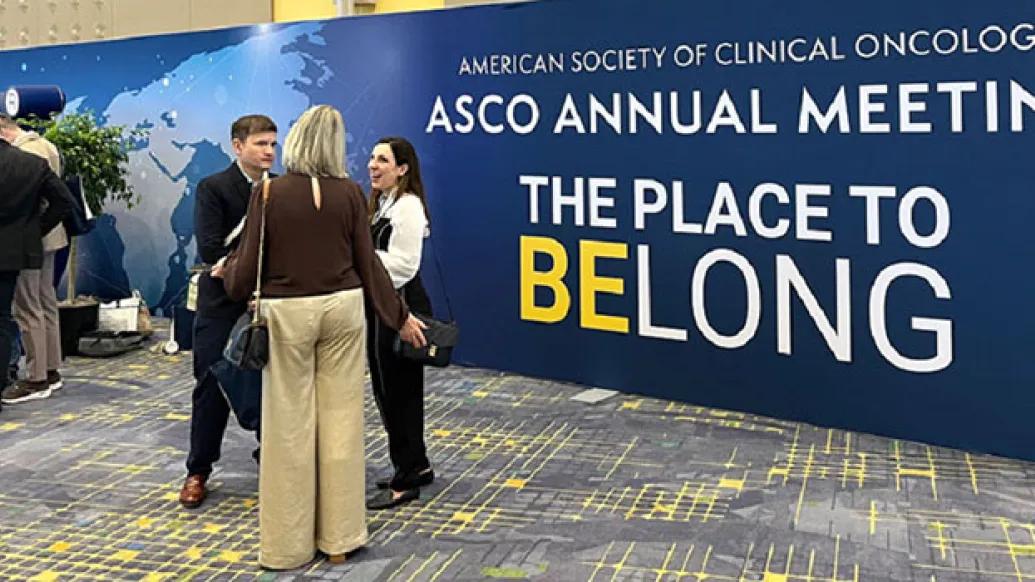
The 2025 American Society of Clinical Oncology Annual (ASCO) Meeting was held in Chicago, Illinois, May 30-June 3. Many Rogel researchers participated in presentations, poster sessions and panel discussions before an audience of cancer researchers from around the globe. Check out the highlights below.
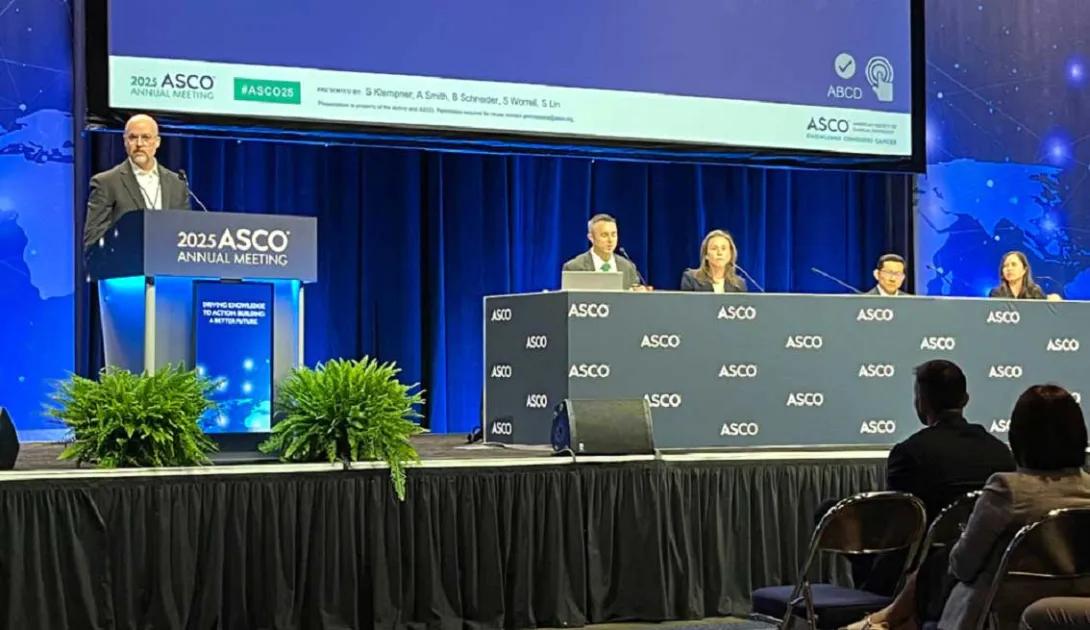
Bryan J. Schneider, M.D. (pictured above), clinical professor internal medicine, gave the medical oncologist perspective in a panel discussion on esophageal cancer treatment standards.
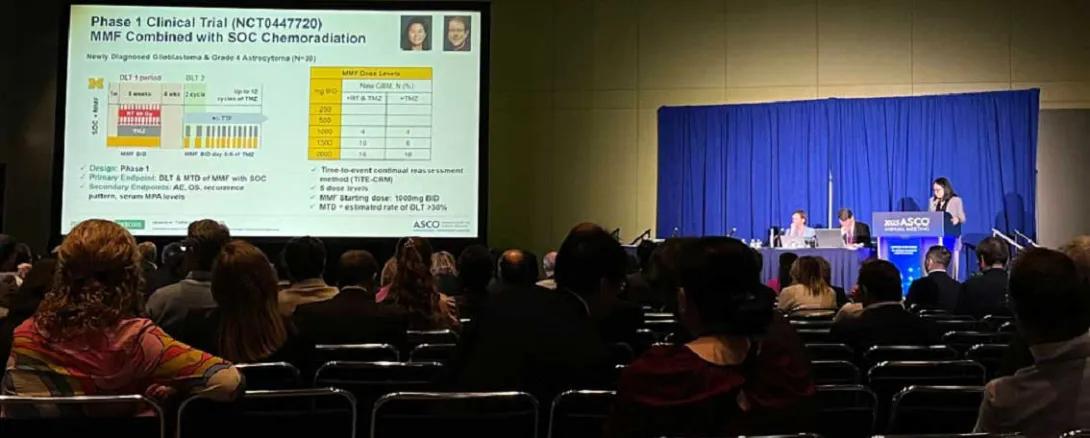
Yoshie Umemura, M.D. (above right), adjunct clinical assistant professor of neurology, presented results from a phase 1 study of mycophenolate mofetil with chemoradiation in newly diagnosed glioblastoma.
Alexander Bray, M.D., Ph.D., fellow, presented a poster on claudin-18 directed therapy in patients with advanced biliary tract cancer.
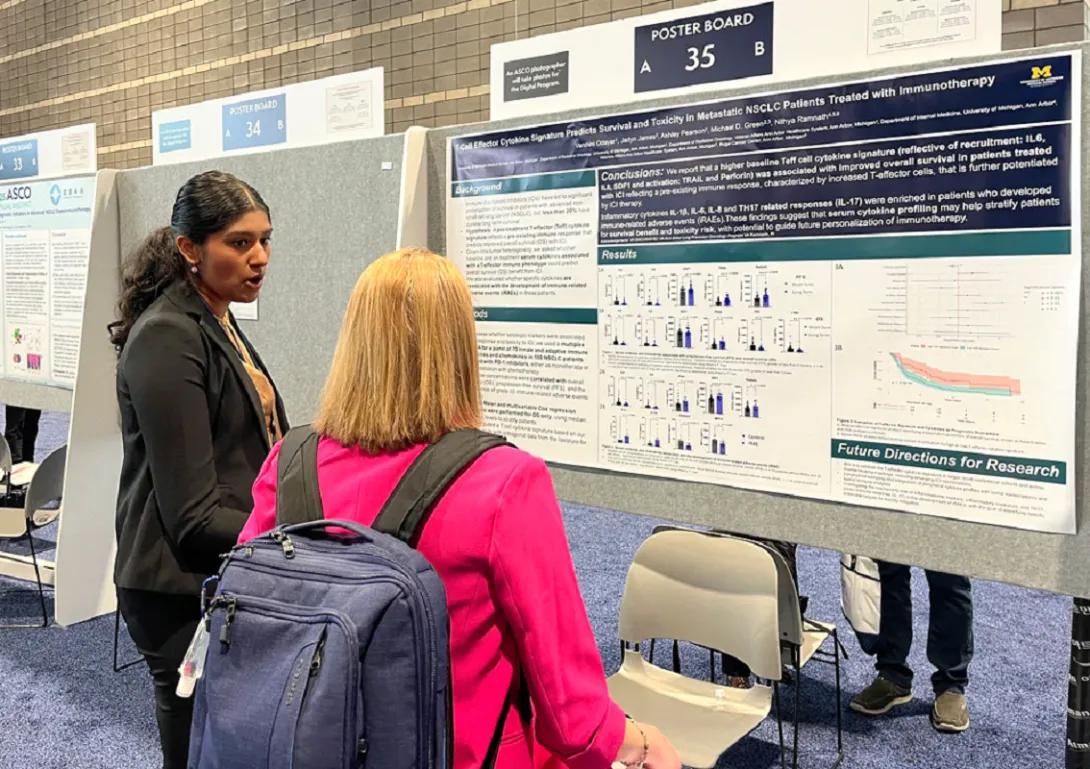
Varshini Odayar, medical student, presented a poster on specific conditions that may indicate a pre-existing immune response for patients with advanced non-small cell lung cancer.
Jennifer Lee, Ph.D., MPH, postdoctoral researcher, presented a poster that looked at aspects of VA hospice enrollment for men with metastatic castration-sensitive prostate cancer.
Erin Cobain, M.D., associate professor in internal medicine, presented a poster which examined possible racial disparities in gene expression assays, such as MammaPrint.
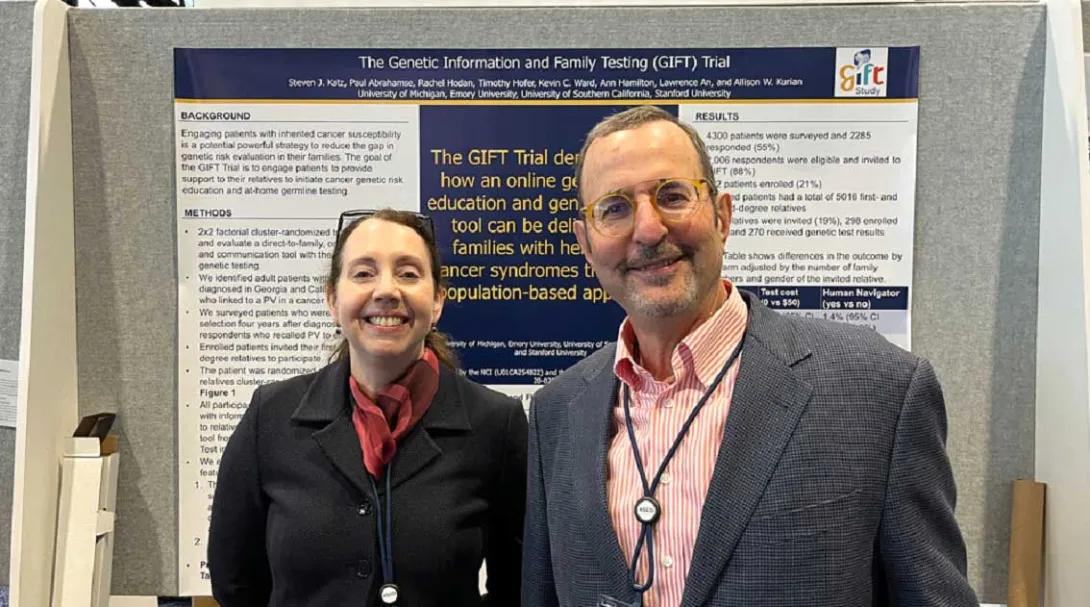
Steven Katz, M.D., MPH (pictured above with Allison Kurian, M.D., M.Sc.) , professor of internal medicine and health management and policy, presented a poster on patient and relatives’ engagement in the Genetic Information and Family Testing (GIFT) trial.
Kelley Chan, M.D., presented a poster looking at the results of a national quality improvement collaborative on improving surgical patient outcomes.
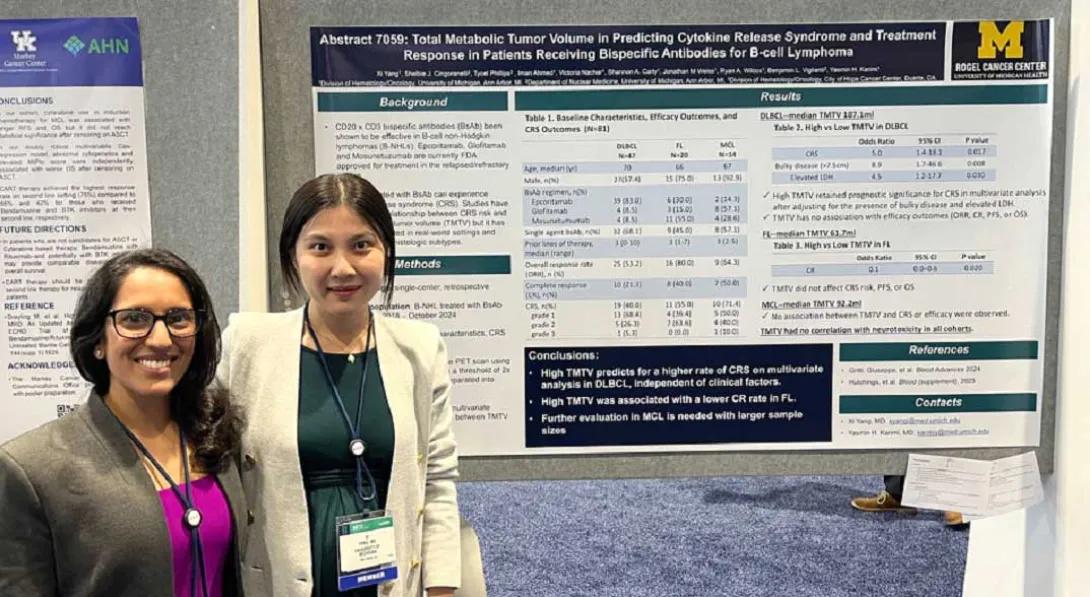
Yasmin Karimi, M.D. (pictured above left with Xi Yangm M.D.), clinical assistant professor in hematology, presented a poster study of the effects of the Epcor antibody on outcomes for patients with Diffuse Large B-Cell Lymphoma.
Xi Yang, M.D., fellow, presented a poster suggesting that total metabolic tumor volume in patients with B-cell non-Hodgkin lymphoma may be a predictor of outcomes.
Christine Veenstra, M.D., assistant professor in internal medicine, presented a poster examining oncologist reports of challenges in using various types of therapy in the treatment of metastatic cancers.
Kristen Pettit, M.D., clinical associate professor in hematology and medical oncology, presented a poster study on the safety and efficacy of using Bomedemstat in patients with essential thrombocythemia.
Francis P. Worden, M.D., clinical professor in internal medicine, was moderator for a discussion on the multidisciplinary treatment of anaplastic thyroid cancer.
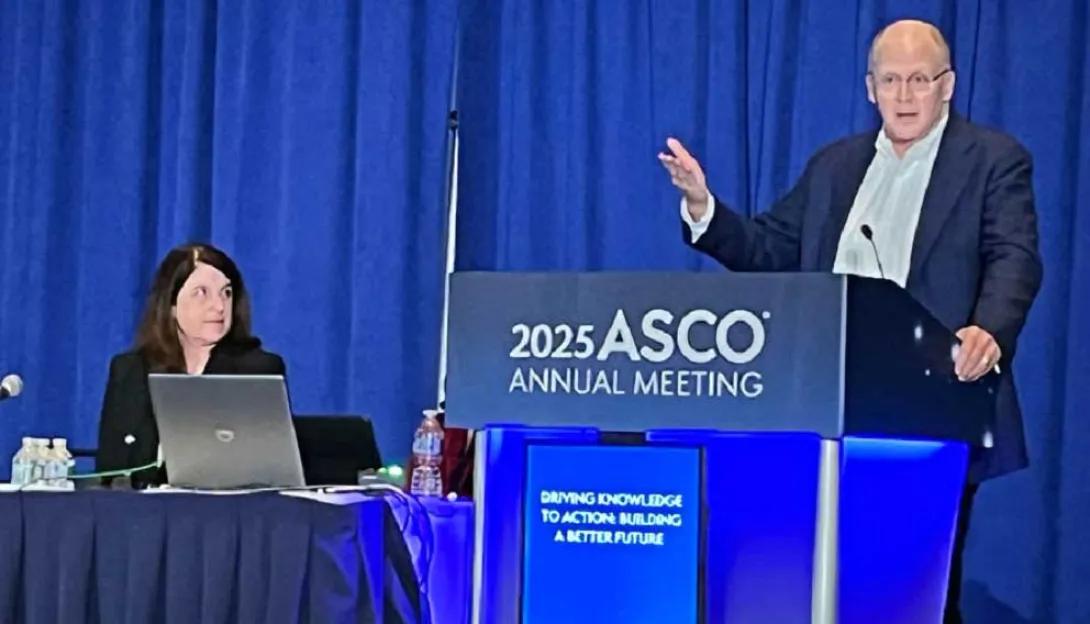
Mark Fendrick, M.D. (above), professor of internal medicine and health management and policy, took part in a discussion on the unintended consequences of multicancer early detection for the Head and Neck Cancer Case-Based Panel.
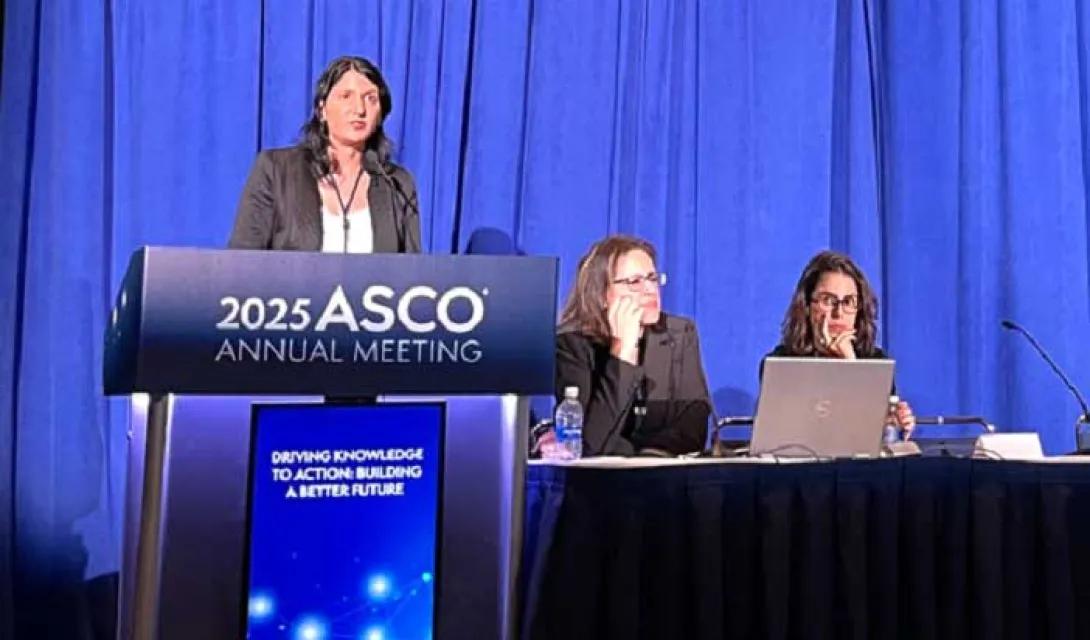
Rashmi Chugh, M.D. (above at the podium), clinical professor of internal medicine, presented results from a study of oral varegacestat therapy at the Sarcoma Rapid Oral Abstract Session.
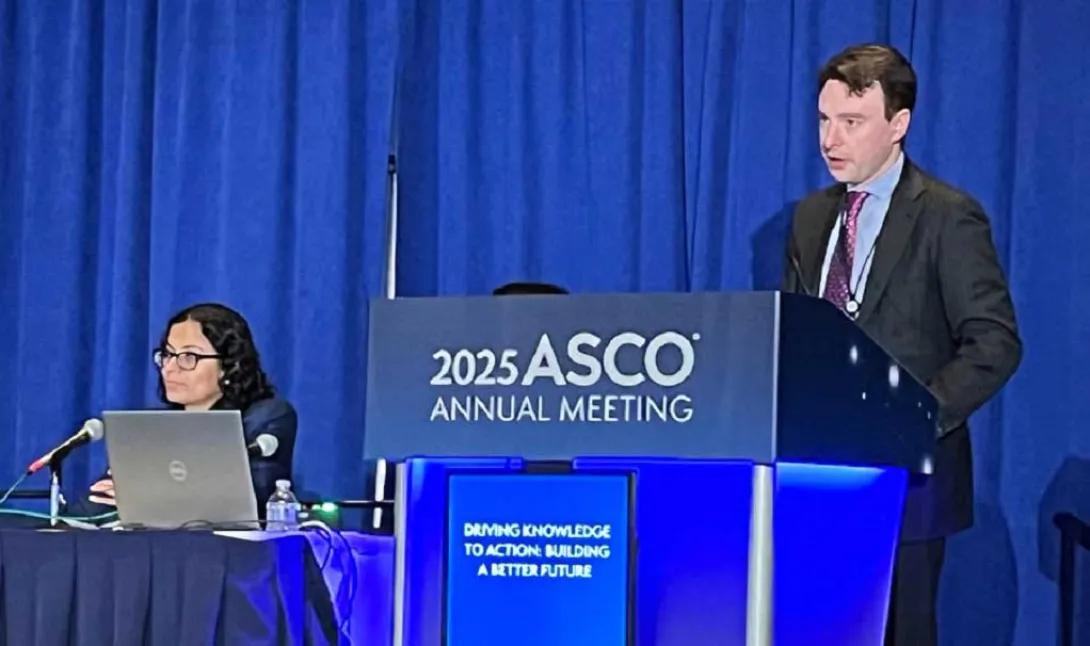
Paul Swiecicki, M.D. (above at the podium), clinical associate professor in internal medicine, gave a presentation on redefining head and neck cancer treatment paradigms at the Clinical Science Symposium.
Andi Cani, Ph.D., research investigator in internal medicine, presented a poster study on using trastuzumab deruxtecan (T-DXd) and sacituzumab govitecan (SG) in cases of advanced HER2-negative breast cancer.
Norah Lynn Henry, M.D., Ph.D., Daniel F Hayes M.D. Breast Cancer Research Professor and professor of internal medicine, presented a poster study on whether adding ovarian function suppression (OFS) to hormonal therapy can help young patients with breast cancer reduce their risk of cancer recurrence.
Anbarasu Kumaraswamy, Ph.D., Smith Family Postdoctoral Scholar, presented a poster looking at extreme non-response to enzalutamide in metastatic hormone-naïve and castration-resistant prostate cancer (CRPC) patients.
Hannah Catzen, M.D., resident in pediatrics, presented a poster looking at a pilot study highlighting the diverse attitudes of oncologists toward crying in the presence of patient.
Bradley Zebrack, Ph.D., M.P.H., M.S.W., professor of social work, presented a poster study looking at how social and psychological factors influencing gene activity in immune cells might impact young (15-39) lymphoma survivors.
Monika Burness, M.D., clinical assistant professor of internal medicine, presented a poster study examining how two types of cancer drugs, called HDAC inhibitors (HDACi) and PARP inhibitors (PARPi), might work better together in patient treatments.
Jacqueline Sara Jeruss, M.D., Ph.D., Alfred E Chang M.D. Research Professor of Surgical Oncology and professor of surgery, led the Highlights of the Day Session III.
We also asked Rogel trainees and faculty to see what they were excited about at this year’s conference. Here’s what they had to say:
“I come to ASCO every year. It's one of my favorite meetings. It's a great place to learn about the latest clinical research, not only in my field but in other fields, as well as to meet up with old friends in important collaborations.”
Rashmi Chugh, M.D., clinical professor of internal medicine
“I've been passionate about access and affordability of cancer prevention my entire career, and work with policy makers to make screening for breast, cervical, colorectal, and lung cancer available at no cost…. some [in the oncology field] would be happy to be put out of business by having fewer fatal cancers diagnosed and would be really thrilled to have more cancer detected in earlier stages where treatments are more effective and less expensive.”
Mark Fendrick, M.D., professor of internal medicine and health management and policy
“ASCO, I think, is a great opportunity to meet people, to learn about new and exciting research in the field, and to get involved more with the community.”
Jennifer Mei Lee, medical student
“I'm one of the sixth-year fellows at University of Michigan…it is my first ASCO. I think there's a really good opportunity for networking with other fellows, faculty and industry, just to learn more about oncology and also exchange ideas…”
Xi Yang, M.D., fellow
“I'm a first-year medical student at the University of Michigan Medical School…it was really important to come to ASCO because I really wanted to meet other like-minded professionals in this space. I'm also here as part of the ASCO oncology summer internship at Michigan, and so also really excited to meet people across the different cohorts across the US...”
Varshini Odayer, medical student
“I love to come to ASCO largely to connect with my colleagues. While it's a wonderful every day to connect with my colleagues at the University of Michigan, we also have this amazing, very broad network of colleagues from across the country and across the world, and we love to get together and discuss the data, really exciting ways in which practice principally, at least for me, watching the way that we're going to change the care for patients with breast cancer…”
Erin Cobain, M.D., clinical associate professor in internal medicine
Publication Only
Pilot study of intestinal microbiome alteration with resistant potato starch (RPS) in patients (pts) treated with dual immune checkpoint inhibitors (ICI).
Nathaniel Wilson, Amy Chang, Nicole Cady, Muneesh Tewari, Tom Schmidt, Thomas Braun, Christopher Lao, Leslie Fecher
Response adapted oncologic surgery following neoadjuvant immunotherapy and chemotherapy for resectable locally advanced oral cavity and oropharyngeal squamous cell carcinoma.
Moneb Bughrara, Francis Worden, Zachary Buxo, Colleen Hochfelder, Steven Chinn, Michelle Mierzwa, Jennifer Shah, Keith Casper
Association of initial abemaciclib dosing with duration of medication use in patients with stage II/III breast cancer on endocrine therapy.
Alexis Espinal, Xueting Tao, Kelley Kidwell, Norah Henry
Change in practice patterns over time for endocrine therapy (ET) and radiation therapy (RT) in women with breast cancer age 65 and older.
Aubrey Stickland, Xueting Tao, Kelley Kidwell, Norah Henry
Medical oncologist–reported challenges of treating metastatic cancer.
Nathaniel Wilson, Paul Abrahamse, Allison Kurian, Sarah Hawley, Ann Hamilton, Kevin Ward, Steven Katz, Christine Veenstra
Treatment intensification in veterans with metastatic prostate cancer.
Megan Caram, Phoebe Tsao, Kyle Kumbier, Jennifer Burns, Jordan Sparks, Archana Radhakrishnan, Jennifer Lee, Amanda Malus, Lauren Gauntlett, Samuel Washington III, Timothy Hofer, Lauren Wallner, Brent Hollenbeck, Vahakn Shahinian, Ted Skolarus
Development and implementation of a home bortezomib injection program in the US (Ann Arbor VA Close to Me).
Daria Brinzevich, Virginia Falvello, Dana Carelli, Brian Bazzell, Tal Higashimoto, Tyler Gipson, Jenna Shields, Vida Passero, Jason Chen
The value of integrating urology and oncology real-world data for understanding prostate cancer management.
Ruth PeBenito, Brandon Nathasingh, Herman Ray III, Sheenu Chandwani, Todd Morgan
Oral microbiome diversity and oral human papillomavirus-associated differences in Black vs. White individuals.
Morgan Byrd, Shelly Han, Deesha Bhaumik, Nosa Osazuwa-Peters
Featured News & Stories
What’s the latest on 7-OH and kratom availability and addiction care?

A metabolic “switch” that could help reset scar-producing cells in scleroderma
Depression in OBGYN residents needs more attention, study suggests

Emergency room intervention pairs smartphone, telehealth counseling to reduce risky firearm behavior
Can Your Voice Reveal Early Signs of Alzheimer’s?