
Health Lab
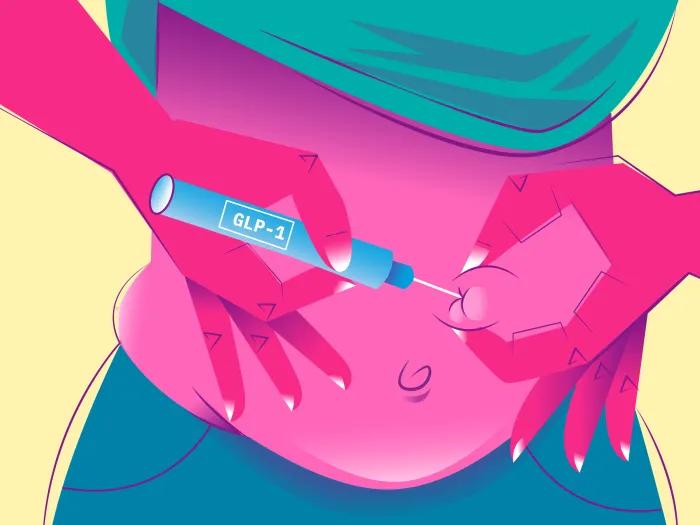
What should you know before starting a GLP-1?
A Q&A with Dr. Howard (Surgeon) and Dr. Seeley (researcher) about microdosing GLP-1 drugs answering common questions about the risks, what it entails and more.
Health Lab Podcast
Medicare's New GLP-1 Bridge Program
An obesity expert welcomes new Medicare option for access to effective weight loss medication, and shares the new program’s limitations.

Health Lab
7 things to know about Medicare’s new GLP-1 coverage
Medicare coverage of GLP-1 drugs for weight loss including Wegovy and Zepbound has begun but has limits.

Health Lab
Gut hormone FGF15 changes how mice respond to weight loss
University of Michigan researchers found that a gut hormone known as fibroblast growth factor 15, or FGF15, is essential for preserving lean mass during diet-induced weight loss. Their results suggest that effective weight-loss strategies need to be tailored to each patient.

Health Lab
Do you really need 10,000 steps a day?
A Michigan Medicine doctor talks about whether or not you need 10,000 steps a day.

Health Lab
Randy Seeley gets a lot of questions about GLP-1s. Here’s why
A Michigan Medicine Ph.D. researcher dissected bariatric surgery to understand how it actually works, contributing to obesity therapies that have given rise to drugs like Ozempic and Wegovy.
Health Lab
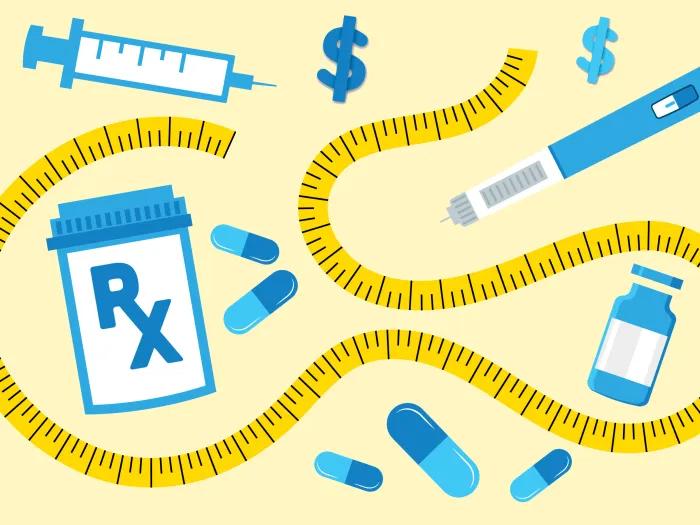
Most older adults want insurance to cover obesity drugs and many want to use them
Medicare and most private insurance plans don’t cover anti-obesity medications like Wegovy (also sold as Ozempic), but a new poll of older adults shows widespread support and interest in using them.

Health Lab
Study finds tonsil removal not linked to undesirable weight gain, contrary to popular belief
A trial involving Michigan Medicine researchers has upended a long-held belief that adenotonsillectomies for children with mild sleep-disordered breathing lead to undesirable weight gain.

Health Lab
Could GLP1RA drugs lower high iron levels?
GLP1RA drugs are used to treat obesity as well as type 2 diabetes. Research from University of Michigan Health finds that these drugs can also be effective in treating high iron levels, a cause and symptom of type 2 diabetes.

Health Lab
How do GLP-1 weight loss drugs affect the liver?
Glucagon-like peptide-1, or GLP-1, receptor agonists, that aid in weight loss, are now being investigated for their ability to help other patients, including those with liver disease. However, a research letter discusses the first known case of hepatitis and jaundice in a patient taking these drugs.

Health Lab
Navigating a weight loss journey
Losing weight can feel like a constant uphill battle for many people. However, patients like Marsha Burks found success with The Weight Navigation Program at Michigan Medicine, a program aiming to make weight loss easier with structured, individualized support.
Health Lab
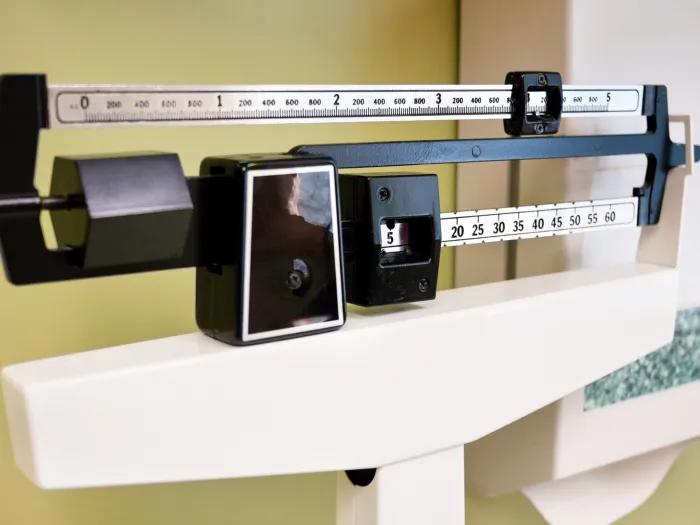
Adding obesity experts to primary care clinics improves patients’ weight loss outcomes
A weight navigation program for primary care patients with obesity led to more use of proven weight management strategies and more weight loss
Health Lab
Should heart patients consider taking weight loss medications?
Cardiologist shares how weight loss medications may impact cardiovascular health.

Health Lab
Mapping the brain stem’s control of eating could lead to better treatments for obesity
An atlas of neuronal circuits could help predict targets for medications to control appetite.
Health Lab
What will it take to transform obesity care?
Although obesity is now known to be a chronic disease that often doesn’t respond to diet and exercise alone, many people with obesity don’t have access to weight loss drugs and operations.
