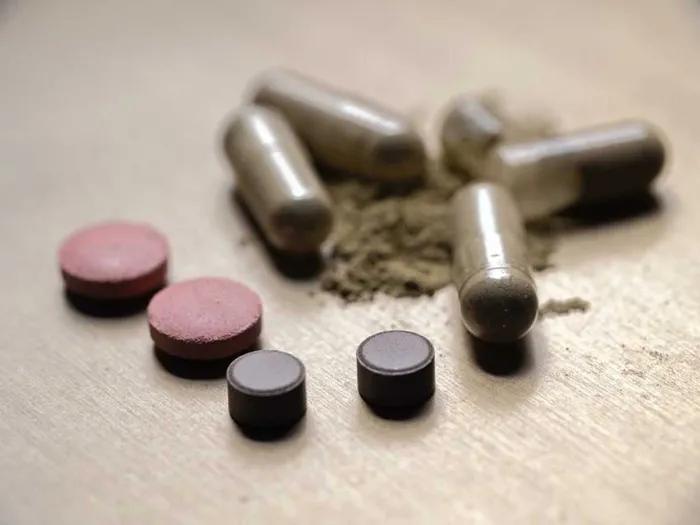
Episode 3: Medication, Relationships, and Caretaking
Michigan Medicine Presents Season 3: Living with Bipolar Disorder
5:00 AM
Like many other mental health conditions, bipolar disorder is still quite stigmatized in our society. Stigma can play a significant role in how people living with bipolar disorder receive treatment and care, their education and careers, and many other aspects of daily life. For this episode, we’ll be tackling topics like medications, relationships, the workplace, and supporting a loved one. We’ll be hearing from Dr. Sagar Parikh, a psychiatrist in the Michigan Medicine Bipolar Disorder Clinic and professor of psychiatry and of health policy and management in the School of Public Health at UofM, and Michelle Yang, writer, activist, marketing project manager, and research participant with the Heinz C. Prechter Bipolar Research Program.
Transcript
Speaker 1:
Welcome to Michigan Medicine Presents, a wide-ranging podcast series that will explore the progress in scientific research and innovation, historic roots, and the current state of conditions that affect us all. Join us for our third series, a three-part look into bipolar disorder. Bipolar disorder is a mental health condition that is marked by extreme shifts or changes in a person's mood, energy, and behavior. Bipolar disorder affects nearly 11 million Americans at some point in their lives. And despite affecting millions of people, it is still often misunderstood and stigmatized. Throughout this podcast, we're going to hear from clinical, research, and lived experience experts from the Heinz C. Prechter Bipolar Research Program at Michigan Medicine.
Navigating a bipolar diagnosis looks different for everyone. Sometimes that happens early in adulthood. For others, maybe later in life. A bipolar diagnosis can also bring up a lot of feelings. What does this mean for my job? Will this affect my relationship? How is my family going to take the news? Will I need to take medications? Which medications? And sometimes even, "Why me?"
Like many other mental health conditions, bipolar disorder is still quite stigmatized in our society. At the Heinz C. Prechter Bipolar Research Program, our research teams look at participants over the course of their lifetimes. And for many, stigma has played a significant role in how folks receive treatment and care, their education and careers, and many other daily aspects of life. That's why it's so important to hear from people with real experiences and how their life stories and journeys with bipolar disorder can help fight stigma and shape how we view the condition.
This is Michigan Medicine Presents, and we're joined by Dr. Sagar Parikh and Michelle Yang. They bring two different perspectives, clinical and personal lived experiences. We'll be tackling some of the topics we hear at the Prechter Program often when it comes to living with bipolar disorder. Medications, relationships, the workplace, and supporting a loved one. Let's jump right in and start with a topic that the Prechter Program gets asked a lot of questions about, medication. Dr. Parikh, you see patients in the bipolar clinic at Michigan Medicine. What kind of medications exist for bipolar disorder? Why these medications? What's the story on these medications?
Dr. Sagar Parikh:
The whole area of medications for psychiatric disorders often generates a lot of controversy. So let me just clarify a few things. For certain conditions like anxiety, psychotherapy is in general the first option and is somewhat superior to medications. For regular clinical depression, not bipolar depression but regular clinical depression, psychotherapy and medications can fight it out about who's better and who works. They're both very valuable.
In bipolar disorder, it's a very different situation. 80% of the course of bipolar disorder is actually determined by biological factors. And for that 80%, medication is absolutely critical. So among the psychiatric disorders, bipolar disorder is probably the most biological.
Now when I say that, sometimes even bipolar experts don't get it. And what I mean is there's the person with bipolar disorder who may have a profound need for psychotherapy. And that's essential, but that doesn't necessarily treat mania and it doesn't necessarily treat depression. It helps the person with bipolar disorder. So that's the distinction I want to draw. In bipolar disorder, absolutely, do you need medicines? Yes. I don't say that so strongly for anxiety disorders or for depression. But for bipolar, yes, the foundation of treatment, the food and water of treatment, is medication.
Speaker 1:
That was Dr. Sagar Parikh. Dr. Parikh is a professor of psychiatry and of health policy and management in the School of Public Health at the University of Michigan. He's also a frequent research collaborator of the Prechter Program and is a psychiatrist in the Michigan Medicine Bipolar Disorder Clinic. Previously, he was head of the bipolar clinic and director of CME at the Center for Addiction and Mental Health in Toronto, Ontario. He has conducted clinical trials looking at combination medication and psychotherapy for bipolar disorder and depression. Through his leadership as co-author of all 12 editions of CANMAT treatment guidelines for depression and for bipolar disorder, the world's most widely used guidelines, in 2020, Dr. Parikh won the Mogens Schou Award for Education and Teaching from the International Society for Bipolar Disorders. He is recognized as one of the world's leading experts in bipolar disorder.
So why is medication such an important part of treatment for bipolar disorder?
Dr. Sagar Parikh:
The illness has its own will and life. It can flare up. It can flare up, of course, in two main ways, either mania or depression. And while there are certainly environmental triggers or lifestyle triggers that can cause an episode to flare up, once the fire is burning, it's pretty strong and it sticks around for a long time. And psychotherapy or just going to a spa or relaxing will help a little but will not abort an episode. So in those circumstances, there's a dire need for medicine. And the other thing is that unlike, say, anxiety disorders where sometimes it's severe but sometimes it's mild, with bipolar disorder, often the episodes can be pretty severe. So someone can have a mild high, sure, but when a full-blown manic episode is present, people may have psychotic symptoms, they may have behaviors which get them into trouble and put other people at risk. And the same is true in depression as well.
Speaker 1:
When you work at the clinic and see patients, how do you talk to someone about the benefit of medication? Or their loved ones?
Dr. Sagar Parikh:
Trying to form a treatment alliance around bipolar disorder is the first goal. And explaining that bipolar disorder is an illness and that the person also may have other needs, and therefore we want to address the full situation. We're not just treating an illness. We're not just treating an individual who has trouble. These overlap, and the treatments necessarily mean that we have to address ... If there's an acute episode of bipolar disorder or we want to prevent a flare-up in the future, we need to address that with the right medication. And there are certain forms of psychotherapy that can help prevent flare-ups, but the person with bipolar disorder may also have other issues. They may have the consequences of previous episodes where something happened or they suffered a lot and that destroyed or altered their relationships or caused a problem at work and so on. And that is another specific need.
So when I'm talking to people about medicine, what I'm saying is, "We're interested in working with you as a person. You will have several needs. One of them is medication." And we usually start with what we call psychoeducation, which is a systematic education about what bipolar disorder is, what treatments exist. And we try to lay out a menu of the key medications for the person, and then engage in a conversation about, "Okay, why try this? Or why might this work? What would be the pros and cons?" And together, hopefully we can identify a medication strategy that is acceptable to that person.
Speaker 1:
Thank you so much for walking us through that. I know medication is something that we receive a lot of questions about when it comes to our programming within the Prechter Program. And it's really helpful to hear from someone with such vast clinical experience to speak on the medication menu and the treatment options and looking at the whole person. And being in bipolar research and looking at bipolar disorder in the clinic, it's important to look at the entire person. And the entire person does include medication as part of their treatment.
I want to take a quick moment to introduce someone. This is Michelle Yang. Michelle is a writer and activist for mental health wellness. Her writing advocates for the intersection of Asian American identity, body image, and mental health. She's also a parent, a creative, she works full-time as a marketing project manager, and is a research participant for the Heinz C. Prechter Bipolar Research Program.
Michelle, I've had the privilege to talk to you a couple of times before today, but I want to talk to you about your lived experiences with bipolar disorder. You and your family immigrated to the United States when you were a young child. You were a highly successful student as a teenager, and you were diagnosed with bipolar disorder as a young adult. Tell us about the journey to that diagnosis. What was that process like? How did you and your family navigate that?
Michelle Yang:
Thank you for having me on, Rachel. First of all, I would like to talk about the trauma of immigration, which is not often discussed in our country. And that is really, really difficult. And I remember that's really when depression started for me, and I would cry myself to sleep but have to hide my struggles from my parents. It just kept going from there and got more and more severe. And I struggled with sleep since I was a child. We immigrated at age nine. In high school, as the academic pressures ... And I worked at my parents' restaurant a lot, and all of those things, they were mounting.
And it was the '90s, so there was a lot that was overlooked by teachers and counselors who maybe could have helped, but it was the practice at the time to say, "Oh, this is cultural sensitivity, that you should look the other way because we're so different." And also the model minority myth, I think, made it so that it was harder for me to get the help that I needed and get the treatment that I needed because the story was just that ... Oh, look, she's getting great grades, so she's fine. She's Asian, she's fine. She's just working hard. That's what they do.
So I wasn't diagnosed until college, when I was a junior studying abroad in China. And it was just after 9/11 and I was not doing well. And I had a manic episode that was the most severe yet. I had manic episodes in high school with psychosis. So I had very severe episodes, and everybody just kind of brushed it under the rug, which was really hard because then I had internalized it. So I lived with severe internalized stigma. I didn't know why I couldn't not have these experiences. So it wasn't until China, where model minority myth does not exist there for someone like me, where my academic reputation did not follow me there, where people were like, "She needs help. There's something wrong with her."
And so I was able to finally go to see a psychiatrist in China, where the program director and ... Yeah. Folks took me. My dad flew out to get me, and then flew back to the states for treatment. I was eventually hospitalized. It took me a month to see a psychiatrist in Phoenix, Arizona where I was living because, yeah, that's just how long it takes for a new patient sometimes.
Yeah. First, I was prescribed an antidepressant once I was back stateside. In China, they prescribed an antipsychotic, and then the antidepressant made me manic. And so then my doctor diagnosed me with bipolar disorder, and then I was hospitalized. And while I was hospitalized, I was given the right medication mix that pulled me out of psychosis and was able to stabilize.
Of course, this was all very traumatic. When you've been top of your class, especially when you've been top of your class, high achieving your whole life, suddenly you're in a mental psychiatric ward. And I didn't know anybody who went to therapy, let alone take mental health medications.
And my parents were terrified because they thought that mental health medications means that I would become a drug addict, and I was never able to convince them otherwise. And so my parents were very much in denial about my condition, the seriousness about my condition. So I was lucky that I was already a young adult at that point, even though I was only 20. But I had my own insurance, and I was like, "This is too important for me not to take care of it."
Speaker 1:
Yeah. Thank you so much for sharing your journey, and I am sorry that those are your experiences. And I know that it's still a challenge to this day. When you said it took a month for you to see a psychiatrist, that was 20 years ago at this point, and it's still the case for a lot of people in getting treatment in the US, is you have long wait times. And so it's sometimes disheartening to hear that this is still the experience, but I am so grateful that you are sharing your story. It's really important to help address that stigma and especially the internalized stigma.
I want to talk a little bit about your own self-advocacy. You've talked a lot about the importance of medication in your journey. And you touched on that a little bit already. And it can be a tricky topic for people living with bipolar disorder, and sometimes with family members too, like you had shared. People are sometimes very hesitant to taking medication, maybe thinking they'll fundamentally change as a person. Family members ask the Prechter Program researchers all the time, and I'm sure you as well, Dr. Parikh, about how they can talk to their loved ones about medication and medication adherence. How did you handle that aspect of treatment early on, with both yourself and your family?
Michelle Yang:
Yeah, absolutely. I was terrified of these episodes that I had. I did not enjoy being out of control. It was not pleasant at all. I didn't ever want to experience an episode again. And again, I had so much internalized stigma. I didn't know why this was happening, and I couldn't control it. And so when I was diagnosed and learned that it wasn't my fault, that there's a condition that lots of people share and that there's actually a treatment that can help, I jumped on it. I embraced it. I was not one to try to deny it, even though it's a hard ...
It is hard. I remember asking my doctor, "Does this mean I will be on medication for the rest of my life?" And my doctor was great. And he said, "You're 20, Michelle. There's no rest of your life at this point. You don't know what's going to happen." And that was a really honest answer that I didn't expect, but it was enough to have me keep holding onto hope and say, "Okay, just one step at a time." That's what he's saying, right? One step at a time. Don't think about it as this whole daunting, overwhelming thing. This is what you need. This is what I needed to do for myself. And that's what I did.
And yeah, of course my parents were very resistant to the medication. As soon as I was no longer in the psychotic episode, they were trying to get me off meds, which is very, to me, short-sighted.
But I hear this all the time because I do go and talk to university students and young students all the time. And they ask me both about medication and about therapy and what do they do, especially immigrants, Asian American immigrants is whom I talk to a lot. And they're like, "What do I do when my parents object? They disagree." And what I did was just, like, "Well, do it anyway." Especially if you're an adult, this is what you need for your mental health, for your well-being. You just need to do it anyway. And you can't have your parents agree with you every single decision you make on your life, unfortunately. And so that's what I did.
And then another big thing that I get asked a lot, like you mentioned, is that ... I'm a creative, I'm a writer. I also paint and draw. I had an art minor. And people are terrified that if they get on medication, their personality would change, they'll no longer be creative. And I can only speak from my experience, but that has never been an issue for me. I'm still creative. I have a book coming out soon. I wrote a ton of articles. My house is full of art. And the medication only changes the way that you are creative, maybe, because when I was unmedicated, less controlled, maybe you have these spurts where there are long days where you're not sleeping. That is unhealthy. And a lot of the things I wrote was gibberish because I was manic.
But now, it's a controlled stream of creativity, which to me is much more productive and much more usable. What I produce is much more usable. So to me, that has never been an issue. It doesn't change my personality. It actually allows me to be me. And so I'm absolutely an advocate of medication, and everything that Dr. Parikh said completely makes sense to me. Yeah.
Speaker 1:
Stigma, whether internal, external, or societal, still plays such a major role in how people seek and receive treatment and so much more. I want to talk to you about your life as a partner and a mother. You've been with your husband, Bob, since 2008, and you have a young son. Maintaining a relationship and handling parenthood is no easy task for anyone, but navigating them with bipolar disorder can set the difficulty level on high and bring its own challenges to those aspects of life. What do you think has been helpful in building a successful partnership? And what are, or what were, some challenges for you?
Michelle Yang:
Yeah. I mean, first of all, I had to get over this internalized stigma. And actually, I didn't do it until later, but to some point you had to. As Lindy West said, "You can't advocate for yourself if you don't admit what you are." And so that was a huge thing for me, and to recognize that I deserve love, that I am lovable, that my mental health condition does not make me undeserving. For a long time, that was my greatest fear, that ... Who would want me because I have this severe condition? But no, we can live wonderful, healthy, thriving lives with treatment. And for me, embracing the diagnosis and doing everything I can to manage it the best I can has made all the difference.
And then to your question about what makes us a successful partnership, I think as with any relationship, strong communication is key. Luckily, he and I are both pretty good at communication. We met in business school, at grad school. But just both of our personalities, that's who we are, and that helps a lot. Even though, as with any relationship, there are some issues that are hard to talk about that we had to work on. But that honesty and trust and open communication is, just with any relationship, so important.
Of course, the mutual respect. Not taking advantage of one another, like leaning on the other too hard. I think I see that sometimes, where just because my partner is supposed to be there to support me, I shouldn't lean on them 24/7 like they're my therapist because that would be ... I think that's abusing the relationship, in my opinion, because that's too hard for anyone. They're my partner, they're not my doctor. And we've always treated each other as equals as much as possible.
And then the other thing is we're both in therapy, and I think that really helps work through our own issues. And again, if you can't lean on the other person as therapists, you need to find your own other support system in addition. And yeah, Bob didn't start his therapy until our son was born, but it has really helped a lot.
Our family dynamics of our families of origin are actually pretty similar too, and that really also helps our relationship, I think, a lot, that we can relate to each other. We're both trauma cycle breakers as parents. We have a very shared vision of who we want to be as parents, and we're dedicated to being positive parents who are providing a stable, happy environment for our child. As Dr. Parikh said earlier, it's mostly biological, but it's also environmental. So we can't control the biological side of what our son will inherit, but we can do everything we can to try to provide a healthy stable environment. So that's what we're trying to do.
And he and I have a lot in common on paper, but we're also so different. We're opposites emotionally, and it just works. It seems to work well for us. We both adapt. Yeah.
But one of the things ... I know we're going into the challenges, but we're both good at adjusting and adapting. And in the beginning of our relationship, he basically ignored my bipolar disorder. And I think that's the way I wanted it at some point, because I was afraid that if he worried about it as a big thing, that it would jeopardize our relationship. So I was like, "I got it. I got this. You don't have to worry about it." But as we become parents, as we have life's challenges thrown at us, that's just not realistic. And so he's definitely more into how I'm managing. He's more aware. I have provided him a list of my doctors and therapists so that just in case something happens, it's much like a birth plan, if you've had a child. It's a mental health plan. I know I just talked a lot there.
Speaker 1:
It's really helpful to hear direct life experiences. I think what you've talked about will resonate with a lot of listeners, and I hope it resonates with a lot of listeners because ... I love that you call it a mental health plan. I think that's something that's becoming more and more apparent and important in our own health advocacy. I know a lot of individuals in my own life who have mild, moderate, and severe mental health conditions. And to say, "Hey, this is my therapist. This is who you need to contact when I'm in this situation, or this is the list of numbers that you need to contact if I'm in this type of situation." So I love that you have something set up with your partner. I think that's a really positive tool to spread the word on. We need to make sure that we're including our partner in all aspects of our lives, and that includes our mental health plan. So I really appreciate you sharing that.
Dr. Parikh, I want to jump over to you. In your clinical experience, how can family members, like a spouse or parents, be present for someone living with bipolar disorder? How can they be involved in their loved one's care without being too involved?
Dr. Sagar Parikh:
Well, I think Michelle said one thing that was very cogent, and that is you can lean on them, but it's not a full-time job. There is a healthcare team, and it's knowing when to bring some issue to the family versus when to bring it to a therapist or a doctor or something like that.
I think it really begins with a deep level of education. And one of the things that we do ... Michelle certainly talked a lot about coming to terms with internal stigma and all that. One of the things we do is we run a bipolar psychoeducation group, which is particularly for people who are at the start of their bipolar journey, but is also for others. Sometimes they take it as a refresher.
And in this group, there are a number of people. And what we do is we talk about what bipolar disorder is, what the treatments are, but we rely a lot on the comments from the people in the group. So individuals like Michelle will share different aspects of how they cope, what they say to family members, and so on. So in addition to helping with their own sense of stigma, they actually share tips. And it's that learning that happens, about ... Okay, well, what can you rely on a partner to do? Maybe where do you draw the line?
And often in those kinds of groups, people will bring up a dilemma right now. So my partner and I are discussing this kind of issue. I'm leaning towards saying this. What do others in the group want to say? Or have you been there? What did you say? So that's one piece.
The second piece, and again, this is something that our healthcare providers are not necessarily always comfortable with. We're always trained ... Respect privacy, keep everything that the patient says in a tight little box, and you don't want to be somehow adversely influenced by others in the family or something like that. So we're almost a bit standoffish around family members, but that's exactly the wrong attitude for mental health in general, but especially for bipolar disorder.
So quite often in a clinical encounter, we have family members come. They sit through the encounter. They hear the discussion. They hear the pain. They hear the suggestions. And in that way, they learn about the disorder. And often they will say, "Well, what can I do when he or she is facing this kind of issue or this kind of symptom?" And so it is very individualized. By having a session with both the individual with bipolar disorder and their family member present, we can talk through different scenarios and identify particular ways that that group, that family, can approach the problem.
And to give you a couple of practical examples, I encourage people to identify their early warning symptoms, particularly if they're going high. And then we have a discussion. Can your family member say something if they notice something in you? And are you comfortable with them reaching out to me as their treating doctor and saying, "I'm a little bit worried about my spouse because I'm seeing excessive phone calls in the middle of the night, extra energy, extra talking, and I'm a little worried that things are getting out of hand." So we try to engage the patient's permission to allow more dialogue between the treatment team and the family. And in that way, we increase the chances for success.
Speaker 1:
I love that you talk about deep education. I think that's part of the point of this podcast, to make sure that we're educating people what it's like to live with bipolar disorder. What is it like to treat bipolar disorder? What do we see from both of these different perspectives? And involving family members is a really important part of that process. Community building is really important for anybody, but I think that's especially true post-COVID, where we experienced a point in time where we were not able to have direct community touches. And so I love that you're talking about involving the family at every corner, and then also making sure that that is to the consent of the patient as well. I know that's a really tough line to toe, but it's really important that we involve all types of people and all types of connections when it comes to our treatment.
Michelle, you've written and spoken, and even here today, about breaking generational trauma. Tell us a little bit more about that. How are you approaching that with your son?
Michelle Yang:
Yeah, thank you. I think that too often, generational trauma is thought to be culture. I know that was my experience. And I reject this completely because if we think that this generational trauma is culture, then it makes it so that I can't love my culture, and I absolutely love my culture and my heritage. And so I didn't realize this until I was an adult, until years of therapy. And once I was able to separate the two, yeah, it was a huge step embracing myself and healing.
So how we approach this with our son is, like I mentioned earlier, we practice positive parenting. And what that means to us is ... Part of it is that we never hit our son and we never yell at our son. We, of course, have boundaries and everything in different ways, but we try to approach it in a positive way. And it's really kind of funny now that he's 10 years old, that he's so not used to being yelled at by an adult at a home, so that if he's in somebody else's home where the parent is yelling or somebody is yelling or snapping, even, at children, he finds that very unusual.
So there's also a narrative that goes, I think, hand in hand with generational trauma. And that is the theory, the philosophy of parental sacrifice and about how much your parents sacrificed for you. And for me, I don't buy that. I reject that as well because my belief is that we chose to bring my son into the world, our son into the world. So it was our choice, not his. And so it is our job to love him and care for him the best we can. And he does not owe us anything. He does not owe us his life. And we respect and value his emotions, his point of view. His age doesn't matter. He is a human being who deserves respect.
And we model taking care of mental health as normal as best we can, that we see our therapists, that we see our ... Professional listeners is what we call him. And encourage it for him too if he needs it. And we also try to model that just because we are in pain, it is not okay to hurt people, hurt other people with our pain.
Speaker 1:
I want to take a moment to talk about the workplace and living with bipolar disorder, losing employment, job-related stress that can trigger episodes, and dealing with anxiety around whether or not to disclose their bipolar disorder. Dr. Parikh, what do you see are some challenges that your patients in the bipolar clinic face when it comes to the workplace?
Dr. Sagar Parikh:
I think it starts with reassuring them that bipolar disorder does not mean an end to their work life. There's research that shows that, actually, bipolar disorder is more common in people with higher abilities. And it's really borne out if you look at the professions where individuals with bipolar disorder often find themselves. So a disproportionate number of professionals, particularly doctors and lawyers, actually have bipolar disorder. The rates of bipolar disorder in those two vocational groups is much higher than the population percentage.
So one of the things I share right off the bat when I start working with somebody, is I say, "Bipolar disorder is an episodic illness. In between episodes, you are who you are." So you might be a nice person, you might be a rotten person, and whatever your underlying personality is and what your hopes and dreams are, they will continue to be there. And most of the time in your life, you will not be in a bipolar episode. So you will be whoever you choose to be and whoever you work at being. So I emphasize that bipolar is not destiny. It does not determine who you are. It's all the work you do that determines who you are. So that's the first thing.
The second thing is I actually go out of my way to share stories of people who are living well with bipolar disorder. So we have a number of videos, we have some larger books, we have smaller articles written by individuals like Michelle, who just talk about their lives and their accomplishments and all that.
I happen to have always worked at major academic medical centers. So I get a lot of healthcare professionals referred to me, a lot of whom have bipolar disorder. So one of the early stories that I started sharing is that I've treated individuals who were, say, in medical school or in law school and had a severe manic episode with psychotic features. They were hospitalized. And I was able to work with them. The healthcare team was able to work with them. I saw them graduate. I saw them launch successful careers. And some of them, one or two of them, to my embarrassment, started publishing more in medicine than I did. So I became envious, I must say.
But my point was this, that I have success stories that I've witnessed with my own eyes. And I share that with my patients. I say, "Yeah, you may be in a depression right now. It may take you a couple of months to get back on your feet, but you are who you are. The bipolar disorder does not define you."
So that's the first point. The second point is that when someone has established bipolar disorder, they're already in treatment, they've already got a job, I'm very aware of asking them, when an episode happens, "What are the things that might interfere with your work? What is your job description?" And we talk about how to handle that.
So if there's this kind of deficit temporarily, maybe you should be off work for two weeks or something like that. In other scenarios, we identify different tasks so that some tasks at work can be postponed because this isn't the best time, the concentration is off, or something like that, but you can still go to work and concentrate on these other tasks. So it's knowing what the person actually does. And this is something I actually teach a lot of doctors, how to get a history of what are your challenges and what does your actual job entail, so that you can then make a decision of how to advise the person how to handle work.
The final thing I'll say here is it's also important to know what can you say? Can you reveal that you have bipolar disorder? And that's very specific to the person as well as to the workplace. So we're protected by the Americans with Disabilities Act. And if you have a large employer, you can really use that and human resources to help the employer make sure that they're treating you properly in the workplace. But not everybody is covered. If you work on your own or if you work for a small business, there isn't fancy legislation like the Americans with Disabilities Act to protect you. So we have to talk to individuals about what they can accomplish within the world of accommodations and working with your employer.
Speaker 1:
Michelle, I'm going to turn to you here. How can employers do better to accommodate folks with mental health conditions like bipolar disorder?
Michelle Yang:
Yeah, absolutely. I think first of all, respecting mental health days as sick days. Actually, my husband takes more mental health days than I do, but I think he takes them because he needs them. He absolutely needs them. And so having an employer who respects that, as if he has COVID or any other more physical health condition, is super important. It shows the values of the organization.
And I think healthy work environments are actually more rare than they ought to be, I think. And I find that for myself, as long as the work environment is healthy, I can thrive. So as someone who grew up in a stressful home where I was walking on eggshells most of the time, I don't do well with abusive personalities or if their personalities are unpredictable. That can be turned very toxic for me quickly.
So if it's a fairly healthy organization and you're working with good people ... The one I work at now, I just don't have any problems. And so it's not some big secret where people have to go really out of their way to make it a mental health accessible place for folks to work at. It really is just for employers to create a healthy work environment that if most people can thrive, then so can people like me. Respecting a good work-life balance, having good values. It all sounds very obvious, but it is hard to achieve. I know it can be hard to achieve.
Speaker 1:
Yeah. Yeah, I think there's a long way to go for accommodations, and hopefully we get to a point where we see those more frequently and it's a lot less rare. So I want to talk a little bit about your writing. You're a very accomplished writer and activist. You've been featured on platforms like HuffPost, CNN, and NBC News, to name a few. What led you down the path of writing?
Michelle Yang:
Yeah, thank you for asking. I was in one of those unhealthy corporate work environments before I became a writer. And I was feeling trapped and crying at my desk, and I was 38 years old and wondering, "What am I doing here?" I never strived to work at a corporate environment, and yet somehow I was sitting at that desk. And so I asked myself, "What am I doing with my life, and how do I give my career the purpose that I want it to give to?" And I just kept coming back to this. I know it sounds cheesy, but called to it.
When I was 20 years old and first diagnosed with bipolar, everything that I was terrified of ... Like Dr. Parikh mentioned, I didn't know if I could live a normal life. I didn't know if I could have a career. I didn't know if anybody would want to marry me because of this diagnosis. I didn't know if I could be a parent. All the things that I wanted the most in life that everybody told me I had such great potential for because I was such a high achiever. I was like, "Is all of this gone now because of this diagnosis?" And it felt such like a death sentence, and why even try anymore? I knew that it was so easy to give up at that point. And I know that a lot of people do give up, but they don't need to, because there is hope, like all the examples that Dr. Parikh just gave.
Unfortunately for me, when I went to my doctor, I was like, "Do you know people who live normal lives?" And he couldn't give me an answer at that point. That was 20 years ago. And I wish that he would've referred me to a bipolar group, even one at NAMI or something, but he didn't. I don't know why. And so I just felt really alone. And I was like, "How do I share my story so people don't feel alone?"
What I did when I was 20 was I went to the library. I'm a bit of a lifelong reader, and I tried to find a story of a real person who lived with bipolar who was okay. And I didn't find anyone who was BIPOC or immigrant. And I found a couple more, but there was one that was by Lizzie Simon about ... She drove across the country interviewing people who lived with bipolar disorder. And it's a very obscure book now. But it was like, "Wow, look at this. This is a young person like me who was just trying to find her way." And that gave me so much hope.
And so at this point, when I'm 38 years old, crying at my desk, I was just like, "I need to share my story," because I still don't see stories of someone who looks like me, who has my background, who lived through this. And I wanted to go back and tell my 20-year-old self that it's going to be okay, that you still can have everything you worked hard for. And Toni Morrison said if there's a book that you want to read but it hasn't been written yet, then you must write it. And so I've just been on a journey since.
Speaker 1:
Thank you so much for sharing. And you both have given some really great advice so far, but I want to ask one last question. Any parting advice to someone who's navigating bipolar disorder?
Dr. Sagar Parikh:
I think the first thing I would say is make sure you belong to some kind of group, whether it's a self-help group or a specific bipolar group or something like that, because the opinions of your peers and their reactions, it's really valuable to hear that and to integrate that with any kind of formal feedback you might get from a healthcare team.
The second thing is, as with any other area of medicine, many psychiatrists are trained in the basics of bipolar disorder, but they don't specialize in it. So if your disorder is under good control and if you're progressing in life and you have a general psychiatrist or a nurse practitioner that you get along well with, fine. Carry on. But if you're having trouble, it's worth getting a referral to a specialty clinic and asking for some additional advice. It could be medicine changes. It could be changes in the way that you're approaching psychotherapy. It could be to be able to answer these certain dilemmas, like, "What do I tell my employer because I'm having more problems in the workplace?" And perhaps the general clinician that normally treats you doesn't have specific expertise on how to handle that. So it's worth getting a second opinion if you're having any issues.
Michelle Yang:
Yeah. Thank you, Dr. Parikh. I absolutely agree about the importance of support groups. I developed my voice as an advocate by joining a NAMI support group, and there was also the stewardship network back then, years ago. And it really, really helped because for nearly 20 years, I did keep my bipolar disorder a secret from everyone. And I realized that that keeping it a secret was not doing me any good because the shame was putting a wall between me and my relationships because it was on a need-to-know basis. So only the people closest to me knew that I lived with bipolar. And having this shame made it so that my friendships weren't as strong, and I was worried at work that people would find out, and then it would limit my career opportunities. But then it made it so that I was less confident at different presentations or just interacting with people. And so then that was career limiting anyway.
And so I've come a long way, I know, since going to those groups, and overcoming a lot of my stigma and then finding my voice, finding my confidence. So I completely echo what Dr. Parikh says about the importance of those type of support groups and finding a peer group to be able to relate to one another and share stories.
The other thing I want to talk about is medication treatment, psychotherapy is all very key to wellness with managing bipolar disorder, but so is a healthy lifestyle. I know it's less important, as you say, but I think one of the things that is so important is sleep, because with sleep, it seems so ... For me, but I think generally speaking too, how much it affects depression and anxiety. And then I know that if I go more than two days without sleeping well, then that's a red flag, that I'm contacting my doctor.
And I know I've read at different places, and I would love to hear more from you, Dr. Parikh, about bipolar disorder possibly being a sleep disorder. I don't know if you could speak more about that. I know it's kind of like the chicken or the egg, right? Because if you are unwell, then you're not going to sleep well, but so is it not sleeping well that causes the manic episodes and the depression, or is it because you're already getting manic and feeling depressed that you cannot sleep?
Dr. Sagar Parikh:
You're right to call attention to sleep regulation as a critical piece of bipolar disorder. In fact, outside of medicine, the single most important thing for successful management of bipolar disorder is sleep regulation. And we know that bipolar disorder has many symptoms. So we wouldn't really consider it a sleep disorder because it simply has many other things beyond disruptions or sensitivity to sleep disruption. But absolutely, meticulous regulation of sleep is critical.
And a very practical way that I tell patients about sleep is this. Six nights out of seven, you need to have a regular bedtime and a regular wake time. And those two times should be determined by how long do you need to sleep when you're feeling okay. So if you need seven hours of sleep, you just have to adjust your bedtime and your wake time, six nights out of seven. One night a week, you're allowed to cheat. And follow that. And that's not any particular time, by the way. So if somebody's always going to bed at 2:00 AM and they need seven hours, if they can do six nights a week of 2:00 AM to 9:00 AM, that's seven hours of sleep, that's fine. You don't have to go to bed at 9:00 PM, or you don't have to go to bed early. You just have to know how much sleep do you need, and then you have to set your life in such a way that six nights out of seven, you can get that sleep.
Michelle Yang:
And I want to say, maybe some people will think it's extreme, but I avoid caffeine. I don't drink alcohol. I do everything I can to protect my sleep. So yeah, I have found through experience that that is key. Yeah.
Speaker 1:
Thank you so much for sharing that advice. And I think that's a really nice way to also plug that we frequently collaborate, with the Prechter Program, with our sleep lab. And we have a lot of research on the patterns of sleep, circadian rhythms, light sensitivity, and things like that, which can all be found at PrechterProgram.org.
So thank you both today for coming and talking about some really common topics that we hear at the Prechter Program. Medications, relationships, caretaking, and the workplace. That was Dr. Sagar Parikh and Michelle Yang for our three-part series, Michigan Medicine Presents Bipolar Disorder. For more information about the Heinz C. Prechter Bipolar Research Program, visit PrechterProgram.org. Michelle's book, Phoenix Girl, a memoir, will be out in January 2025 from Fifth Avenue Press and can be found at michelleyangwriter.com, or on Instagram, @michelleyangwriter.
Educational activities on bipolar disorder, like this podcast, are made possible through generous contributions from people like you. If you're interested in making a gift to support educational materials and events or the vital research of the Prechter Program, please send an email to [email protected]. You can also learn much more about the Heinz C. Prechter Bipolar Research Program and sign up for our e-newsletters at prechterprogram.org. And don't miss the other two episodes in this series. You can find these and other Michigan Medicine podcasts at uofmhealth.org/podcasts or by looking up the Michigan Medicine Podcast Network wherever you stream your podcasts.

Michigan Medicine Presents
Listen to more Michigan Medicine Presents podcasts - a part of the Michigan Medicine Podcast Network.
Featured News & Stories

Studying Period Pain

Foundation gift inspires additional gifts to strengthen youth mental health care
A tragedy and a trial shine a spotlight on new moms’ mental health

Beyond the White Coat: The Med Student Tradition Behind Michigan’s Smoker
How to improve mental health safety on social media – not just for young people