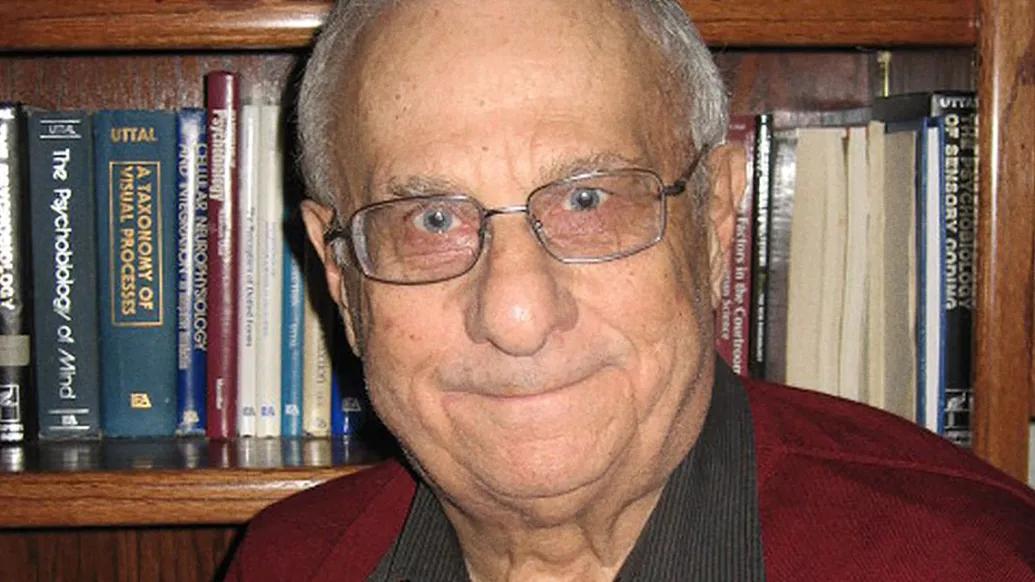
William “Bill” Uttal, Ph.D.

William "Bill" R. Uttal, Ph.D., professor emeritus of psychology, died Feb. 9, 2017. Uttal came to U-M in 1963 and conducted elegant experiments comparing behavioral and neural responses to stimulation in various sensory modalities. He began at the Mental Health Research Institute and then moved to the Institute for Social Research. 

Uttal retired from U-M in 1985 and took a job with the Navy in Hawaii. However, he quickly returned to academia when he remembered how much he valued "the romance of discovery and the sobriety of verification," as Gary Bradshaw remarked in his Massachusetts Institute of Technology memorial. Uttal eventually retired from the School of Computing, Informatics and Decision Systems Engineering at Arizona State University in 1999. 

Uttal wrote a new book every 18–24 months after his second retirement. A recurring topic was the relation of brain, mind, and behavior. One of his most famous publications was The New Phrenology: The Limits of Localizing Cognitive Processes in the Brain (2001, MIT Press). In his final book, published in 2016, he wrote, "Of all of the scientific mysteries confronting our inquisitive species, none is more profound or challenging than understanding how the tangible brain can give rise to intangible thought." The bittersweet paradox of Uttal's life was that, while he spent his career searching for ways to solve that mystery, being unwilling to relax his scientific standards, he could discover, time and again, only reasons that it was insoluble. 

This obituary, originally written by Peter Killeen, Ph.D., and Lynet Uttal, Ph.D., has been edited for style and length. 


More Articles About:

Obituary Lives Lived Emeritus Psychology Mental Health Faculty In memoriam

Featured News & Stories

Health Lab Podcast in brackets with a background with a dark blue translucent layers over cells
Health Lab Podcast

LGBTQ+ Aging in America

People over 50 are growing older in a very different environment for LGBTQ+ people than the one they grew up in. Now, a new University of Michigan poll looks at what that means for both people over 50 who are LGBTQ+, and those who are not.
Well-Being at Michigan Medicine with Dr. Elizabeth Harry
Well-Being at Michigan Medicine

The Power of Mattering

What does it take to create a culture where people can truly thrive? In this episode, Dr. Elizabeth Harry welcomes Dr. Robert Ernst, Chief Health Officer and Associate Vice President for Health and Wellness at the University of Michigan, about building well-being into systems, policies and everyday experiences. They explore purpose-driven leadership, belonging, mental health and why helping people feel they matter can strengthen entire communities.
person close up nails and shots going into face on comptuer screen gif moving
Health Lab

What is looksmaxxing?

A Q&A with Dr. Bravender discussing what looksmaxxing is. Along with the true dangers of it, what parents should know, and when to intervene.
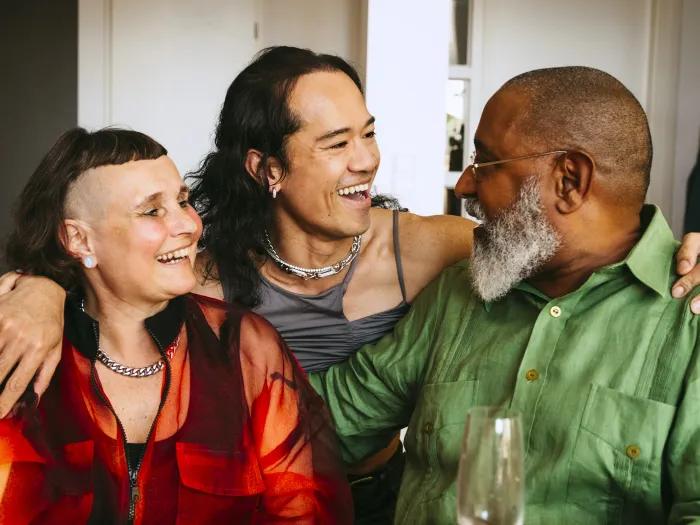
friends laughing together
Health Lab

LGBTQ+ people over 50 face more aging-related challenges

Lesbian, gay, bisexual, transgender, queer and other sexual and gender minority adults over 50 have higher rates of mental health, disability, social isolation and health care access issues, though they also may have more connections than before to non-LGBTQ+ people in their age group.
person thinking of healthy food and junk food
Health Lab

Processed foods may be fueling the rise in binge eating

Analysis shows highly processed foods aren't only common in binge-eating—they're nearly universal, says a University of Michigan study.
Health Lab

AI chatbots spark mental health concerns, including psychosis risk

Artificial intelligence-driven AI chatbots have been linked to cases of suicide, delusions, psychosis and mental health issues. Three experts from Michigan Medicine explain what’s known and how to respond.