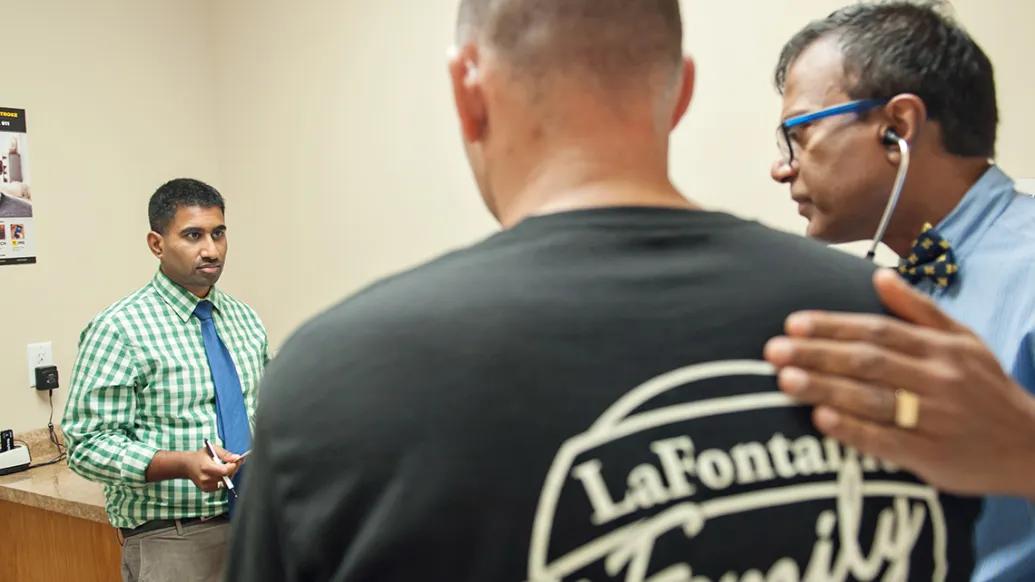
One of Michele Irvin's most memorable experiences as a first-year medical student at the U-M is the afternoon she spent shadowing a social worker who was handling a complex case at an adult and pediatric outpatient clinic.
"She was able to give her time and emotional energy, her own personal resources as well as the resources she had as a social worker, and I realized that physicians would never have the time to care for this person like the social worker could," Irvin says. "I was also struck by what would be missing if she wasn't part of the health care team."
The Initial Clinical Experience, part of the new Medical School curriculum, allows first-year medical students to better understand the roles and responsibilities of all health care team members within UMHS.
Irvin's time in the clinic was part of the Initial Clinical Experience, or ICE, program, now part of the new Medical School curriculum. ICE is a required first-year class in which students spend three hours every other week in various clinical settings. These include 18 U-M clinics, where the students shadow not just physicians but other types of health professionals. For example, in the emergency department, they might spend time with a triage nurse or a nurse who has a clinical assignment, pharmacists, techs, clerks and social workers. In an outpatient setting, they would shadow nutrition specialists, physical therapists, billing professionals or call center representatives.
With ICE, students gain clinical experience earlier than in a traditional medical school curriculum. The goals are to establish early connections with patients and families; interact with faculty from other health professions; and understand the roles and responsibilities of all health care team members within UMHS. Students can also compare and contrast the roles in different environments.
Students stay in the same clinic for a full semester, switching from an in-patient to an out-patient clinic, or vice versa, for the next semester. They discuss their experiences in small group settings and through written reflections. They consider how they saw inter-professionalism at play, addressing communication skills, roles and responsibilities, and how they will apply what they have seen to their careers later on. The students are also evaluated on their communication and professionalism, so they can measure improvements over time.
"Medicine has become a team-based practice, and the expanding roles of other health professionals are driving that," says Joseph House, M.D. (Fellowship 2010), assistant professor of emergency medicine and director of the Medical School's Interprofessional Education program. "We need to start addressing how to function well in a team sooner in their education. [With ICE], they can see what makes a high functioning team, and understand the role of other health professions and what their experiences are like in the clinic."
In that way, the ICE program mirrors many of the other changes to the new curriculum, which continues to transform to better prepare students for success in the health care systems of the future.
Featured News & Stories
Sanjay Gupta recounts his U-M years and shares life lessons for medical school commencement
Phase 1 trial of alrizomadlin shows promise in targeting metastatic salivary gland cancers
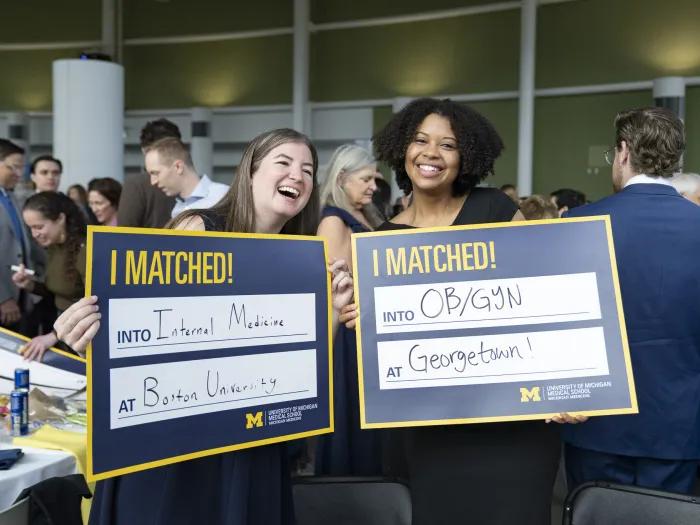
U-M medical students learn their next steps at Match Day 2026

Revolutionizing child neurology residency training
Milestones in the history of women in medicine and biomedical science at U-M