Sunscreen dispensers come to campus

A student-led research project identified the need for easy access to sunscreen

Author | Lauren Talley
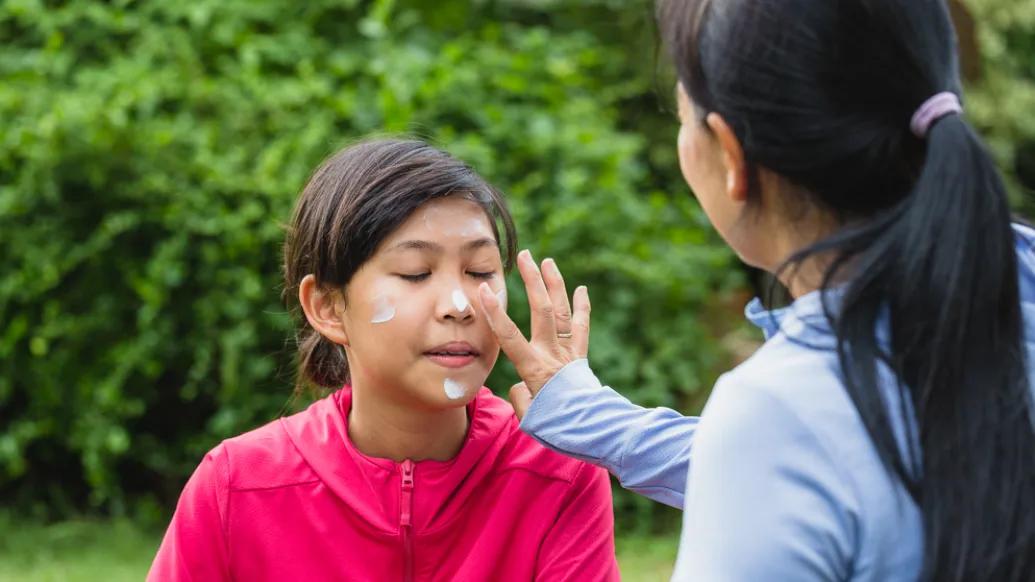
A mom applies sunscreen to her daughter's face. They are outdoors in a green area. Both are wearing long-sleeve jackets.
Getty image

Sunscreen dispensers have popped up at a half dozen outdoor sports venues on the U-M campus. They’re the result of an initiative started by student researchers and collaboration between the Department of Family Medicine, Impact Melanoma, the U-M Health Rogel Cancer Center, and the Athletic Department.

During her first year at the Medical School, Olivia Lamberg and a team of student researchers analyzed teen perspectives on sun safety and sunscreen use. They surveyed the teens through the MyVoice project, a long-term research initiative led by Tammy Chang, M.D., associate professor of family medicine.

A group of 977 young people from across the country were asked about their sunscreen use. About 90% of participants reported sunscreen use, but 81.1% noted having had one or more sunburns, and 28.4% reported five or more.

The results were published as a letter in JAMA Network Open in 2021.

“Through surveys, we gathered valuable insights into the behaviors, knowledge, attitudes, and barriers to sun protection among teenagers,” Lamberg says. “The results revealed a gap in access, which prompted us to take action.”

The sunscreen dispensers have been installed at the entrances of the U-M Soccer Complex, Alumni Field, Fisher Stadium, the U-M Lacrosse Stadium, the Varsity Tennis Center, and the U-M Golf Course. Dispensers contain SPF 30 sunscreen and are targeted at spectators. (The Athletic Department already provides sunscreen to student athletes.)

Since the dispensers were installed last summer, more than 5,000 applications of sunscreen have been dispensed. Lamberg says the group is expanding the initiative with a new community partner, Ann Arbor Parks and Recreation.


More Articles About:

Medical School

Featured News & Stories

women looking at model hand in front of poster and computer on table next to them
Health Lab

Rethinking how clinicians learn to feel disease

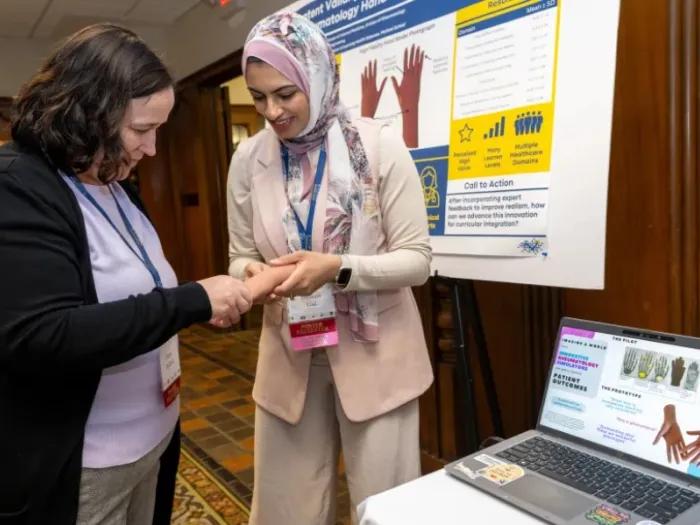
For most doctors, learning to recognize swollen joints begins in the classroom. A clinical assistant professor in Michigan Medicine's Division of Rheumatology saw a gap in how to distinguish subtle swelling in joints, thus creating a hand simulator to help.
Portrait of Thomas Macek. He's wearing a navy blazer and light blue button-down shirt.
Philanthropy News

College of Pharmacy alum advances U-M Medical School addiction research
Grateful for support that help launched his career in pharmacology research and drug development, Tom Macek, Ph.D., has made a gift to the University of Michigan Medical School to advance addiction research.
Well-Being at Michigan Medicine with Dr. Elizabeth Harry
Well-Being at Michigan Medicine

Rethinking care: How ‘de-implementation’ can improve quality and reduce burnout

In this episode of Well-Being at Michigan Medicine with Dr. Elizabeth Harry, Dr. Eve Kerr explores the concept of de-implementation—scaling back unnecessary tests, treatments, and administrative hurdles. Kerr shares how eliminating low-value practices can reduce clinician overload, lower patient costs, and improve overall health outcomes. Discover how both healthcare organizations and local frontline teams can foster a culture of high-value care by eliminating outdated processes.
The Fundamentals Podcast Hero Card Final 1800 x 1350
The Fundamentals

The Questions That Shape the Future of Medicine
On this episode of The Fundamentals, we talked to Dr. Thomas J. Wang, dean of the University of Michigan Medical School, about the fundamental questions that have shaped his career and continue to drive biomedical research. Dean Wang discusses his work in cardiovascular research, the enduring impact of the Framingham Heart Study, the potential of AI and emerging health data, and the importance of collaboration between academia and industry. He also shares advice for the next generation of scientists and physicians and explains why sustained investment in biomedical research is essential to improving human health.
presentation on stage with slideshow up
Health Lab

Medical students develop novel technological solutions for unmet patient needs

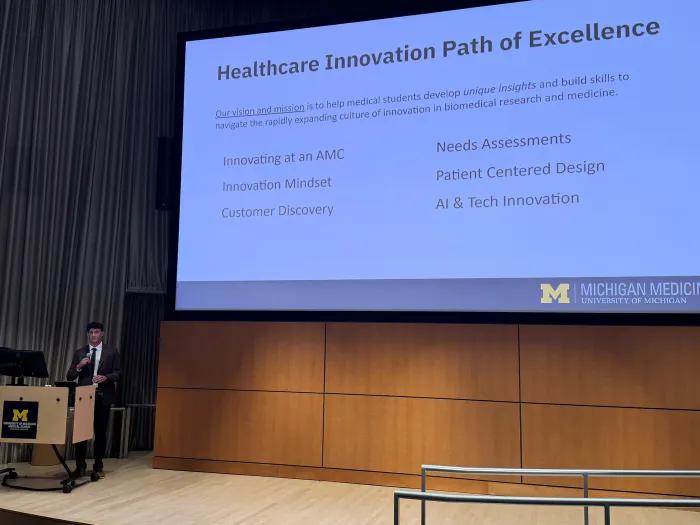
University of Michigan medical students showcased AI-driven healthcare innovation projects focused on melanoma support, transplant recovery and primary care access.
UMich Med Mosaic on blue background with colorful geometric shapes
UMich Med Mosaic

Beyond the White Coat: Global & Local Health Experiences

In this UMich Med Mosaic, host Mackenzie Kay talks with medical students Amanda Cassetti, Emily Gitlin and Evelina Hristova about how they’ve engaged in service through initiatives like the U-M Student-Run Free Clinic, Wolverine Street Medicine and Global REACH. They reflect on building trust with patients, navigating care in nontraditional settings and the importance of ethical engagement. The conversation explores how these experiences have shaped their skills and aspirations and reinforced that service can be a critical part of becoming a physician.