Spoof positive
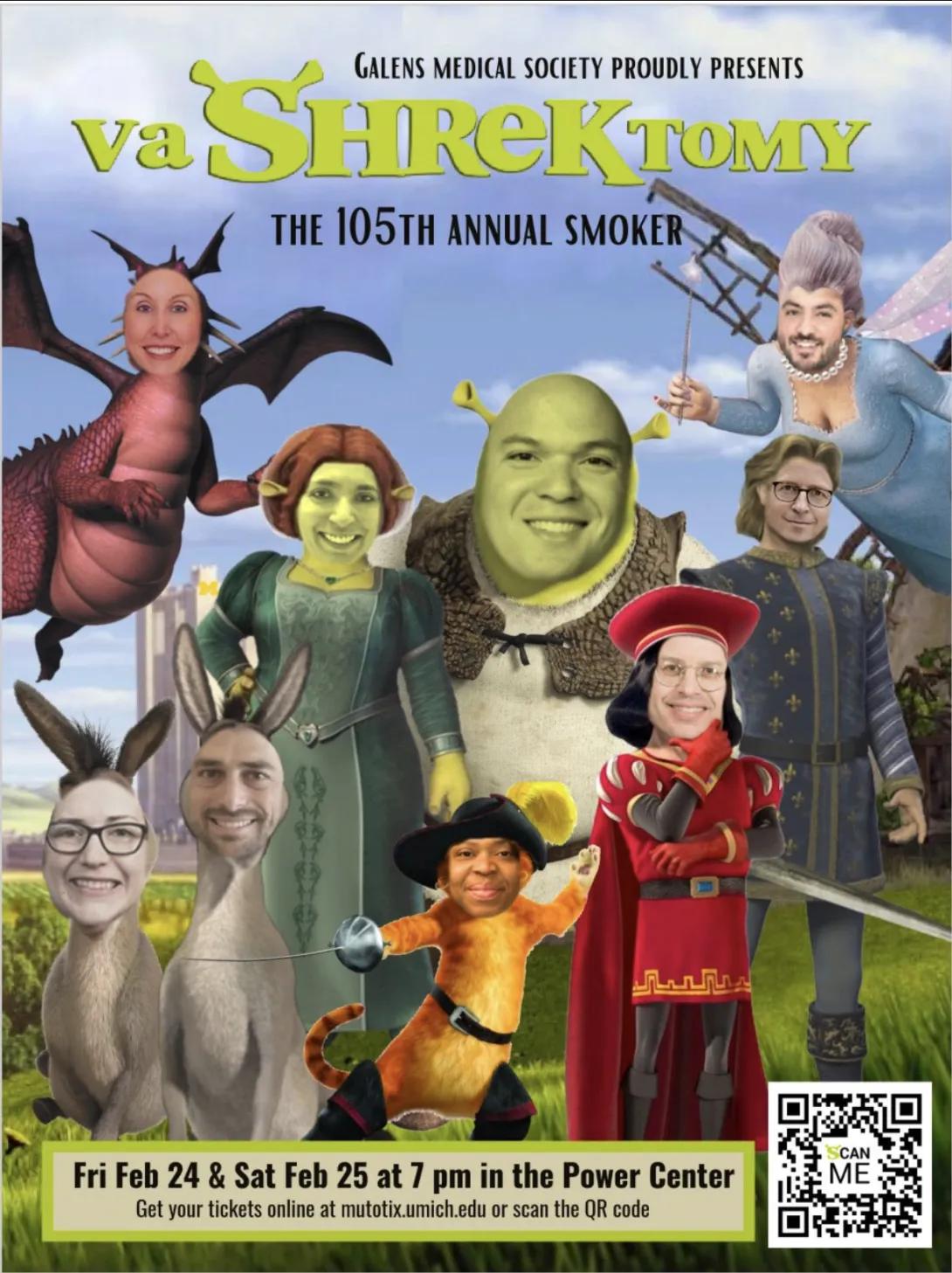
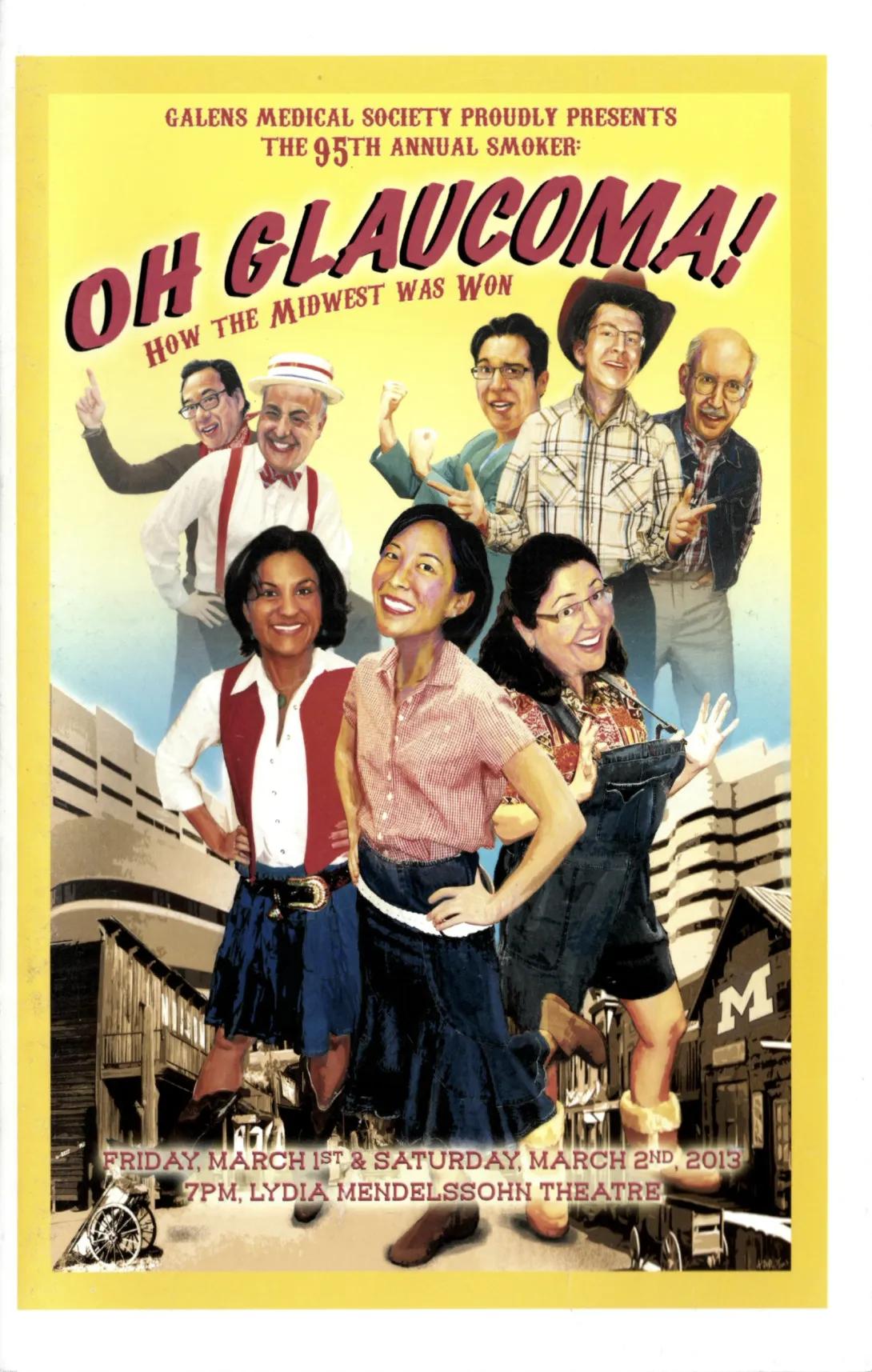
For more than a century, the Galens Smoker has given medical students the chance to parody their professors and profession.
Author |
Prologue
The scene
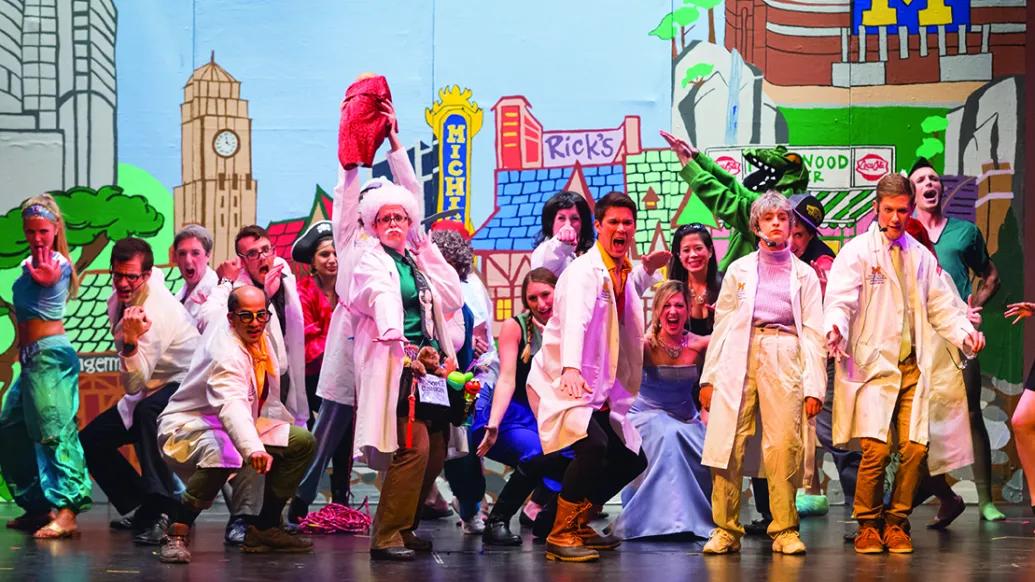
A medical student portrays thoracic surgeon Rishi Reddy, M.D., who has grown bored with the operating room in Procedure Town. He discovers a cheery, colorful place called Medicine Land, where physicians focus on patient-centered care. He plans a coup.
Along the way, an astonishing number of talented dancers and singers perform parodies of Broadway and pop songs. Surgery is performed with the assistance of a rubber chicken; a surgeon blames anesthesiology for a mistake; a meeting that “could’ve been an email” is held; medical students are chided for breaking a sterile field; dancers in tutus perform alongside a student portraying neurosurgeon Karin Muraszko, M.D., who sings “Protege” to the tune of “Popular” from Wicked. Jokes are made about a nine-month wait time to see a specialist; characters wear genitalia costumes; patients are zombified. Amid the laughter, a poignant version of the song “Shallow” from A Star is Born is performed as a duo between surgeon and patient characters: “The crash carts can’t save me, so let’s do this bravely … DNAR, DNAR, DNAaaaR …”.
And a lot happens that we can’t mention here because this magazine is PG-13 and the Galens Smoker is decidedly, raunchily, unabashedly R-rated.
Act I, Scene I
The humor in this scene from the 2020 production ofThe Nightmare Before Match Day will ring true to anyone who has acted in or attended the annual Galens Smoker, a tradition for more than 100 years at the U-M Medical School. The show is produced by medical students and serves as a roast of their professors and clinical faculty.
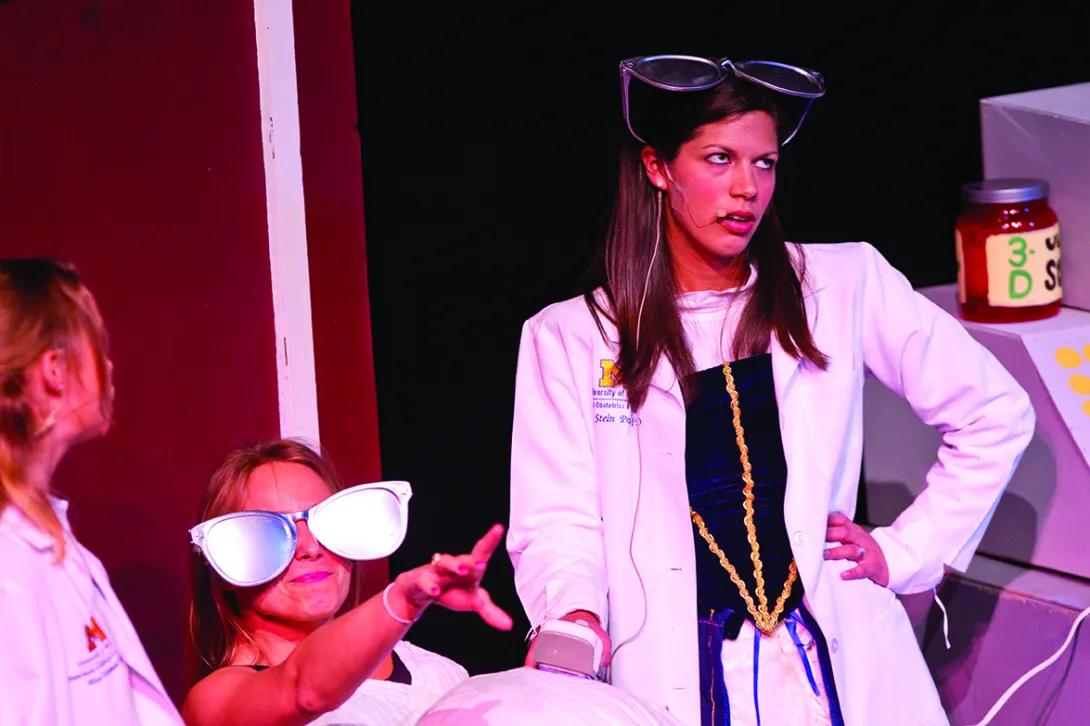
The first “All-Medic Smoker” was held in 1918, four years after the founding of the Galens Medical Society. The “Smoker” name refers to the early performances when Galens men (and only men) “enjoyed the pleasures of tobacco along with their ribald humor,” according to the Galens online history page that was initially compiled by Gerald Kangelaris (M.D. 2006), a former president of the Galens Medical Society.
The Galens organization evolved into one that did charitable work for children, including the annual Tag Days fundraiser, and in 2006 donated $200,000 to help construct Child and Family Life playrooms at U-M Health C.S. Mott Children’s Hospital. Meanwhile, the Smoker evolved, too — notably when a student named Bob Bartlett (M.D. 1963) thought the event could be more than just a series of unconnected skits. In 1962, he helped to create the first Smoker based on a Broadway musical.
“I thought it could be better, more cohesive,” recalls Bartlett, now a professor emeritus of surgery and well-known as the “father of ECMO.” Bartlett’s status in medicine because of ECMO and his surgical career is legendary, but his Smoker legacy is next-level: It was memorialized in song.
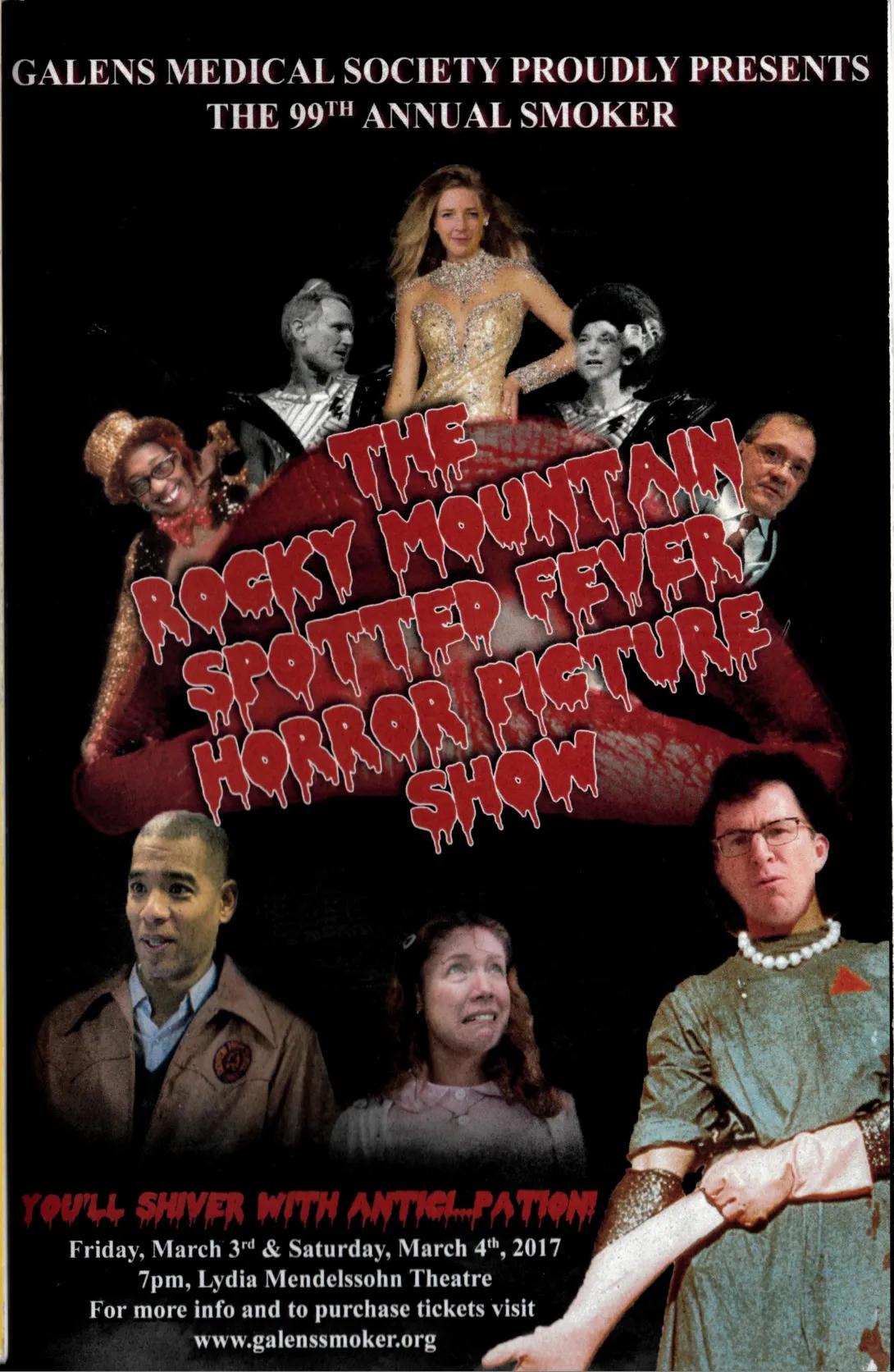
In the 2017 Smoker, The Rocky Mountain Spotted Fever Horror Picture Show, the opening number included a line that pays homage to the parody that he spearheaded: “And then Bob Bartlett came, and he changed up the game, in ’62 with The Medicine Man!”
The 1962 Music Man parody launched a new era of Smokers that were based on musicals, TV shows, movies, and moments in pop culture. Does that sound like trouble? Oh, yes. With a capital T.
Act I, Scene II
In the early years, the Smoker was for men only. “Admission of women to the Smoker was a hotly contested issue until the Galens admitted women as members to the society in 1971,” according to records at the Bentley Historical Library. And thank goodness they were admitted, as it’s difficult to imagine the 1976 My Fair Malady without … malady, or the 1980 show The Sound of Mucus without a mucus-y Maria.
Students do it all: They decide on the title and theme of the show, they write, they sing, they dance, they wear semi-obscene costumes. Some 200 students are involved in each year’s Smoker, with planning starting in September for the show that will be staged in February or March.
Many have backgrounds in theater or dance — and it shows in their skill, precision, and stage presence. For others, the Smoker might be the first time they’ve performed for an audience.
“I was never a ‘theater person.’ I had never acted, sung on stage, or produced any sort of production before coming to medical school. I never would have guessed that as an M4 I would find myself as one of the five people in charge of the massive production that is the Smoker,” Braden Engstrom (M.D. 2021) wrote in an entry for the Medical School’s Dose of Reality blog in 2021. But Engstrom “found a home in the Smoker as an M1. I found best friends, faculty mentors, and lifelong memories. … I spent the next two shows doing everything I could behind the scenes to help make the show happen, and as a fourth year I was named a Producer Czar.”
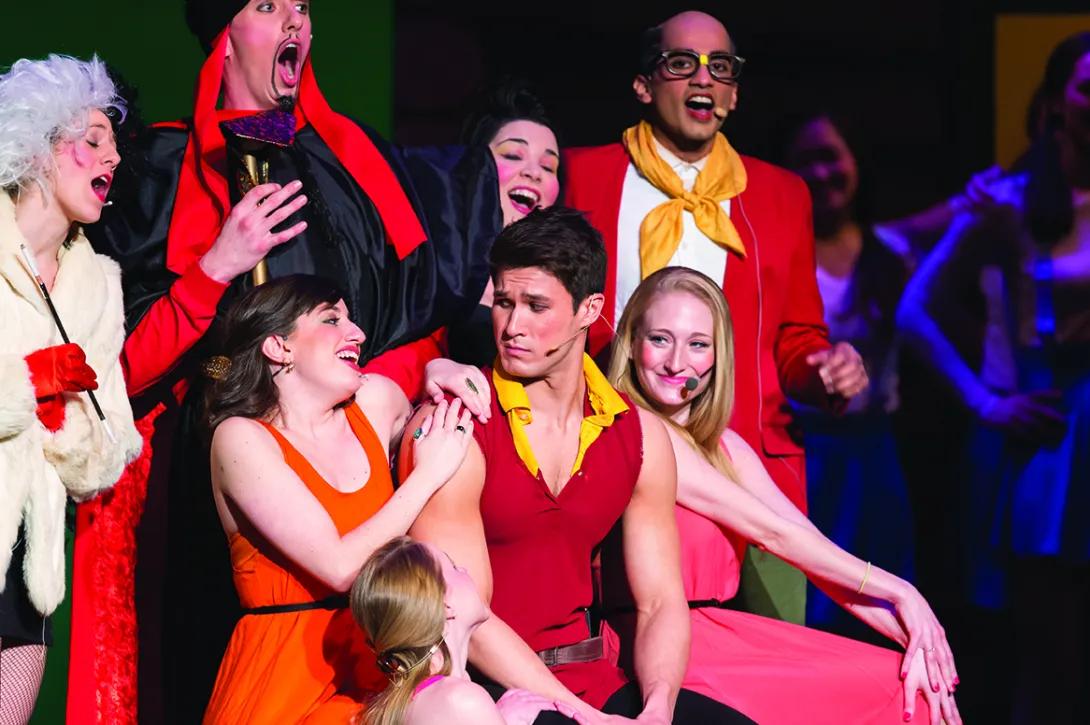
When Bartlett was a student, he was as comfortable on stage as he would later become in the operating room. Indeed, he once thought about becoming a professional musician before opting for medicine; in hindsight, of course he was the person who shepherded in the modern era of Smoker productions. His love of performing did not end in medical school; until recently, he played the bass violin and euphonium in the U-M Life Sciences Orchestra.
For Sarah Diaz, an M4, the possibility of performing in the Smoker was one of the draws of attending medical school at U-M. The former professional ballet dancer has appeared in several shows — including as a lead in her M1 year — and is one of the production directors for the 2025 show, Scooby-Flu.
“Theater and the arts have been a part of my life for the last 29 years,” says Diaz. “I wanted to come here and continue to pursue something that’s so important and to do it with people that are also just as busy as I am, who totally understand our lifestyle but also love art and theater so much. For me, that was a non-negotiable.”
Intermission
Plan A was to become a professional musician. But it became apparent that playing principal oboist for a major symphony orchestra was probably not in the cards. Biology and medical school provided a fortunate alternative and I’ve never looked back,” writes Doug Van Zoeren (M.D. 1984). “When it was announced that the 1983 Galens Smoker would be Med Sci Story, the beautiful oboe passages in Leonard Bernstein’s score (West Side Story) beckoned.
“The next year when it came time to prepare for the match, the administrative assistant to whom my application was assigned turned out to be an individual who had been featured in the production, but not in a way that had met with her approval. Perhaps it was an error to have included my participation in the Smoker among the list of extracurricular activities. But, to her credit — as well as other faculty and staff who have been treated unkindly by the Galens Smoker over the years — she advocated for me and for all fourth-year students, and I matched at my first choice.”
Act II, Scene I
Some of the parodies of faculty members in the Smoker are lighthearted and funny, while others are brutal. The subjects of those parodies are often in the audience; some even make cameos on stage.
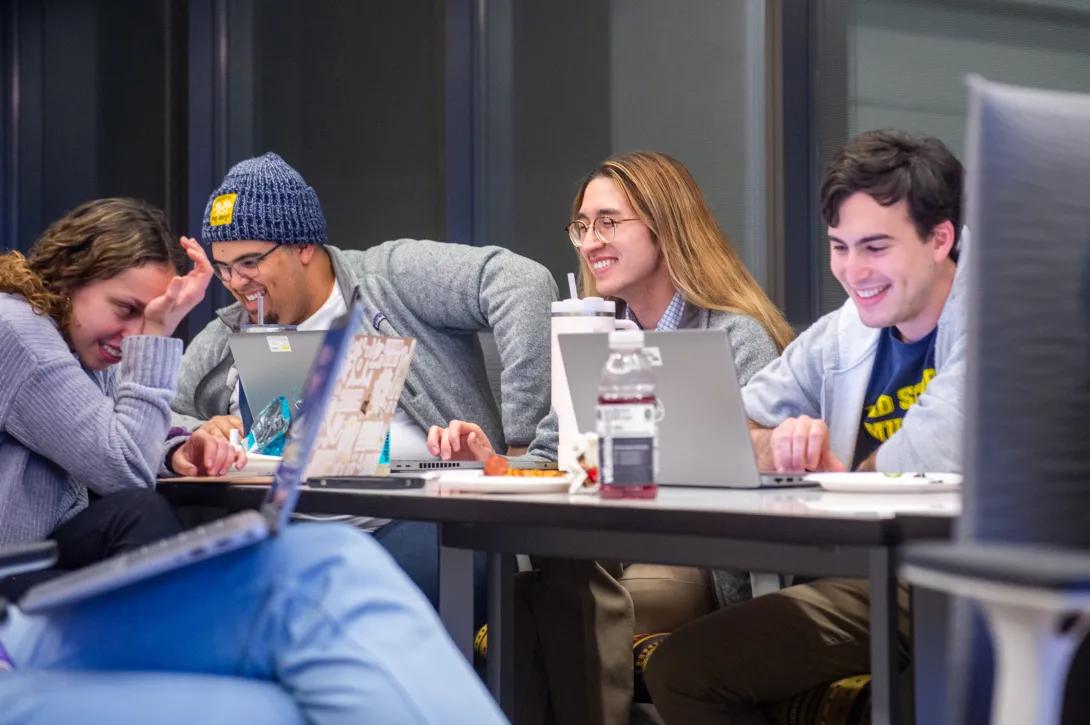
The Smoker can humanize medical students and faculty alike, according to current and past participants. “As an M1, I fondly remember one of our most revered faculty appearing on stage dressed in a green morph suit and rainbow tutu, just days before he would welcome us to the neurology block,” Engstrom wrote of the appearance by Douglas Gelb, M.D., clinical professor of neurology, in 2018’s Harry Polyp. “The support from the entire Michigan Medicine community (faculty, residents, students) fosters the idea that this place is not merely a hospital, but a family.”
Faculty members tend to take the roasting in good humor, says Cyrus Najarian, who is in his fourth year of the Medical Scientist Training Program in which he is studying to be an M.D./Ph.D. “Most of the people we poke fun at, we do so because they’re really involved in medical student education. We love them, and they love us.”
In the 2024 Smoker, Najarian portrayed Rob Huang, associate professor of emergency medicine. “He was a Smoker Czar back when he was a med student, so he has this history of making fun of people and being made fun of. We talked for probably an hour one time, and he was like, ‘Cyrus, stop calling me Dr. Huang; call me Rob.’”
At times, the humor is a little more pointed. “It doesn’t happen too often, but sometimes there’s part of the curriculum or certain behaviors that can be very difficult, and that are challenging to deal with. The Smoker can be a good time to kind of air that out in public,” says Najarian, also a production director of this year’s Smoker.
Diaz thinks the humor and airing of grievances is not only tolerated but actually encouraged because the Smoker is so ingrained in the culture of the U-M Medical School. “There’s sort of a protected legacy because we are in the 107th year,” she says. “It’s older than all of us.”
Act II, Scene II
In the 2020 production ofThe Nightmare Before Match Day that was referenced in the prologue, there is a happy ending: The surgeons of Procedure Town and the physicians of Medicine Land realize that collaboration and consultation are the way to go.
Real life, however, was about to get much more complicated. Just a few weeks after the 2020 show was staged, the COVID-19 pandemic shifted the focus of everyone in the medical community.
“For a few months, my fellow czars and I did what everyone else did: hoped things would blow over and we could go back to normal,” Engstrom wrote on the Dose of Reality blog. Eventually, they realized an in-person musical would not be safe in 2021. He and the other czars knew that everyone needed a reason to laugh, however, so they created the first-ever Smoker movie, called Herpules (rated R for “raunchy”). The first-time filmmakers created a feature-length movie with a cast of dozens. Picture togas, surgical masks, and jokes about Zoom special effects.
“The show went on,” Engstrom wrote. “The show will always go on.”
Alums share their memories of the Galens Smoker
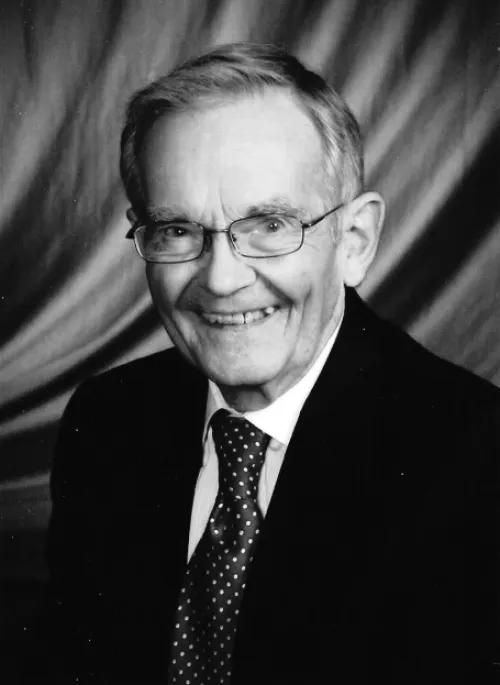
In the 1950s, the annual Galens Smoker was a 100% male endeavor which served primarily as a stage presentation of often raunchy skits and songs written by medical students which lampooned medical student life at that time. The audience likewise consisted of male medical students and an occasional brave faculty member. Individual faculty members, their habits, mannerisms, and foibles often were the subject of a presentation. On occasion a faculty member who was in the audience would leave in disgust if he felt truly offended by the characterization on stage. Generally, however, it was considered an evening of great fun presented solely for its humor. We always anxiously awaited each year’s production.
Lawrence C. Sweet
(M.D. 1956)

I remember one of the years I attended U-M Medical School the Smoker was The Wizard of Gauze. This was a masterful creation where Dorothy was a “Flexie” (Inteflex) and she was in a house that landed on Allan Bakke, who was then the subject of an affirmative action Supreme Court case. By landing on Allan Bakke, Dorothy was allowed admission to the Medical School. Of course, there was the Tin Man who did not think he was compassionate enough to become a general practitioner, the Scarecrow who was not smart enough to become an internist, and a Cowardly Lion who was not courageous enough to become a surgeon. The lyrics to the songs were so intelligently put together and the performances were so well received in Hill Auditorium. I only wish we had video tapes to be able to enjoy seeing them once again.
Lawrence M. Shuer
(M.D. 1978)
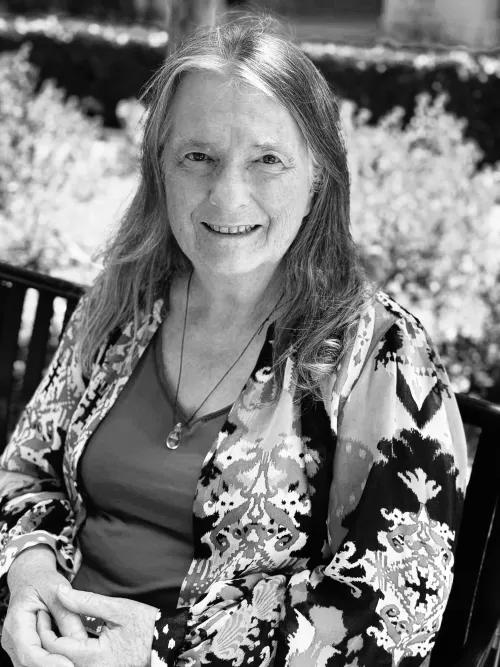
As an M1, I donned a yellow uniform dress and pushed “Mr. Kite” around in a wheelchair as I sang. I played the part of “Lovely Rita Messenger Girl,” and I sang to the tune of “Yellow Bird” [by the Brothers Four].
“Yellow girl, high on the Mecca tree
Yellow girl, you wait for me endlessly
While I make you wait, gas equilibrate, cells coagulate, cells disintegrate
No one tell the boss
If the tube is lost
He’ll just call the M3.”
The next day in an anatomy lecture the older male lecturer talked about how he saw, during the Smoker, a woman dressed in yellow “who had lost complete control of her sartorius muscles.” (I was wearing wooden
platform shoes and struggling to dance as I was singing).
In 2013 my daughter was a master’s student at the U-M School for Natural Resources and Environment [now
the School for Environment and Sustainability] and she got to see a Smoker and thoroughly enjoyed it.
Sue Boiko
(M.D. 1978)
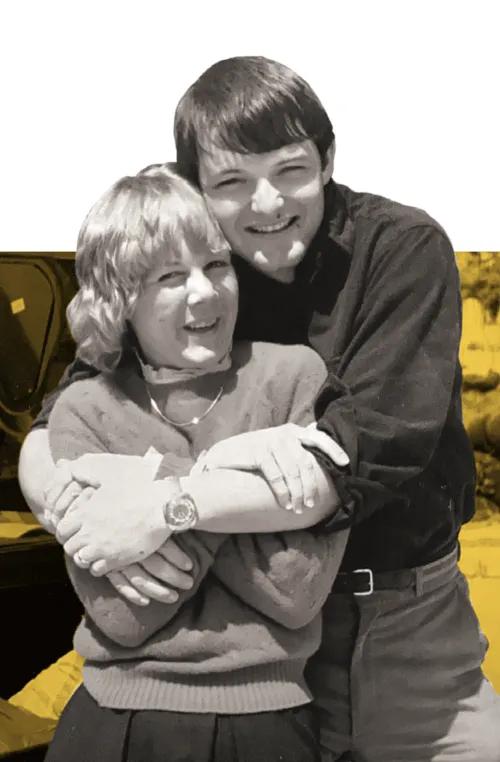
I had known Kathy Johnson, but not well; she studied all the time. Then in May of 1980, she played Sister Maria (modeled on our beloved professor of medicine, Faith Fitzgerald) in The Sound of Mucus. The saucy lyrics were based both on The Sound of Music and Mary Poppins; a sampler includes Idiopathic Hypertrophic Subaortic Stenosis (Supercalifragilisticexpialidocious), Crabs and Lice (Edelweiss), and of course The Wards are Alive with the Sound of Mucus. In emulating Dr. Fitzgerald, Kathy wore a black frizzy wig, chain smoked, and dominated the stage, just like Dr. Fitzgerald dominated the medicine wards. I was smitten. I somehow got myself into the cast party after the show. Kathy and I talked all night and walked home in the cold together, declining offers for a ride. One year later we were engaged. Upon graduation in 1982, we were married. We were fortunate to stay in touch with Faith, even as she moved to UC Davis. Every time we saw her, we reminded her that she was instrumental in our getting together. Thank you, Faith and Galens.
David Neely
(M.D. 1982)
Kathy Johnson Neely
(M.D. 1982)

In the 1960s two of the greatest Galens Smokers were written and directed by Bob Bartlett (M.D. 1963), who subsequently became one of the greatest U-M Medical School graduates of all time. He wrote and directed The Medicine Man based on The Music Man and the next year M4 Lady based on My Fair Lady.”
They were brilliant and such fun for the actors.
Kurt Seiffert
(M.D. 1964)
My fondest memories of the Galens Smoker always include the dancing! These photos are from the 1986
Smoker Fiddling on the Wards.
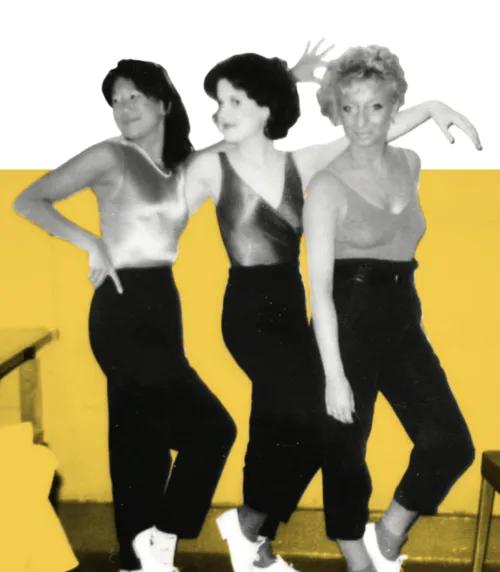
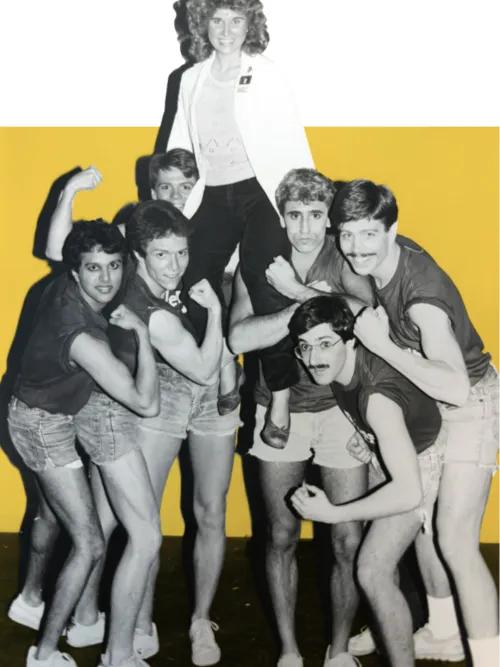
Mary Ann Cheng
(M.D. 1988)
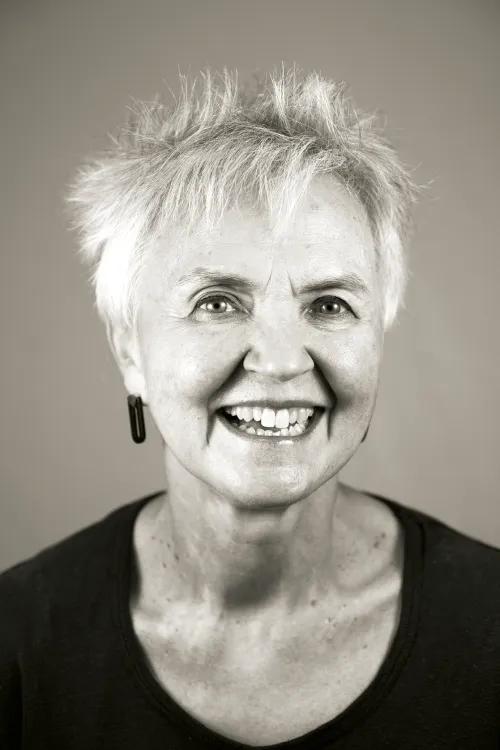
Mostly general memories:
How so many of us, despite not having the time, worked hard to make each Smoker happen.
The joy in being able to poke fun at people and processes that held such power over us at that point in our lives.
My specific memory was a near miss wardrobe disaster involving a tube top migrating south during a tap number as I stood in front of the chair of internal medicine.
Nancy Noble Dodge
(M.D. 1983)
Oh, I remember that Paul Fine (M.D. 1989, Residency 1993) was a lyricist beyond compare. “Which insipid sphingolipid piles up in Gaucher Disease?” is an earworm from his version of the Beetles’ Letter B [a parody of the Beatles’ “Let it Be”]. And I smile at the memory of classmates Alan Weissman (M.D. 1991, Fellowship 1993) belting "Suddenly Semen" from Little Lab of Horrors and Jim Carlisle (M.D. 1991) strutting about as King Arthur in Meccalot. Of course, my own husband, Eric Ridings (M.D. 1989, Residency 1993), was a pretty awesome narrator in that same show.
Jane Witter Ridings
(M.D. 1991, Residency 1996)
There was a nice article on [ECMO pioneer Bob Bartlett (M.D. 1963)] in the last issue of Medicine at Michigan. What wasn’t mentioned in the piece was Bob’s musical composition “Hemorrhoids,” which “often itch and often burn” and “give you that look of concern.” That song was in the 1963 Smoker, which included [the late] Bob Komorn (M.D. 1964, Residency 1970) in a principal role declaring “BFD” repeatedly and myself as our hallowed Eddie Kahn, complete with long handled reflex hammer.
Sid Goldman
(M.D. 1964)
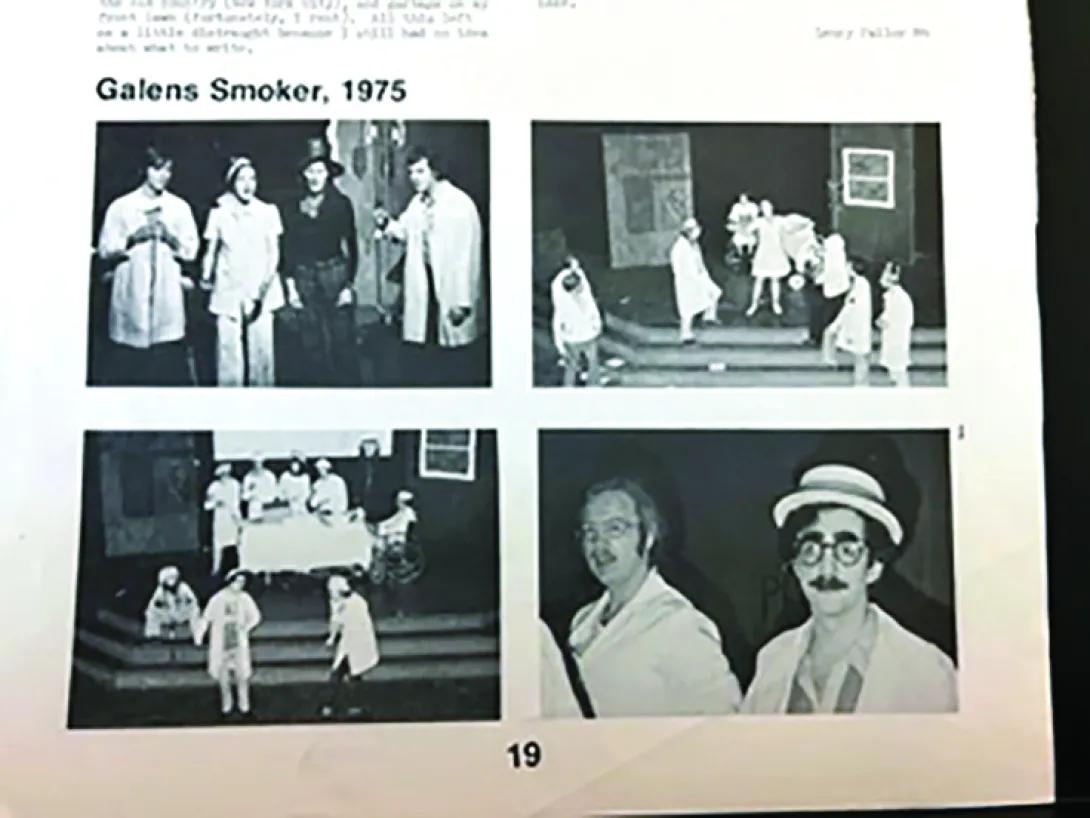
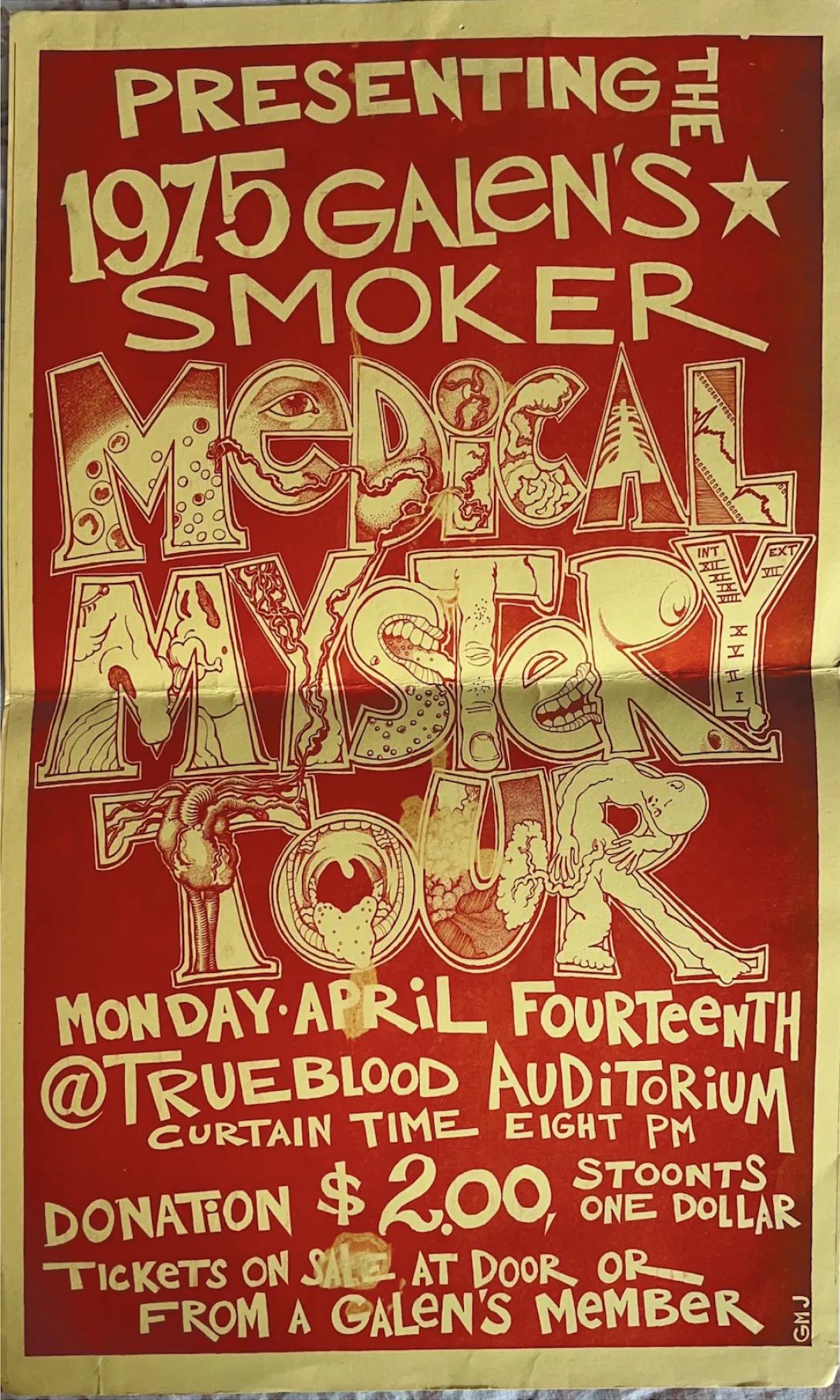
Medical Mystery Tour involved parodies on songs from the Beatles albums, Sgt. Pepper’s Lonely Hearts Club Band and Magical Mystery Tour. The plot followed students John, Paul, and George through med school as they were being indoctrinated by faculty who were inbred at U-M (Dr. Gronvall’s Inbred Mecca Band).
As I recall, we had more than two dozen actors/singers, several writers, and John Johnson (M.D. 1975) superbly playing the piano on the musical numbers. As co-producers, Jim Bale (M.D. 1975) and I had a wonderful time working with everyone involved in the production. I have an old cassette recording of the show which is still playable (after almost 50 years).
Gordon Goodman
(M.D. 1975, Residency 1979)
Featured News & Stories
How AI is helping emergency physicians learn from their patients
A link between e-cigarettes and oral cancer
Research may help better predict outcomes in kids with congenital cytomegalovirus
12-year-old shares journey with sickle cell anemia on Capitol Hill

LGBTQ+ Aging in America