The Hospital of the Future
Coming in 2024

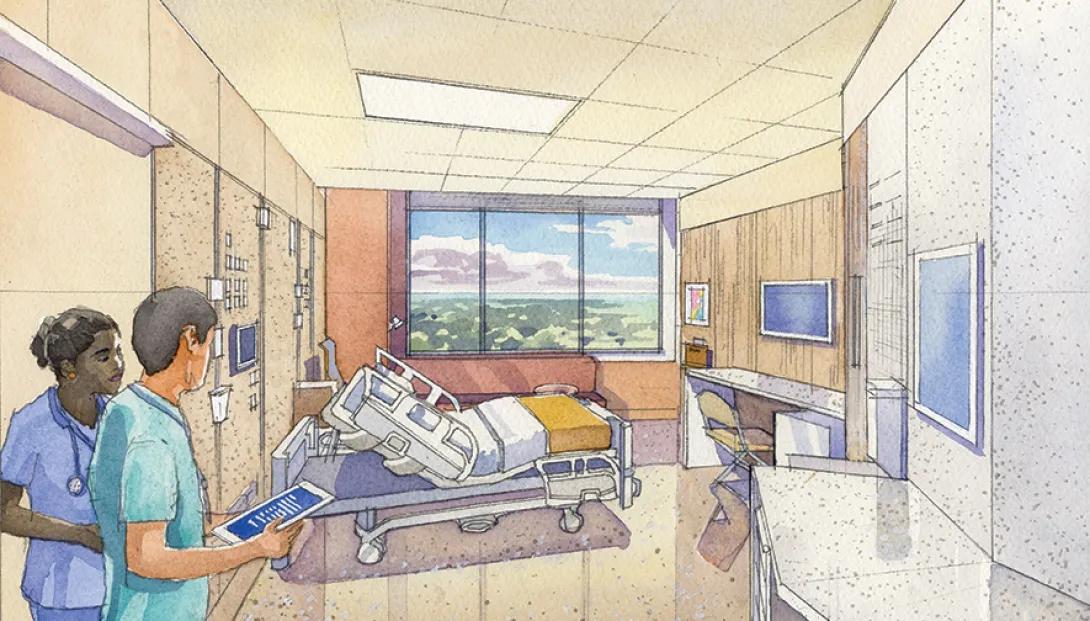
In late October, Michigan Medicine broke ground on a new 12-story adult inpatient hospital. The facility is needed to increase patient access while also providing state-of-the-art care to patients, with an emphasis on clinical neurosciences and cardiovascular services. Each of the 264 rooms in the hospital will be a private room that is capable of being converted to intensive care. It is expected to open for patient care in fall 2024.
The 690,000 gross-square-foot hospital will allow more patients to access Michigan Medicine's high level of care. Currently, hospital facilities often operate at more than 90% capacity.


"It's an investment in Michigan Medicine's mission of advancing health to serve Michigan and the world," says Marschall Runge, M.D., Ph.D., executive vice president for medical affairs for U-M, CEO of Michigan Medicine, and dean of the Medical School.
In keeping with the university's commitment to prioritizing sustainability and reducing its carbon footprint, Michigan Medicine is working with its team of architects and engineers to achieve LEED Gold status for the project. LEED provides a framework to create healthy, highly efficient, and cost-saving "green" facilities.
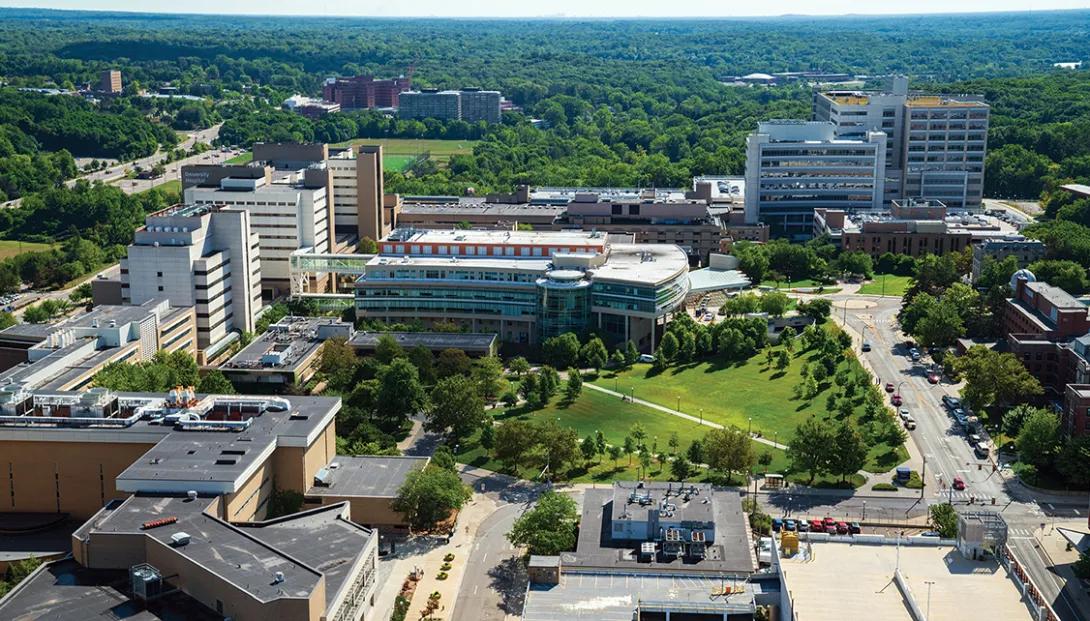
When completed in fall 2024, the hospital is expected to exceed current energy efficiency standards by about 20% compared with the State of Michigan building code for energy performance.
After construction of the new rooms and relocation of the existing beds, the project will add a total of 154 new beds to the medical campus. The new adult inpatient hospital will allow the relocation of 110 beds currently in semi-private rooms at University Hospital to the new hospital. As a result, all Michigan Medicine inpatient beds will be single private rooms.
The new hospital was designed with lean principles for efficiency of flow and responsiveness to user needs. It will include:
- Family spaces throughout and space for loved ones to visit in each patient room
- Centralized collaboration spaces in each patient area to enhance continuity of care
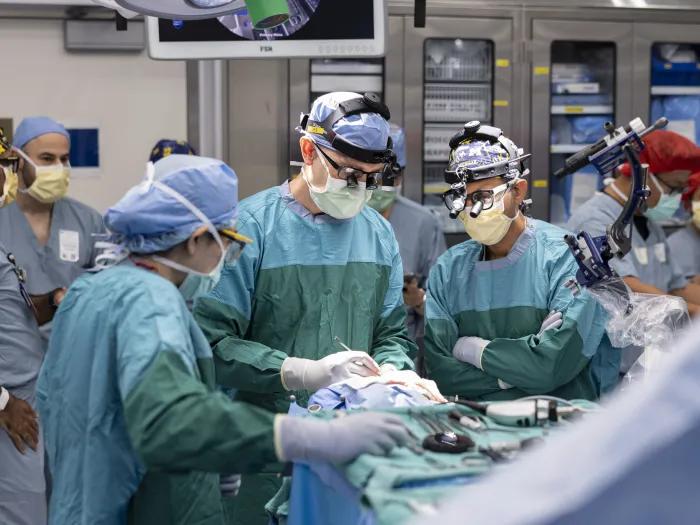
- Two floors with 20 operating rooms built with the latest technology, many larger than Michigan Medicine's current ORs, and three interventional radiology suites
- Patient rooms that allow for more complex care, including capability for all spaces to be converted to intensive care
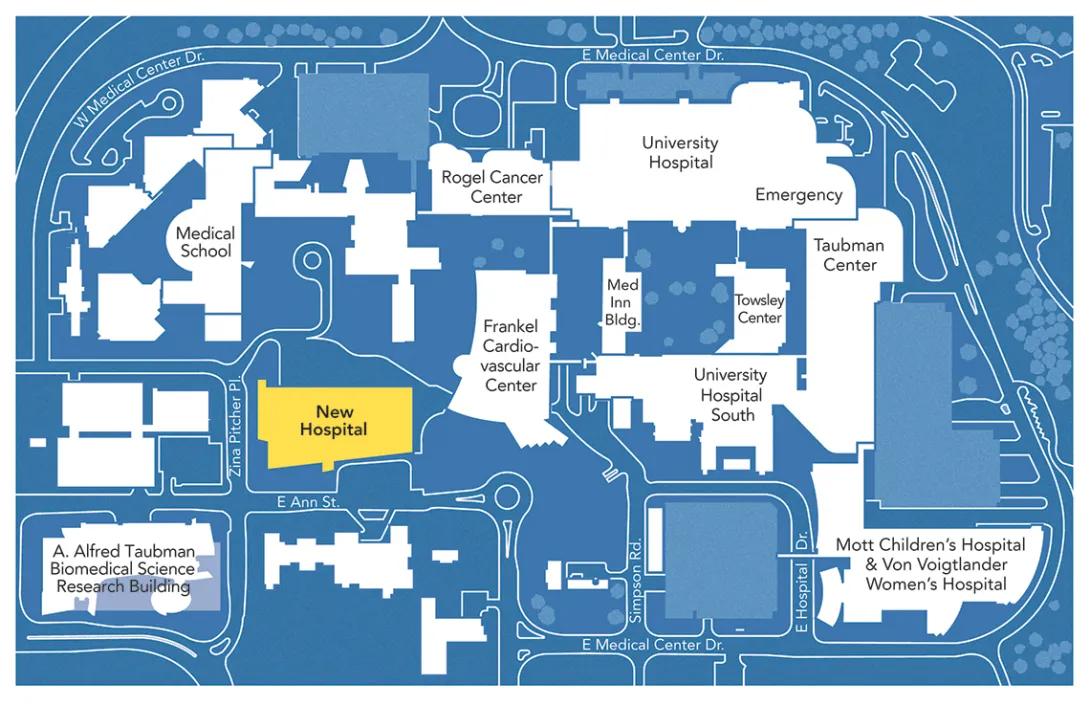
By 2024, the new Wall Street West parking structure will have been completed, which will include more than 900 employee parking spaces. Further planning for incremental parking, transportation, and roadway improvements is underway. About 1,600 full-time employees will work at the new hospital.
"We invite the community to join us in building the new hospital. Contributions will fuel progress across the neurological, neurosurgical, cardiovascular, thoracic, and other critical areas of care, ensuring the greatest possible impact for patients and families as well as for medical research and education," says Eric Barritt, associate vice president and chief development officer at Michigan Medicine.
Philanthropy has played an essential role in the construction and programmatic buildout of many capital projects at Michigan Medicine, including the A. Alfred Taubman Health Care Center, Rachel Upjohn Building, Samuel and Jean Frankel Cardiovascular Center, Kellogg Eye Center and Brehm Tower, and C.S. Mott Children's and Von Voigtlander Women's Hospitals.
Featured News & Stories

Spinal implant eliminates patient’s 'all-consuming' pain without need for a fusion

The Kidney Warning Signs You’re Missing— And Why Waiting is Dangerous
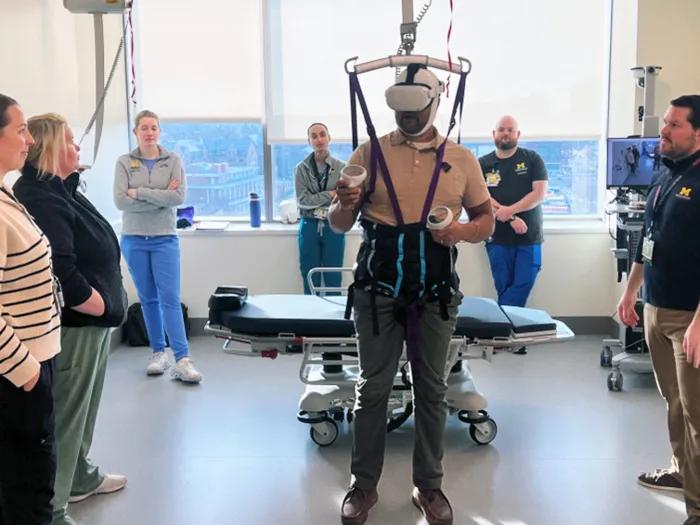
How new care models, within a new building launch, are helping optimize patient care

Celebrating cardiac arrest survivors and their lifesavers
University of Michigan implants first-in-human Paradromics wireless brain-computer interface, designed to restore communication