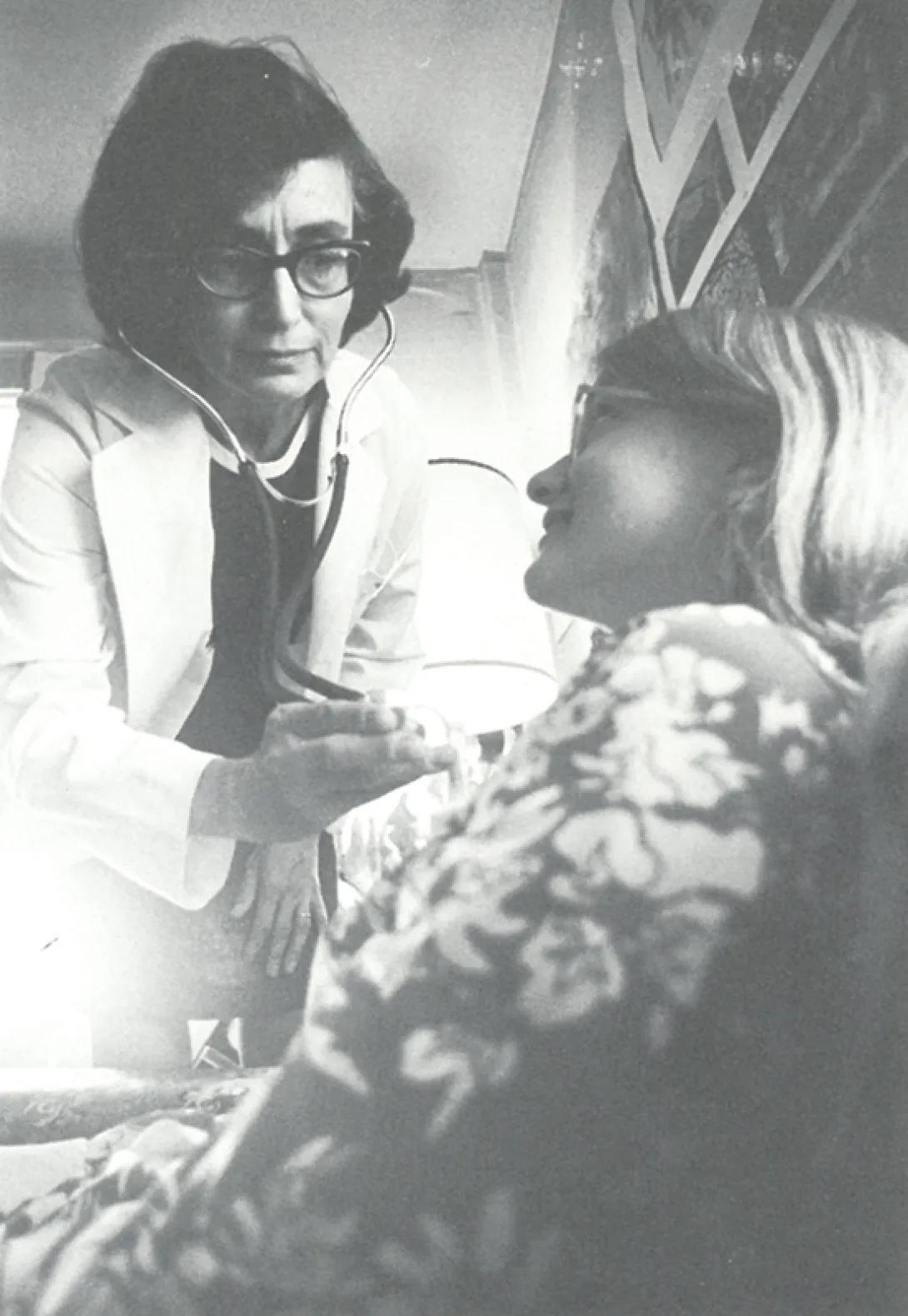
A 1971 profile on Jane Bloom (M.D. 1974) in The Parke-Davis Review describes her as a "diminutive housewife" on a quest to receive her medical degree by age 50. Now 91, Bloom looks at the article — and her portrait, complete with cat-eye glasses and a stethoscope — and gives a wry smile. "I looked a lot different back then," she says.
Prior to medical school, Bloom and her husband, Bill, were busy raising their 10 children. But once the kids were old enough, Bloom decided to pursue her dream of becoming a doctor. After completing her undergraduate degree at U-M in 1968, she began applying to medical schools — but it cost about $50 per application, and she didn't have money to spare.
Determined, she went to the U-M's Center for the Continuing Education of Women and explained her situation. Jean Campbell, the center's director at the time, recognized Bloom's tenacity, and wrote her a personal check to cover the fees.
"I would not be where I am today without Jean and the center," Bloom says.
That check started Bloom on what would become her 30-year career in internal and emergency medicine. She worked mostly in Detroit, where she believed she could make the most impact. Bloom retired in 2005 at the age of 80.
Bloom is quick to point out that there were many people who helped her complete her quest — especially the late Robert A. Green, M.D., professor emeritus of pulmonary and critical care medicine, whom she regards as a mentor.
"I am so grateful that this whole remarkable opportunity occurred — that with everything going on I was admitted to the Medical School. That changed not only my life but the life of my entire family, who thrived in health, school and work."
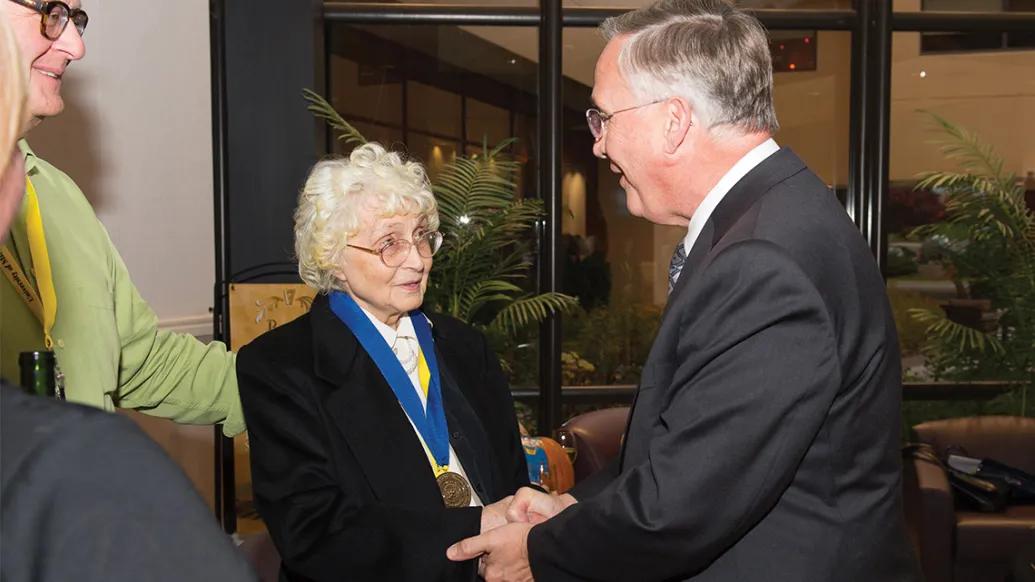
In fall 2014, Medical School Dean James Woolliscroft, M.D., gave Bloom a medallion in recognition of her accomplishments as a nontraditional student. "I was given a golden opportunity," she says of her career and of her time at Michigan. "I don't think it could ever happen again; it was just too unique."
Featured News & Stories

E-Bikes are everywhere, but most parents say they don’t know enough about them

New drug combination may help treat advanced prostate cancer
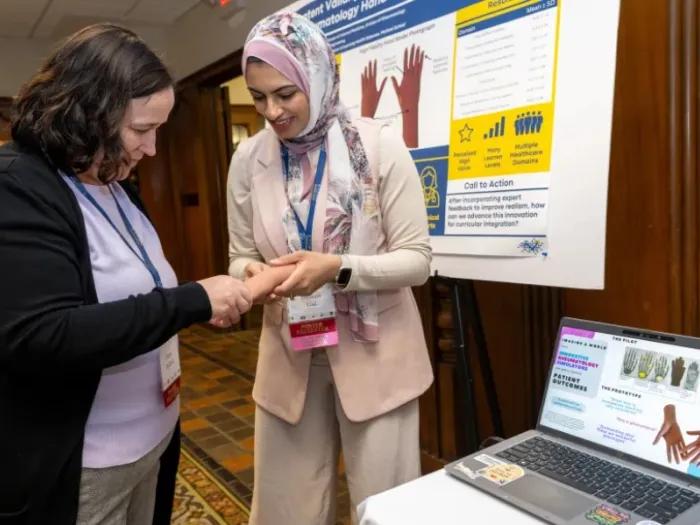
Rethinking how clinicians learn to feel disease

Waiting for a bed, but not for care: ED boarding study finds wide variation in handoffs

From journalist to parent to advocate