
Celebrating 175 years of the Medical School: #17–30
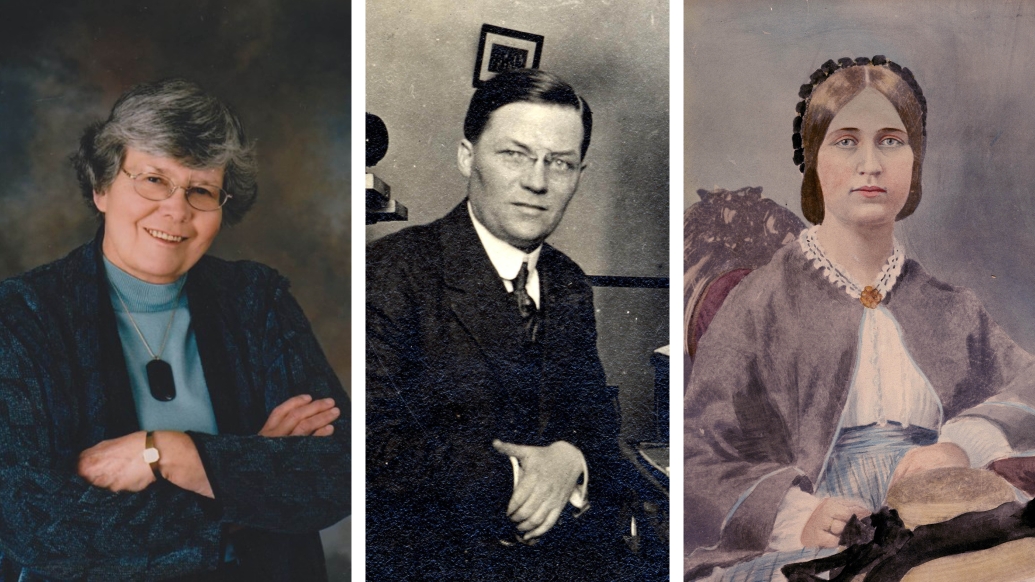
This article is part of a special magazine issue celebrating the 175th anniversary of the U-M Medical School with profiles of 175 people who have been important in its history. See the full issue here.
#17 The women’s research club
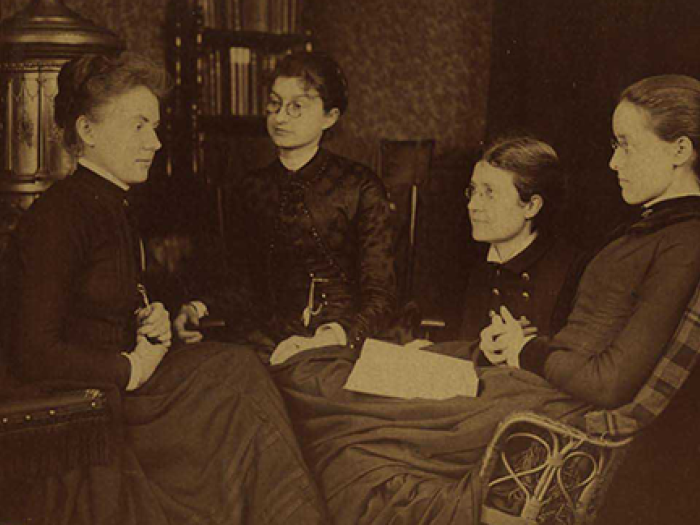
In the late 1800s, women had been refused entry into the Junior Research Club for younger teaching and research staff at the Medical School. Lydia Maria DeWitt (M.D. 1898), who had joined the faculty as a histology researcher and teacher after graduation, founded the Women’s Research Club in 1902 and was elected the first president. The club provided an environment for women who conducted scientific research or were pursuing scientific studies to present and discuss their work.
Source: “Leaders and Best: Milestones in the history of women in medicine at U-M,” Michigan Medicine
#18 Nursing great
Jo Anne Horsley, Ph.D., was best known for the innovative Conduct and Utilization of Research in Nursing project. CURN, which Horsley co-led, may have been the first funded initiative aimed at bridging the gap between nursing research and clinical practice. The project is still cited today. She was proud to have graduated three times from U-M (B.S.N. 1962, M.S. 1968, Ph.D. 1971).
Source: Dignity Memorial obituary
#19 Building a future for families
“To be with your child all day and night, have your own bathroom, be in the room, was overwhelming to parents who need every little reinforcement you can give. In the old facility, they were packed three or four in a room, so they couldn’t have privacy and couldn’t sleep there with their baby. The new hospital was so well planned for the families,” says Edward Bove, M.D. (Residency 1977 and 1979), reflecting on the completion of the University of Michigan Health C.S. Mott Children’s Hospital and VonVoigtlander Women’s Hospital building. Bove was named the inaugural chair of the Department of Cardiac Surgery in 2011, the year the building was completed, and he performed his 10,000th cardiac procedure there in 2012.
A renowned pediatric cardiology surgeon, Bove was instrumental in helping to improve the survival rates of children born with hypoplastic left heart syndrome. About 40 years ago, there were no surgical options. The early days of refining surgical procedures for this condition were heartbreaking for Bove, as very few children survived. One child made it a year but died a month after a second surgery. “I was ready to quit,” Bove says. “But I got a letter from that child’s mom and dad thanking me for the nearly one year they had with their child, and [they] told me to keep trying, to not give up. It was very emotional, and I never forgot that.” In 2021, C.S. Mott Children’s Hospital reported a 97% survival rate. “You don’t operate on a baby. You operate on a family. I can’t ever tell you what that feeling is like.”
Sources: Medicine at Michigan, Winter 2022; “A reflection on congenital heart disease care,” Michigan Medicine Health Lab blog, December 2021.
There’s a lot of positive tech for kids out there, but algorithms are amplifying the garbage. Platforms elevate the most ‘engaging’ media, amplifying the apps and videos engineered to keep kids’ attention for longer.
#20 Jenny Radesky, M.D., the David G. Dickinson Collegiate Professor of Pediatrics
Radesky was quoted in CNN in 2021, when the pandemic was making it harder for parents to manage their children’s screen time. Radesky has been a major voice in the national conversation on the ways tech companies have manipulated children, and she has advocated for child-centered media and laws that put the onus on tech companies to protect kids.
#21 X-ray vision
James Gerrit Van Zwaluwenburg (M.D. 1908) worked as a metallurgical chemist for five years to afford medical school. He went on to become U-M’s first radiologist. Van Zwaluwenburg was an early adopter of X-ray technology, and he made imaging an integral element of clinical diagnoses and patient care at U-M.
Source: Medicine at Michigan, Winter 2019
#22 FIRSTS: Open-heart surgery
Herbert Sloan, M.D. (Residency 1949), was a major leader in thoracic and cardiovascular surgery. While on faculty at the Medical School, he performed the first successful open-heart surgery in the state of Michigan in 1956, and he was first to perform the challenging procedure on an infant in 1960.
Source: Ann Arbor News obituary
#23 The beauty of biology
Deborah L. Gumucio (Ph.D. 1986) is professor emerita of cell and developmental biology and of internal medicine. Her lab helped identify MEFV, the gene for familial Mediterranean fever, the first autoinflammatory disease gene to be cloned. Gumucio also co-founded BioArtography, a program now housed at the University of Notre Dame in which vividly colored images of cells and tissues are sold to benefit trainee travel and educate the public about scientific discovery.
Source: Medicine at Michigan, Fall 2020
#24 Urology legacy
In 1930, Reed M. Nesbit, M.D., became head of urology at the Medical School, a position he held for 37 years. During his tenure, he achieved national and international recognition for his work in endoscopic surgery to treat prostatic disease. In 1957 he established a hemodialysis unit at University Hospital, which was unusual for being run by surgeons and not internists. Nesbit became president of the American College of Surgeons in 1967, the first urologist to hold that position. He trained more than 80 residents, at least 18 of whom became chiefs of urology at medical schools in the U.S. and abroad. In 1972, faculty and residents who worked with Nesbit founded the Reed M. Nesbit Urologic Society. In 2007, the Reed M. Nesbit Professorship in Urology was established at U-M in his honor.
Source: U-M Department of Urology
Most of the time, certainly in the physician population, depression is due to the toxic system and working excessive, and sometimes inhumane, hours. [Interns are] not more vulnerable people, but they’ve gone from living a normal life to working 80 hours a week and not sleeping enough.
— #25 Srijan Sen (M.D. and Ph.D. 2005) is director of the Frances and Kenneth Eisenberg and Family Depression Center and director of the Intern Health Study, which is investigating the interplay of genes and stress in the development of depression.
Source: Medicine at Michigan, Summer 2024
#26 Poetic advocacy
Sarah Gertrude “Gertie” Banks (M.D. 1873) was part of the second group of women to graduate from the Medical School. Only the second female physician in Detroit, Banks cared for many prominent families and citizens, including Clara Ford, a businesswoman and the wife of Henry Ford. Her patients also included the poorest of Detroit’s women and children. She founded the Free Dispensary for Women and Children at the Women’s Hospital and Foundling’s Home and was a patron of Detroit’s first free playground for children. Banks also fought for women’s suffrage alongside her friend, Susan B. Anthony. For Anthony’s 85th birthday in 1905, Banks wrote her a poem, which included this stanza:
Thou has sacrificed for women
saintly, borne the taunts of man,
thus, to free thy sisters, Susan —
from tradition’s bitter brand.
Source: Medicine at Michigan, Summer 2019
#27 Cardiology legend
Albion Walter Hewlett, M.D., a founding father of cardiology, was the Medical School’s chief of medicine from 1908–1916. He made important contributions to our understanding of cardiac arrhythmias and their pharmacological treatment. At the time of his arrival at Michigan, Hewlett was considered the best young clinician in the country. He also was a major proponent of making medical practice more scientific, believing that a good medical school could only be great with a strong integrated research program. He is credited with bringing the first electrocardiogram machine to U-M in 1913.
Sources: U-M Department of Internal Medicine; Clinical Cardiology, Volume 16, Issue 1
#28 Was the medicine on “M*A*S*H” realistic?
Though TV medical dramas have gotten more graphic since the 1970s, they haven’t necessarily gotten more true to life. Walter Dishell (M.D. 1964) can vouch for that. For 11 years and more than 250 shows, Dishell served as medical advisor for “M*A*S*H,” the immensely popular comedy-drama starring Alan Alda as Hawkeye.
As military and medicine aficionados know, “M*A*S*H” stands for mobile army surgical hospital, and producers of the show wanted to depict the medical reality of those battlefield situations. The show was set during the Korean War in the 1950s, which presented a challenge for Dishell to make sure the medicine was not too advanced. “I remember they wanted to do a story on cortisone, but I had to tell them that it hadn’t been invented yet,” Dishell recalls. He did a lot of research on 1950s medicine and even co-wrote an episode with Alda in 1979 about a patient in need of an aortic graft.
Source: Medicine at Michigan, Fall 1999
#29 A good move for obstetrics and gynecology
When Warren H. Pearse, M.D. (Residency 1956), died, the American College of Obstetricians and Gynecologists (ACOG) mourned his passing with this statement: “As the Executive Director of ACOG for 18 years his contributions to our organization, the profession of ob-gyn, and the women we serve were countless. He engineered and executed ACOG’s move to the Capitol in 1981 after determining that the organization needed to be closer to health care policy makers in Washington, D.C. Dr. Pearse was instrumental in procuring the land and oversaw the building of the headquarters. When he retired in 1993, the ACOG headquarters building was named the Warren H. Pearse Building in his honor.”
Source: American College of Obstetrics and Gynecology
#30 Leader in pharmacogenetics
Bert La Du (M.D. 1945) was chair of pharmacology from 1974–1980. He was internationally recognized for his work in pharmacogenetics, the study of how genes affect a patient’s response to medication. His research contributed to our understanding of the genetic variants of the serum cholinesterase enzymes in people who are unusually susceptible to the anesthetic succinylcholine. This genetic variant can cause prolonged paralysis and apnea.
Source: Ann Arbor News obituary
Featured News & Stories
Milestones in the history of women in medicine and biomedical science at U-M
A long time coming: The saga of today’s University Hospital
Pioneers and pathbreakers: Black History milestones at Michigan Medicine
Celebrating 175 years of the Medical School: #2–16
Celebrating 175 years of the Medical School: #31 Pandemic voice of reason

